
Table of Contents
Parnik is a distinctive Sanskrit name with deep botanical roots, literally meaning ‘Leaf’ or ‘Foliage’. This nature-inspired name has been cherished in Hindu communities for generations, symbolizing growth, freshness, and connection to the natural world. With its soft yet strong phonetic quality, Parnik offers a unique alternative to more common nature-themed names while maintaining cultural authenticity.
Meaning of Parnik
The name Parnik originates from the Sanskrit root ‘parṇa’ (पर्ण), which specifically means ‘leaf’, ‘foliage’, or sometimes ‘feather’. The suffix ‘-ik’ is a common Sanskrit diminutive or adjectival ending, creating a meaning of ‘pertaining to leaves’ or ‘small leaf’. This etymology is well-documented in Sanskrit dictionaries and classical texts, where ‘parṇa’ appears in botanical and natural contexts. The name thus carries clear botanical symbolism, representing greenery, growth, and natural beauty. Unlike the original article’s suggestion of ‘Creeper’, Parnik specifically refers to leaves rather than climbing plants.
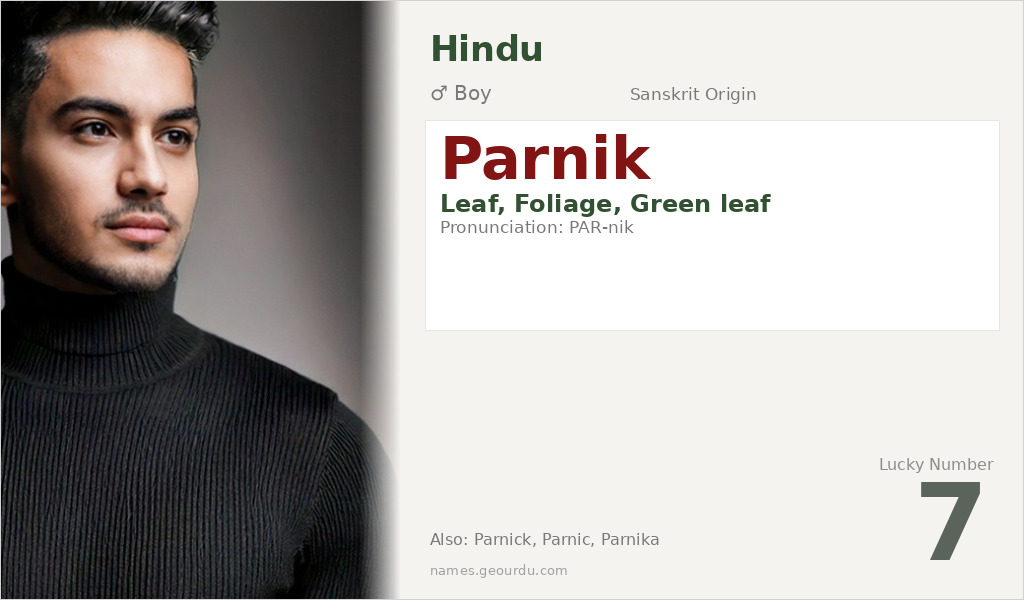
| 📛 Name | Parnik |
| 💎 Meaning | Leaf, Foliage, Green leaf |
| 👤 Gender | Boy |
| 🕌 Religion | Hindu |
| 🌍 Origin | Sanskrit |
| 🗣 Pronunciation | PAR-nik |
| ✍️ Urdu | پرنک |
| ✍️ Arabic | بارنيك |
| 🔢 Numerology | 7 |
| ✨ Spellings | Parnick, Parnic, Parnika |
Origin & Cultural Significance
Parnik has its roots in classical Sanskrit literature and Hindu tradition, where nature-inspired names have always been popular. The name appears in various Indian regional contexts, particularly in Hindi-speaking regions and among Hindu communities. While primarily used in India, the name has also been adopted by diaspora communities worldwide. The botanical theme aligns with Hindu reverence for nature and environmental elements, making it a meaningful choice for parents seeking names with natural symbolism. Historical usage shows it has been consistently used for centuries, though it remains relatively uncommon compared to more popular Sanskrit names.
Personality Traits
Those named Parnik are often associated with qualities of growth, adaptability, and natural wisdom. They may exhibit a calm, observant nature with strong connections to environmental awareness and intellectual pursuits. The leaf symbolism suggests both resilience and flexibility—able to weather changes while maintaining core integrity. These individuals often demonstrate creativity and thoughtful problem-solving approaches in their personal and professional lives.
Similar Names
If you like Parnik, consider: Parnika, Parnav, Parin, Parijat, Parnashree
Famous People Named Parnik
- Parnik Singh — Indian cricketer who played for Punjab
- Parnik Sood — Contemporary Indian artist and photographer
Frequently Asked Questions About Parnik
What does Parnik mean?
Parnik means 'Leaf' or 'Foliage', derived from the Sanskrit word 'parṇa' meaning leaf, with the suffix '-ik' indicating 'pertaining to'.
Is Parnik a boy or girl name?
Parnik is primarily a masculine name in Hindu naming traditions, though the feminine form 'Parnika' also exists with similar meaning.
What is the origin of Parnik?
Parnik originates from Sanskrit, the classical language of ancient India, and is used primarily in Hindu communities across India and the diaspora.





