
Table of Contents
Parth is a distinguished name with deep roots in Hindu mythology and Sanskrit tradition. Primarily used for boys, it carries the noble meaning of ‘prince’ or ‘ruler’ and is famously associated with Arjuna, the heroic warrior from the epic Mahabharata. This name embodies valor, heritage, and cultural significance, making it a popular choice in Hindu families. Discover the rich etymology and modern relevance of this timeless name.
Meaning of Parth
Parth originates from the Sanskrit word ‘Pārtha’ (पार्थ), which directly translates to ‘son of Pritha’. Pritha was the original name of Kunti, mother of the Pandavas in the Mahabharata, making Parth a patronymic reference to her son Arjuna. In classical Sanskrit texts, the term is used specifically for Arjuna, highlighting his lineage and identity. Over time, the name has evolved to symbolize ‘prince’, ‘warrior’, or ‘charioteer’, reflecting Arjuna’s royal status and martial prowess. Its linguistic roots are firmly in ancient Indian scriptures, with no verified connections to meanings like ‘bright’ or ‘silver’ as sometimes mistakenly suggested. The name remains exclusively tied to Sanskrit and Hindu cultural contexts.
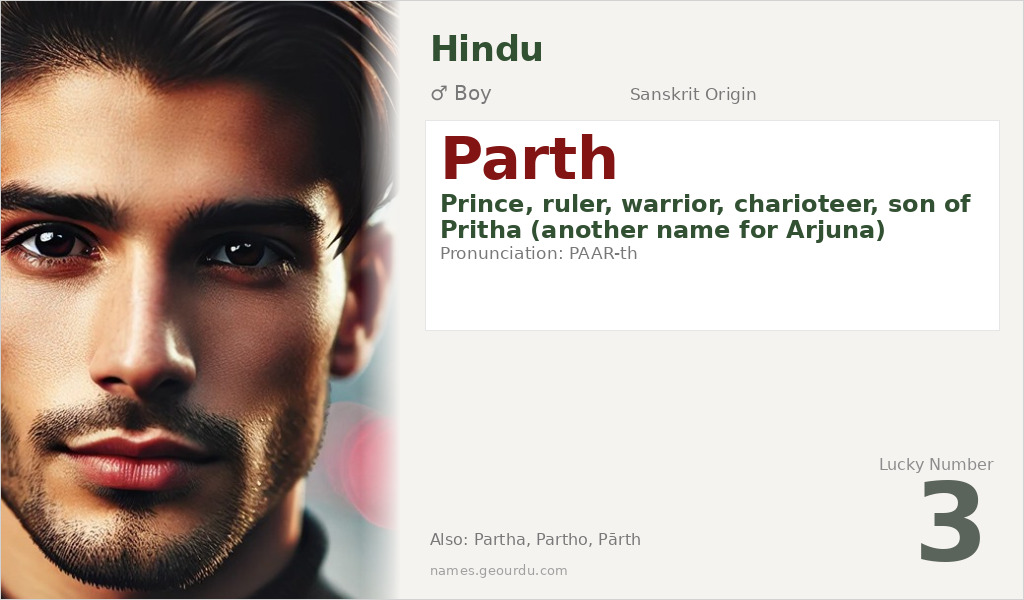
| 📛 Name | Parth |
| 💎 Meaning | Prince, ruler, warrior, charioteer, son of Pritha (another name for Arjuna) |
| 👤 Gender | Boy |
| 🕌 Religion | Hindu |
| 🌍 Origin | Sanskrit |
| 🗣 Pronunciation | PAAR-th |
| ✍️ Urdu | پارتھ |
| ✍️ Arabic | بارث |
| 🔢 Numerology | 3 |
| ✨ Spellings | Partha, Partho, Pārth |
Origin & Cultural Significance
Parth has its origins in ancient India, deriving from Sanskrit literature and Hindu mythology. It gained prominence through the Mahabharata, where Arjuna is frequently addressed as Partha by Krishna and other characters, emphasizing his maternal lineage. The name is predominantly used in Hindu communities across India, Nepal, and the diaspora, reflecting a connection to epic narratives and values. It does not have verified roots in other languages like Arabic, Persian, or regional tribal languages, despite some modern adaptations. Historically, it has been a name of respect and honor, often chosen to inspire qualities of leadership and righteousness in the bearer.
Personality Traits
Inspired by the legendary Arjuna, those named Parth are often associated with traits such as bravery, focus, and ethical strength. They may be seen as determined individuals who value skill and excellence, much like Arjuna’s mastery in archery. This name suggests a personality that balances action with principle, appealing to parents seeking a name with heroic connotations and cultural depth.
Similar Names
If you like Parth, consider: Arjun, Yudhishthir, Bhima, Nakul, Sahadev
Famous People Named Parth
- Parthiv Patel — Indian cricketer who played as a wicket-keeper batsman
- Parth Samthaan — Indian television actor known for roles in Hindi TV series
Frequently Asked Questions About Parth
What does Parth mean?
Parth means 'prince', 'ruler', or 'son of Pritha' in Sanskrit, famously referring to Arjuna from the Mahabharata.
Is Parth a boy or girl name?
Parth is exclusively a boy name in Hindu tradition, derived from the male character Arjuna.
What is the origin of Parth?
Parth originates from Sanskrit in ancient India, specifically from Hindu mythology and the epic Mahabharata.





