Table of Contents
Parul is a beautiful feminine name with deep roots in South Asian culture and nature. Derived from Sanskrit, it refers to the fragrant Stereospermum suaveolens tree, known for its trumpet-shaped flowers. This name carries botanical significance and appears in regional literature across India and Bangladesh. Parents choosing Parul often appreciate its connection to nature, fragrance, and traditional heritage.
Meaning of Parul
Parul comes from the Sanskrit word पारुल (pārula), which specifically denotes the Stereospermum suaveolens tree, commonly called the fragrant padri tree or trumpet flower tree. This deciduous tree is native to the Indian subcontinent and Southeast Asia, valued for its aromatic flowers and medicinal properties. In Bengali literature and culture, পারুল (parul) appears in poems and songs celebrating nature. The name’s meaning is botanical and specific—not a general term for ‘flower’—and has been consistently documented in Sanskrit lexicons, Ayurvedic texts, and regional language dictionaries for centuries.
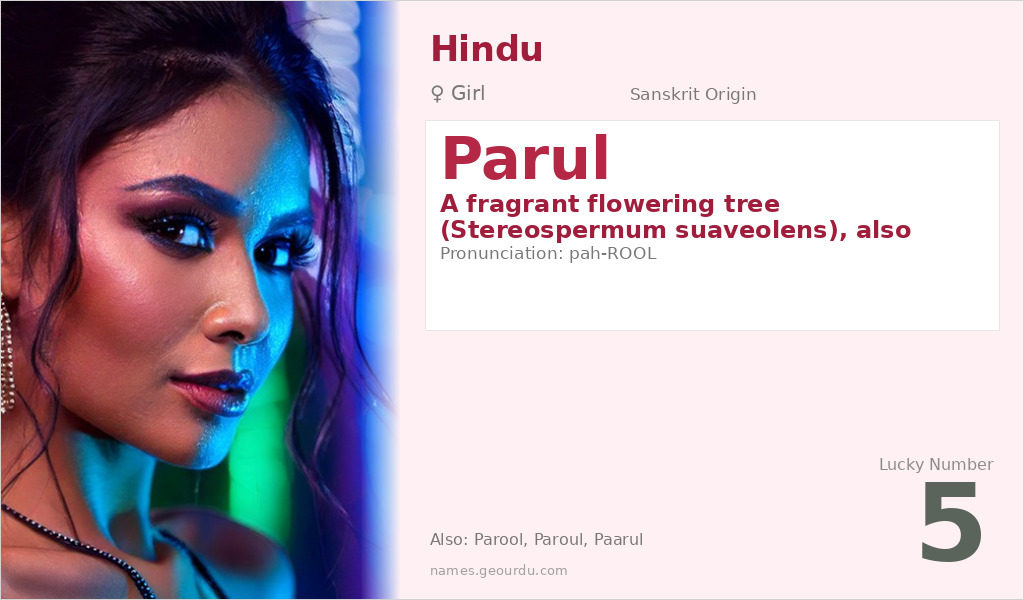
| 📛 Name | Parul |
| 💎 Meaning | A fragrant flowering tree (Stereospermum suaveolens), also known as the fragrant padri tree or trumpet flower tree |
| 👤 Gender | Girl |
| 🕌 Religion | Hindu |
| 🌍 Origin | Sanskrit |
| 🗣 Pronunciation | pah-ROOL |
| ✍️ Urdu | پارول |
| ✍️ Arabic | بارول |
| 🔢 Numerology | 5 |
| ✨ Spellings | Parool, Paroul, Paarul |
Origin & Cultural Significance
Parul originates from classical Sanskrit, with usage documented in ancient Indian texts describing flora. It entered regional languages like Bengali, Assamese, and Odia as a name for both the tree and as a feminine given name. The name is particularly popular in West Bengal, Bangladesh, and among Hindu communities across India. Cultural references include the tree being mentioned in Bengali poet Rabindranath Tagore’s works and traditional folk songs. While primarily Hindu in association, the name is sometimes used by people of other faiths in South Asia who appreciate its botanical beauty.
Personality Traits
Those named Parul are often associated with qualities of grace, creativity, and a deep connection to nature. Like the fragrant tree it represents, they may bring beauty and calmness to their environments. They tend to be artistic, intuitive, and valued for their gentle yet resilient character. The name suggests someone who appreciates aesthetics and has a nurturing presence.
Similar Names
If you like Parul, consider: Parijat, Palash, Champa, Madhavi, Kusum
Famous People Named Parul
- Parul Gulati — Indian actress known for TV series 'Sadda Haq'
- Parul Chauhan — Indian television actress famous for 'Bidaai'
Frequently Asked Questions About Parul
What does Parul mean?
Parul means 'fragrant flowering tree,' specifically the Stereospermum suaveolens tree known for its trumpet-shaped aromatic flowers. This meaning comes from Sanskrit.
Is Parul a boy or girl name?
Parul is exclusively a feminine name in all cultural contexts where it's used, particularly in Hindu and Bengali traditions.
What is the origin of Parul?
Parul originates from Sanskrit and is used in Hindu culture, with strong associations in Bengali literature and South Asian botanical traditions.