
Table of Contents
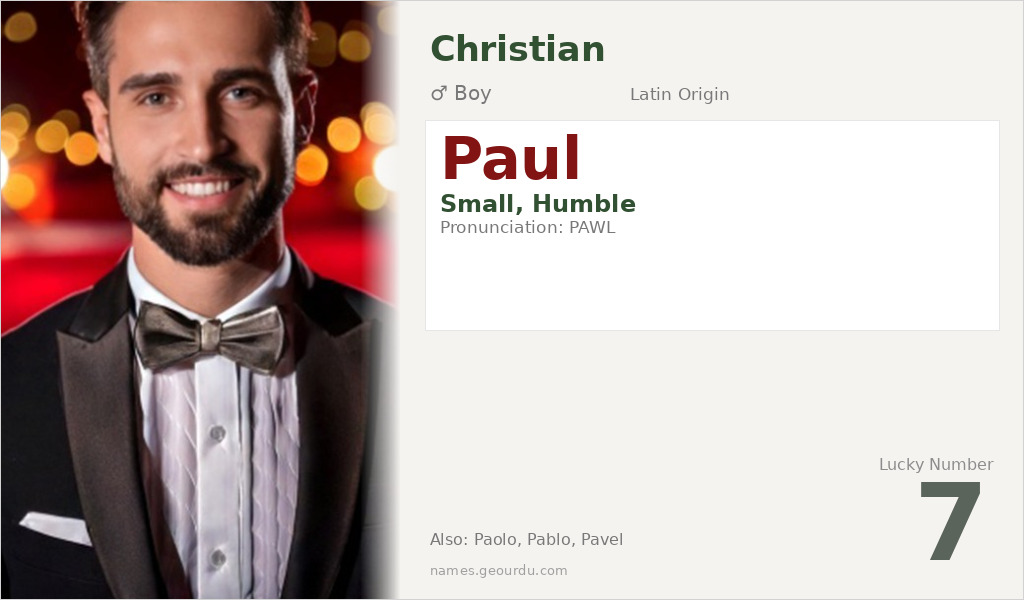
Paul is a timeless and widely recognized name with deep roots in Christian tradition. Derived from Latin, it carries the meaningful connotations of ‘small’ and ‘humble,’ reflecting virtues valued across cultures. This name has been borne by saints, leaders, and artists, making it a enduring choice for boys. Explore the rich history and global variations of Paul in this detailed guide.
Meaning of Paul
The name Paul originates from the Latin ‘Paulus,’ which translates to ‘small’ or ‘humble.’ This etymology reflects the modest and unassuming qualities often associated with the name. Historically, it gained prominence through Saint Paul the Apostle, who adopted it as his Roman name, symbolizing a transformation and humility in his missionary work. In linguistic context, Paulus was a common Roman cognomen before becoming a given name, and it has been adapted into various languages, such as Italian ‘Paolo,’ Spanish ‘Pablo,’ and Russian ‘Pavel,’ all retaining the core meaning. The name’s simplicity and profound meaning have contributed to its enduring popularity in Christian and Western cultures.
| 📛 Name | Paul |
| 💎 Meaning | Small, Humble |
| 👤 Gender | Boy |
| 🕌 Religion | Christian |
| 🌍 Origin | Latin |
| 🗣 Pronunciation | PAWL |
| ✍️ Urdu | پال |
| ✍️ Arabic | بول |
| 🔢 Numerology | 7 |
| ✨ Spellings | Paolo, Pablo, Pavel, Paulus, Pol |
Origin & Cultural Significance
Paul has its origins in ancient Rome, where ‘Paulus’ was used as a family name meaning ‘small’ or ‘humble.’ It entered widespread use as a first name in Christian communities after Saint Paul the Apostle, a key figure in early Christianity who spread the faith across the Roman Empire. Culturally, the name spread throughout Europe and beyond via missionary activities and religious texts, becoming common in English, French, German, and other languages. Today, it remains a staple in Christian naming traditions, symbolizing humility and faith, and is celebrated in various forms across global cultures.
Personality Traits
People named Paul are often seen as dependable, introspective, and kind-hearted, with a natural inclination toward service and community. Their humble demeanor, as suggested by the name’s meaning, often masks a strong inner resolve and wisdom. In social settings, they tend to be calm and approachable, earning trust and respect from peers through their consistent and ethical actions.
Similar Names
If you like Paul, consider: Peter, John, Matthew, Mark, Luke
Famous People Named Paul
- Saint Paul the Apostle — Early Christian missionary and author of New Testament epistles
- Paul McCartney — English musician, member of The Beatles
Frequently Asked Questions About Paul
What does Paul mean?
Paul means 'Small' or 'Humble,' originating from the Latin name Paulus.
Is Paul a boy or girl name?
Paul is traditionally a boy name, though rare feminine variants like Paula exist; it is predominantly male in Christian and Western cultures.
What is the origin of Paul?
Paul originates from Latin, specifically the Roman name Paulus, and gained prominence through Saint Paul the Apostle in Christian tradition.





