
Table of Contents
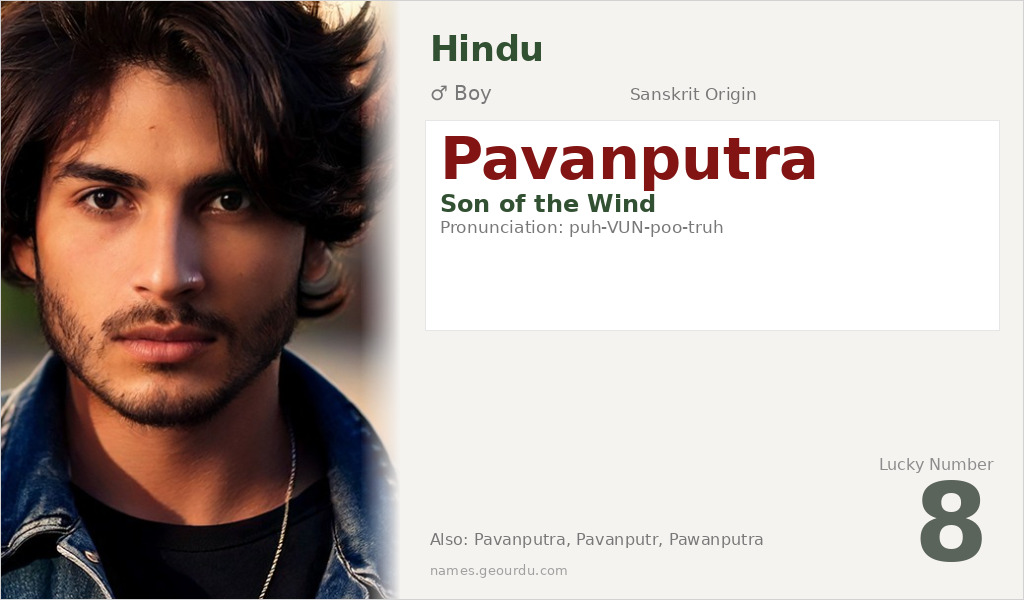
Pavanputra is a powerful Sanskrit name with deep roots in Hindu mythology. Meaning ‘son of the wind,’ this name carries the legacy of one of Hinduism’s most beloved deities. Traditionally given to boys, Pavanputra connects the bearer to divine strength and devotion. Discover the rich cultural heritage and spiritual significance behind this meaningful name.
Meaning of Pavanputra
Pavanputra derives from classical Sanskrit, combining ‘Pavan’ (wind/air) and ‘Putra’ (son) to create the literal meaning ‘son of wind.’ In Hindu tradition, this is not merely a descriptive term but a specific mythological reference to Hanuman, the monkey god who serves Lord Rama in the epic Ramayana. According to legend, Hanuman was born to Anjana through the blessings of Vayu, the wind god, making him Vayuputra or Pavanputra. The name appears in ancient texts like the Valmiki Ramayana and various Puranas, where it’s used as an honorific title for Hanuman. This compound name exemplifies how Sanskrit names often combine elements to create meaningful, spiritually significant appellations.
| 📛 Name | Pavanputra |
| 💎 Meaning | Son of the Wind |
| 👤 Gender | Boy |
| 🕌 Religion | Hindu |
| 🌍 Origin | Sanskrit |
| 🗣 Pronunciation | puh-VUN-poo-truh |
| ✍️ Urdu | پون پتر |
| ✍️ Arabic | بافانبوترا |
| 🔢 Numerology | 8 |
| ✨ Spellings | Pavanputra, Pavanputr, Pawanputra |
Origin & Cultural Significance
Pavanputra originates from Sanskrit, the classical language of ancient India and Hindu scriptures. The name first appears in Hindu epics dating back over two millennia, specifically in reference to Hanuman’s divine parentage. Culturally, it represents the Hindu tradition of naming children after deities or their attributes, particularly qualities parents wish to instill. While primarily used in Hindu communities across India and the diaspora, the name maintains strong religious connotations rather than being commonly adopted outside Hindu contexts. The mythological association with Hanuman makes it particularly popular among devotees of this deity, who is revered for his strength, loyalty, and devotion.
Personality Traits
Namesakes of Pavanputra are often associated with the heroic qualities of Hanuman—immense strength, unwavering loyalty, and spiritual devotion. The wind element suggests characteristics of movement, adaptability, and the ability to navigate challenges with grace. Such individuals may demonstrate resilience in difficult situations and a protective nature toward those they care about, mirroring Hanuman’s role as a protector and devoted servant in Hindu mythology.
Similar Names
If you like Pavanputra, consider: Hanuman, Maruti, Anjaneya, Vayuputra, Pavananand
Famous People Named Pavanputra
- Hanuman — Hindu deity, central character in the Ramayana, known as Pavanputra (son of wind god Vayu)
- Pavanputra Hanuman — Common epithet for Hanuman in Hindu religious texts and devotional literature
Frequently Asked Questions About Pavanputra
What does Pavanputra mean?
Pavanputra means 'Son of the Wind' in Sanskrit. It's a compound name from 'Pavan' (wind) and 'Putra' (son), specifically referring to the Hindu deity Hanuman who is considered the son of the wind god Vayu.
Is Pavanputra a boy or girl name?
Pavanputra is exclusively a boy's name in Hindu tradition. It carries masculine energy and mythological associations with the male deity Hanuman, making it unsuitable for girls in its cultural context.
What is the origin of Pavanputra?
Pavanputra originates from Sanskrit, the classical language of ancient India. It comes from Hindu mythology where it serves as an epithet for Hanuman, appearing in sacred texts like the Ramayana and Mahabharata dating back thousands of years.





