Table of Contents
Pitapushpa is a beautiful Sanskrit name that carries the poetic imagery of nature’s golden blossoms. Primarily used in Hindu communities, this name combines two classical Sanskrit words to create a meaning that evokes brightness, beauty, and natural elegance. With its roots in ancient Indian language and culture, Pitapushpa represents a connection to traditional naming practices while maintaining contemporary appeal. Discover the rich linguistic heritage and symbolic significance behind this radiant name.
Meaning of Pitapushpa
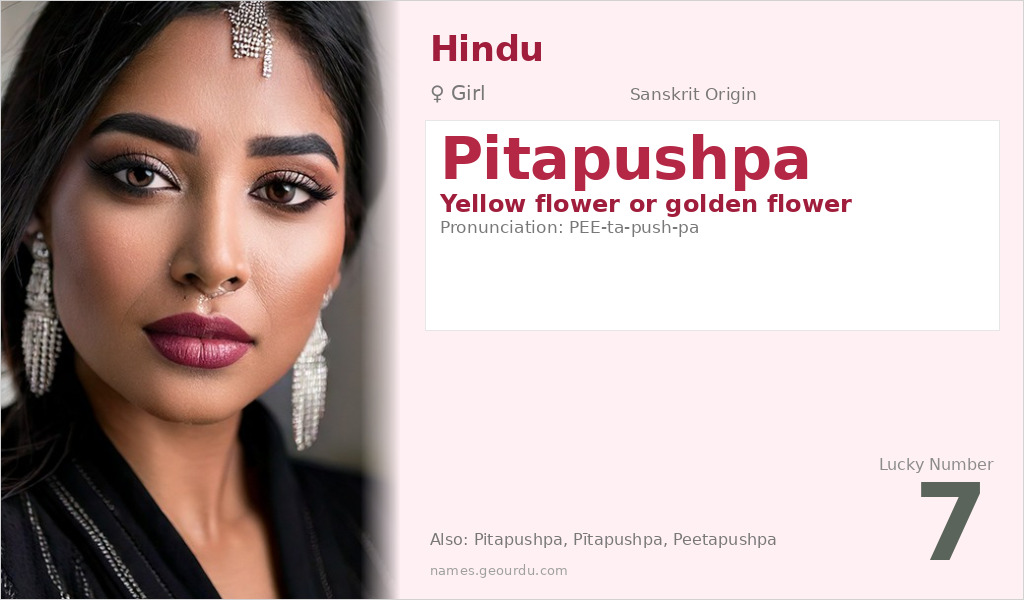
Pitapushpa derives from the Sanskrit language, specifically from the words ‘pīta’ (पीत) meaning ‘yellow’ or ‘golden’ and ‘pushpa’ (पुष्प) meaning ‘flower’. This compound formation follows classical Sanskrit naming conventions where descriptive elements combine to create meaningful names. The ‘pīta’ component specifically refers to shades of yellow, often associated with precious substances like gold, turmeric, or saffron in Indian tradition. ‘Pushpa’ is one of the most common Sanskrit terms for flower, appearing in countless literary and religious texts. Together, they create the literal meaning ‘yellow flower’ or ‘golden flower’, suggesting qualities of brightness, beauty, and natural elegance. Such floral names have been popular in Indian naming traditions for centuries, reflecting the cultural importance of nature and botanical symbolism.
| 📛 Name | Pitapushpa |
| 💎 Meaning | Yellow flower or golden flower |
| 👤 Gender | Girl |
| 🕌 Religion | Hindu |
| 🌍 Origin | Sanskrit |
| 🗣 Pronunciation | PEE-ta-push-pa |
| ✍️ Urdu | پیٹاپشپ |
| ✍️ Arabic | بيتابوشبا |
| 🔢 Numerology | 7 |
| ✨ Spellings | Pitapushpa, Pītapushpa, Peetapushpa |
Origin & Cultural Significance
Pitapushpa originates from Sanskrit, the classical language of ancient India that forms the foundation of many modern Indian languages. As a compound Sanskrit name, it follows traditional naming patterns found in Hindu culture, where meaningful elements from nature are combined to create names with poetic significance. The name reflects the deep connection between language, nature, and spirituality in Indian traditions, where flowers often symbolize purity, beauty, and divine blessings. While not among the most common contemporary names, Pitapushpa represents the enduring influence of Sanskrit in Hindu naming practices, particularly for girls. Its usage spans various regions of India where Sanskrit-derived names remain popular, though it may be more frequently found in literary or traditional contexts than in everyday modern usage.
Personality Traits
Those named Pitapushpa are often perceived as having personalities that mirror their name’s meaning—bright, beautiful, and naturally graceful. They tend to approach life with optimism and creativity, bringing warmth and light to their environments much like a golden flower brightens a garden. Their sensitive nature makes them attuned to beauty in all forms, whether in art, nature, or human relationships. This combination of radiance and sensitivity often makes them cherished friends and family members who nurture growth and beauty in others.
Similar Names
If you like Pitapushpa, consider: Pushpa, Kusum, Sumana, Malati, Kamala
Famous People Named Pitapushpa
- No widely known contemporary public figures with this name found in records
- The name appears in classical Sanskrit literature and Hindu mythological references as a descriptive term for flowers
Frequently Asked Questions About Pitapushpa
What does Pitapushpa mean?
Pitapushpa means 'yellow flower' or 'golden flower' in Sanskrit. It is derived from 'pīta' (yellow/golden) and 'pushpa' (flower).
Is Pitapushpa a boy or girl name?
Pitapushpa is primarily used as a girl's name in Hindu naming traditions. The floral meaning and ending make it feminine in Sanskrit grammar and cultural context.
What is the origin of Pitapushpa?
Pitapushpa originates from Sanskrit, the classical language of ancient India. It is a compound name following traditional Hindu naming patterns that combine meaningful natural elements.