
Table of Contents
Plaksha is a beautiful Sanskrit name with profound spiritual significance in Hindu tradition. Derived from ancient Vedic texts, this name refers to the sacred fig tree (Ficus religiosa), known for its association with wisdom and enlightenment. Unlike many modern names, Plaksha carries centuries of cultural heritage and botanical symbolism. Whether you’re drawn to its natural origins or spiritual connotations, Plaksha offers a unique connection to India’s rich philosophical traditions.
Meaning of Plaksha
Plaksha originates from the Sanskrit word ‘plakṣa’ (प्लक्ष), which specifically denotes the sacred fig tree, scientifically known as Ficus religiosa. This tree holds immense importance in Hinduism, Buddhism, and Jainism as the Bodhi tree under which Siddhartha Gautama attained enlightenment. In Hindu scriptures, the Plaksha tree is mentioned in the Rigveda (10.135.1) and various Puranas as a symbol of wisdom, longevity, and divine knowledge. The name’s etymology is well-documented in Sanskrit lexicons like Amarakosha and Monier-Williams’ Sanskrit-English Dictionary, where it’s clearly defined as the sacred fig tree. This botanical reference connects the name to nature while carrying deep spiritual symbolism.
| 📛 Name | Plaksha |
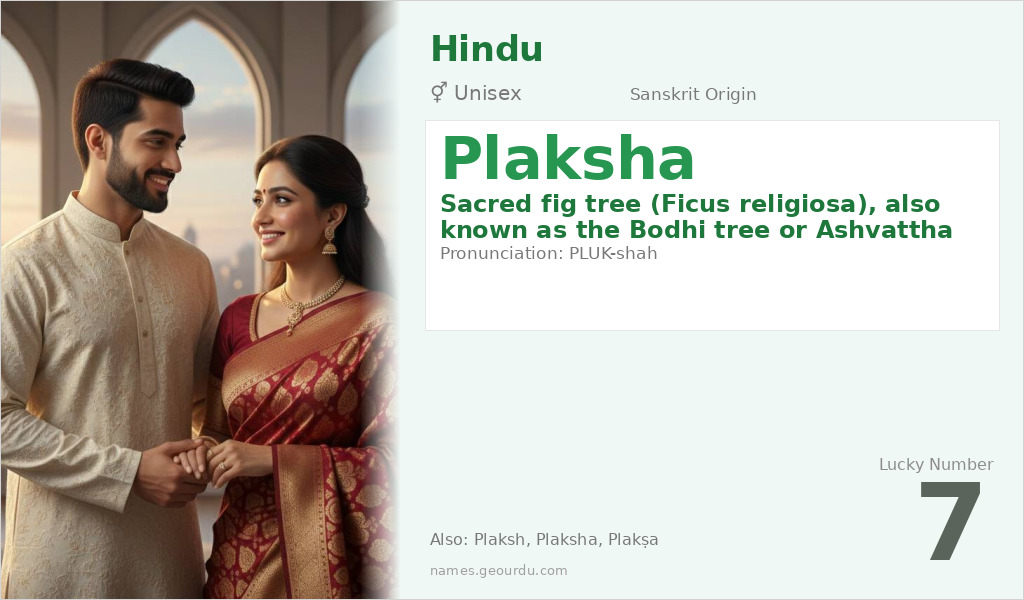
| 💎 Meaning | Sacred fig tree (Ficus religiosa), also known as the Bodhi tree or Ashvattha tree |
| 👤 Gender | Unisex |
| 🕌 Religion | Hindu |
| 🌍 Origin | Sanskrit |
| 🗣 Pronunciation | PLUK-shah |
| ✍️ Urdu | پلکشا |
| ✍️ Arabic | بلاكشا |
| 🔢 Numerology | 7 |
| ✨ Spellings | Plaksh, Plaksha, Plakṣa |
Origin & Cultural Significance
Plaksha has its roots in ancient Indian culture and Sanskrit literature, dating back to Vedic times around 1500-500 BCE. The name appears in foundational Hindu texts including the Mahabharata, where it’s mentioned as a sacred tree and geographical location. In Hindu mythology, the Plaksha tree is associated with the sage Markandeya, who attained enlightenment under its shade. The tree is considered one of the Panchavriksha (five sacred trees) in some traditions. While primarily used in Hindu communities, the name’s botanical nature makes it accessible across cultures, though its deepest cultural resonance remains within Indian spiritual contexts where trees are revered as living embodiments of divine presence.
Personality Traits
Those named Plaksha are often perceived as wise, grounded individuals with a natural inclination toward spiritual growth. Like the tree it represents, they may provide stability and shelter to others in their community. The name suggests qualities of patience, longevity, and deep-rooted values that withstand life’s challenges. People with this name might naturally gravitate toward teaching, counseling, or environmental pursuits, reflecting the tree’s dual symbolism of knowledge and nature.
Similar Names
If you like Plaksha, consider: Ashvattha, Bodhi, Vriksha, Tarun, Vanamali
Famous People Named Plaksha
- Plaksha University — A technical university in India named after the sacred tree, emphasizing its association with knowledge and wisdom
- Plaksha is referenced in Hindu scriptures as a sacred location — The Plaksha tree is mentioned in the Mahabharata and Puranas as a significant spiritual site
Frequently Asked Questions About Plaksha
What does Plaksha mean?
Plaksha means 'sacred fig tree' (Ficus religiosa) in Sanskrit. It refers specifically to the Bodhi tree or Ashvattha tree, which holds great spiritual significance in Hinduism, Buddhism, and Jainism.
Is Plaksha a boy or girl name?
Plaksha is a unisex name in Hindu tradition. While it can be used for any gender, its botanical nature makes it particularly versatile, similar to other nature-based names in Indian cultures.
What is the origin of Plaksha?
Plaksha originates from Sanskrit, an ancient Indo-Aryan language of India. It appears in Vedic texts dating back thousands of years and is deeply rooted in Hindu spiritual and botanical traditions.