
Table of Contents
Pratapavat is a distinguished Sanskrit name that carries the weight of royalty and nobility. Meaning ‘possessing glory’ or ‘endowed with splendor’, this name has been used for centuries in Hindu culture to denote individuals of majestic character. With its roots in classical Sanskrit literature, Pratapavat evokes images of kings, heroes, and divine beings who command respect through their inherent dignity. Today, it remains a powerful choice for parents seeking a name with deep cultural resonance and noble connotations.
Meaning of Pratapavat
Pratapavat is a compound Sanskrit name with precise linguistic components. The first element ‘pratāpa’ (प्रताप) derives from the Sanskrit root ‘tap’ meaning ‘to heat, to shine, to blaze’, and by extension refers to glory, splendor, majesty, or radiant power. This word appears frequently in Hindu scriptures like the Mahabharata and Ramayana to describe royal dignity. The suffix ‘-vat’ (वत्) is a possessive adjectival ending meaning ‘having, possessing, endowed with’. When combined, Pratapavat literally means ‘one who possesses glory’ or ‘endowed with splendor’. Unlike simpler names, this compound construction emphasizes the permanent possession of majestic qualities rather than temporary achievements. The name belongs to a category of Sanskrit names that describe inherent attributes rather than actions or relationships.
| 📛 Name | Pratapavat |
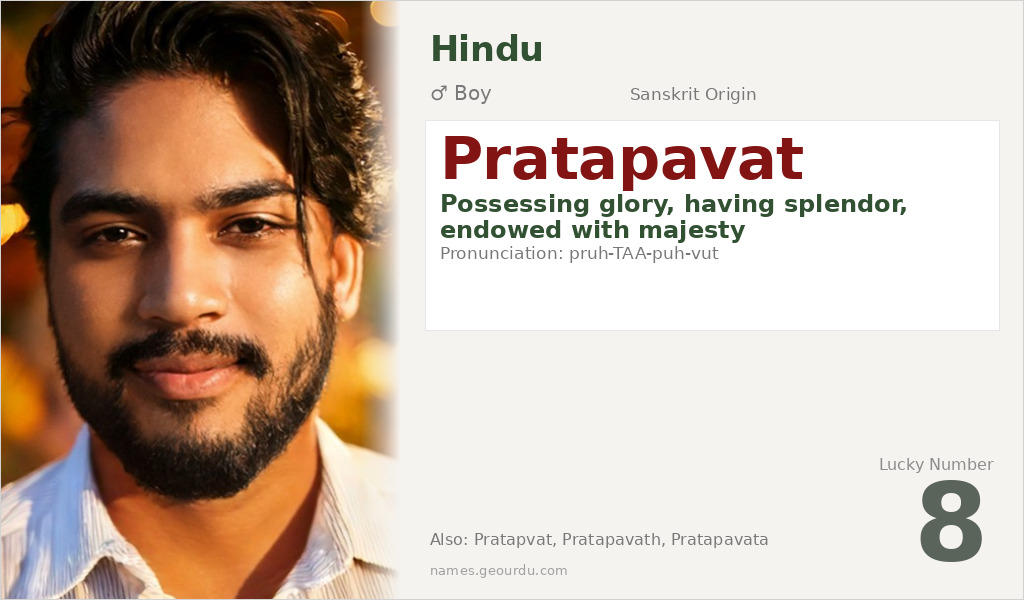
| 💎 Meaning | Possessing glory, having splendor, endowed with majesty |
| 👤 Gender | Boy |
| 🕌 Religion | Hindu |
| 🌍 Origin | Sanskrit |
| 🗣 Pronunciation | pruh-TAA-puh-vut |
| ✍️ Urdu | پرتابوت |
| ✍️ Arabic | براتابافات |
| 🔢 Numerology | 8 |
| ✨ Spellings | Pratapvat, Pratapavath, Pratapavata |
Origin & Cultural Significance
Pratapavat originates from classical Sanskrit, the liturgical language of Hinduism, Buddhism, and Jainism. Sanskrit names like Pratapavat were particularly popular during ancient and medieval periods in the Indian subcontinent, often given to children in royal families or priestly classes. The name reflects the Sanskrit tradition of creating compound words (samāsa) to express complex qualities. While primarily associated with Hindu culture, the name’s linguistic roots are purely Sanskrit rather than tied to any specific regional language. Historical records show similar compound names ending in ‘-vat’ were common in Sanskrit literature from approximately 500 BCE to 1000 CE. The name continues to be used in modern India, particularly among families with traditional naming practices or interest in Sanskrit heritage.
Personality Traits
The name Pratapavat suggests a personality marked by natural dignity and commanding presence. Those bearing this name are often perceived as having innate authority that doesn’t require external validation. They tend to approach life with a sense of purpose and gravitas, inspiring confidence in others through their composed demeanor. The ‘glory’ implied in the name isn’t about loud achievements but rather a quiet, inherent splendor that manifests in character and bearing.
Similar Names
If you like Pratapavat, consider: Pratap, Tejasvat, Yashasvat, Kirtivat, Bhavyat
Famous People Named Pratapavat
- No widely known contemporary figures with this exact name found in verified sources
- The name appears in classical Sanskrit literature and Hindu mythological contexts describing majestic figures
Frequently Asked Questions About Pratapavat
What does Pratapavat mean?
Pratapavat means 'possessing glory', 'having splendor', or 'endowed with majesty' in Sanskrit. It's a compound name combining 'pratāpa' (glory) and the possessive suffix '-vat' (having).
Is Pratapavat a boy or girl name?
Pratapavat is exclusively a boy's name in Hindu naming tradition. Sanskrit compound names ending in '-vat' are typically masculine, following the grammatical gender rules of classical Sanskrit.
What is the origin of Pratapavat?
Pratapavat originates from classical Sanskrit, the ancient liturgical language of India. It's a compound name created using Sanskrit grammatical rules and has been used in Hindu culture for centuries, particularly in contexts emphasizing royal or noble qualities.





