Table of Contents
Princess is a name that evokes images of royalty, elegance, and grace. While traditionally a title for female members of royal families, it has become a popular given name in many cultures, particularly in English-speaking countries. This name carries with it centuries of historical significance and continues to be chosen by parents who wish to bestow a sense of nobility upon their daughters. From ancient Latin roots to modern celebrity bearers, Princess remains a timeless choice with universal appeal.
Meaning of Princess
The name Princess derives from the Latin word ‘princeps’, meaning ‘first, chief, or sovereign’. This evolved through Old French as ‘princesse’ before entering Middle English. Linguistically, it combines ‘prince’ (from Latin ‘princeps’) with the feminine suffix ‘-ess’, creating a term specifically for female royalty. Unlike many names that have evolved meanings over time, Princess maintains its direct connection to royal status and hierarchy. The name functions both as an official title in monarchies and as a given name in contemporary usage, retaining its core meaning of ‘female royal’ across cultures and languages.
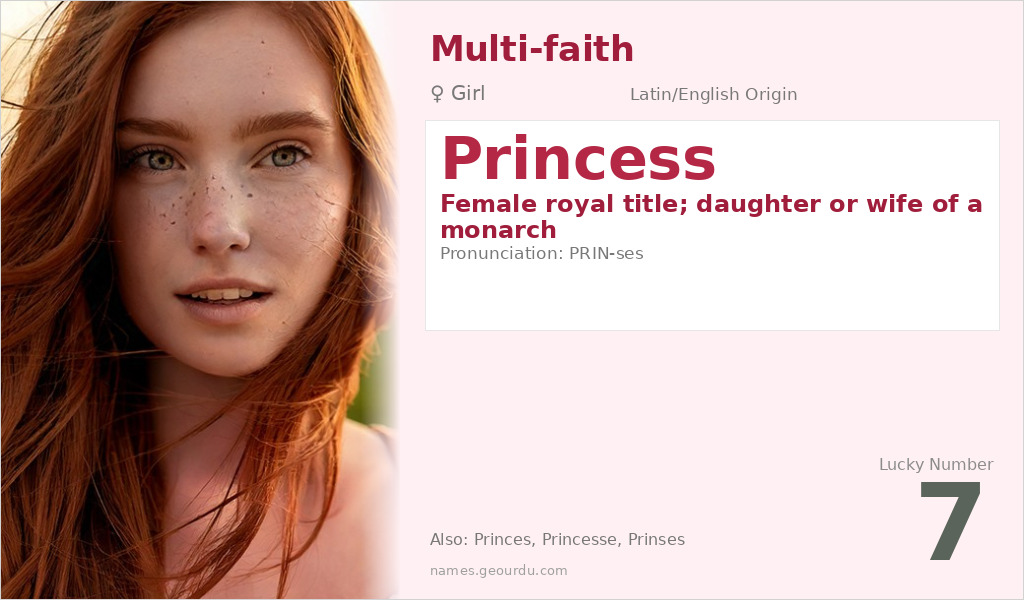
| 📛 Name | Princess |
| 💎 Meaning | Female royal title; daughter or wife of a monarch |
| 👤 Gender | Girl |
| 🕌 Religion | Multi-faith |
| 🌍 Origin | Latin/English |
| 🗣 Pronunciation | PRIN-ses |
| ✍️ Urdu | شہزادی |
| ✍️ Arabic | أميرة |
| 🔢 Numerology | 7 |
| ✨ Spellings | Princes, Princesse, Prinses |
Origin & Cultural Significance
Princess has its origins in ancient Rome through the Latin ‘princeps’, which referred to the first citizen or leader. The term traveled through French nobility traditions before becoming established in English during the Middle Ages. While the name is now used globally, it remains most popular in English-speaking countries and former British colonies. Culturally, the name gained significant popularity in the 20th century, particularly after the rise of celebrity culture and royal weddings that captured public imagination. Today, it represents both traditional royalty and modern aspirations for special status.
Personality Traits
Those named Princess often develop personality traits associated with leadership, grace, and confidence. The name can influence both self-perception and how others interact with the bearer, often creating expectations of poise and dignity. While some might assume the name suggests privilege or entitlement, many who bear it develop strong character and a sense of responsibility that matches the name’s regal connotations. The name encourages qualities of kindness, diplomacy, and natural authority.
Similar Names
If you like Princess, consider: Regina, Royale, Queen, Duchess, Lady
Famous People Named Princess
- Princess Diana — Former Princess of Wales and humanitarian icon
- Princess Grace of Monaco — American actress who became Princess of Monaco
- Princess Beatrice — Member of British royal family
- Princess Nokia — American rapper and singer
- Princess — American singer known for 1980s hit 'Say I'm Your Number One'
Frequently Asked Questions About Princess
What does Princess mean?
Princess means 'female royal' or 'daughter/wife of a monarch', originating from the Latin word 'princeps' meaning 'first, chief, sovereign'.
Is Princess a boy or girl name?
Princess is exclusively a girl's name, as it specifically denotes female royalty with the feminine '-ess' suffix added to 'prince'.
What is the origin of Princess?
Princess originates from Latin 'princeps', evolving through Old French 'princesse' before entering English as a royal title that later became used as a given name.