
Table of Contents
Pundalik is a spiritually significant Hindu boy name with roots in ancient Sanskrit language and mythology. Derived from ‘pundarika’ meaning ‘white lotus,’ this name carries profound symbolic weight in Hindu philosophy and devotion. Most famously associated with a 13th-century saint who established the worship of Lord Vithoba in Pandharpur, Pundalik represents purity, devotion, and spiritual awakening. The name continues to be cherished in Maharashtra and among Hindu communities worldwide.
Meaning of Pundalik
Pundalik originates from the Sanskrit word ‘pundarika’ (पुण्डरीक), which specifically denotes the white lotus or sacred lotus (Nelumbo nucifera). In Sanskrit etymology, the term breaks down to ‘pundra’ (meaning white) and the suffix ‘ika’ (indicating possession), literally translating to ‘possessing whiteness’ or ‘white-colored.’ Unlike generic lotus terms like ‘padma’ or ‘kamal,’ pundarika specifically references the pure white variety of lotus that holds particular sacred significance in Hindu rituals and iconography. This precise botanical reference distinguishes Pundalik from other lotus-related names and connects it to specific spiritual symbolism in Hindu texts. The white lotus represents spiritual purity, enlightenment, and divine beauty that emerges unstained from muddy waters.
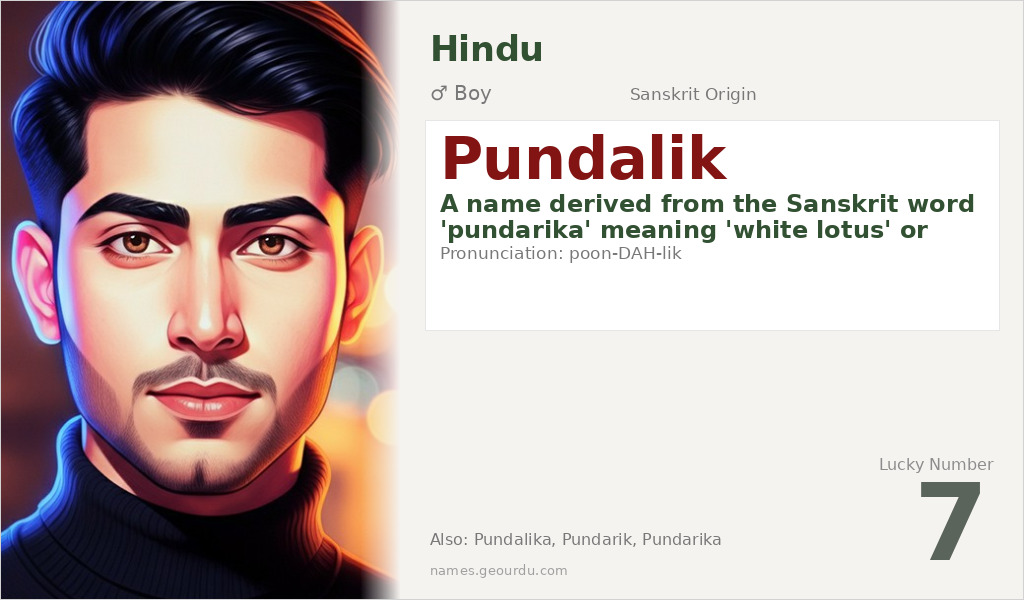
| 📛 Name | Pundalik |
| 💎 Meaning | A name derived from the Sanskrit word 'pundarika' meaning 'white lotus' or 'sacred lotus' (Nelumbo nucifera) |
| 👤 Gender | Boy |
| 🕌 Religion | Hindu |
| 🌍 Origin | Sanskrit |
| 🗣 Pronunciation | poon-DAH-lik |
| ✍️ Urdu | پنڈلک |
| ✍️ Arabic | بوندليك |
| 🔢 Numerology | 7 |
| ✨ Spellings | Pundalika, Pundarik, Pundarika, Pundaleek |
Origin & Cultural Significance
Pundalik has its origins in Sanskrit, the classical language of Hindu scriptures, but gained particular cultural prominence through the Bhakti movement in Maharashtra, Western India. The name is historically associated with Pundalik, a 13th-century saint who is credited with establishing the worship of Lord Vithoba (a form of Vishnu/Krishna) at Pandharpur. According to tradition, Pundalik’s devotion was so profound that Lord Vithoba came to his home and waited on a brick while Pundalik attended to his parents, establishing the principle of parent worship alongside divine devotion. This story forms the foundation of the annual Pandharpur Wari pilgrimage, one of Maharashtra’s largest religious processions. The name thus carries both linguistic roots in Sanskrit and cultural significance in Marathi Hindu tradition.
Personality Traits
Those named Pundalik are often perceived as having spiritual depth and pure intentions, reflecting the white lotus symbolism of their name. They may exhibit qualities of devotion, resilience, and the ability to maintain inner peace amid external challenges. The association with the historical saint Pundalik suggests potential inclinations toward service, family duty, and religious commitment. Like the lotus that rises clean from muddy waters, individuals with this name might demonstrate an ability to transcend difficult circumstances with grace and integrity.
Similar Names
If you like Pundalik, consider: Padma, Kamal, Neelkamal, Pankaj, Aravind
Famous People Named Pundalik
- Pundalik — 13th-century Hindu saint and devotee of Vithoba, central figure in the Pandharpur Wari pilgrimage tradition in Maharashtra
- Pundalik Naik — Contemporary Goan writer and novelist in Konkani language
Frequently Asked Questions About Pundalik
What does Pundalik mean?
Pundalik means 'white lotus' or 'sacred lotus,' derived from the Sanskrit word 'pundarika' (पुण्डरीक). It specifically refers to the white variety of lotus (Nelumbo nucifera) that holds special spiritual significance in Hinduism.
Is Pundalik a boy or girl name?
Pundalik is exclusively a boy's name in Hindu naming tradition. It is masculine in both its historical usage (referring to the male saint Pundalik) and grammatical gender in Sanskrit-derived languages.
What is the origin of Pundalik?
Pundalik originates from Sanskrit language but gained cultural prominence through Marathi Hindu tradition in Maharashtra, India. It is most famously associated with a 13th-century saint who established the worship of Lord Vithoba in Pandharpur.





