
Table of Contents
Puskar is a name rich in cultural and spiritual heritage, primarily used in Hindu communities. Derived from Sanskrit, it evokes imagery of the sacred lotus flower, symbolizing purity, beauty, and divine connection. This name carries a timeless appeal, often chosen for its deep-rooted meaning and auspicious connotations. Explore the origins, significance, and personality traits associated with Puskar in this detailed guide.
Meaning of Puskar
Puskar, stemming from the Sanskrit word पुष्कर (puṣkara), holds a profound meaning centered on nature and spirituality. It primarily translates to ‘blue lotus,’ a flower revered in Hinduism and Buddhism for symbolizing purity, enlightenment, and rebirth, as it rises unblemished from muddy waters. Additionally, Puskar can mean ‘a lotus pond’ or ‘sacred lake,’ referencing holy sites like Pushkar Lake in India, a major pilgrimage destination. The etymology traces back to the Sanskrit root ‘puṣ,’ meaning ‘to nourish’ or ‘to flourish,’ highlighting themes of growth and vitality. This dual significance—both as a flower and a body of water—underscores the name’s connection to life, renewal, and spiritual depth in ancient Indian traditions.
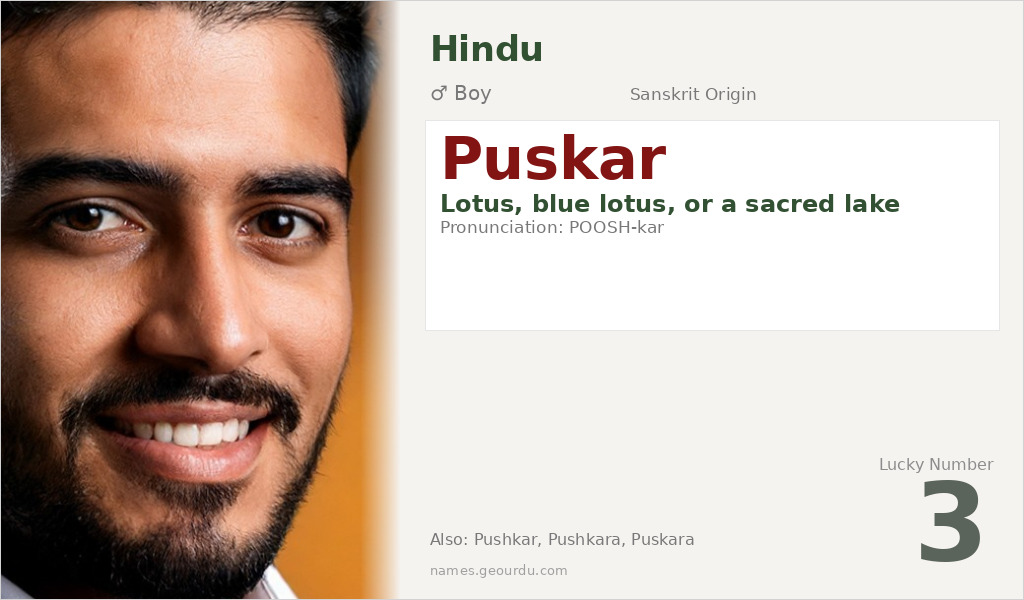
| 📛 Name | Puskar |
| 💎 Meaning | Lotus, blue lotus, or a sacred lake |
| 👤 Gender | Boy |
| 🕌 Religion | Hindu |
| 🌍 Origin | Sanskrit |
| 🗣 Pronunciation | POOSH-kar |
| ✍️ Urdu | پشکر |
| ✍️ Arabic | بوشكار |
| 🔢 Numerology | 3 |
| ✨ Spellings | Pushkar, Pushkara, Puskara |
Origin & Cultural Significance
Puskar originates from Sanskrit, an ancient Indo-Aryan language foundational to Hindu scriptures, philosophy, and culture. It has been used for centuries in India, particularly within Hindu communities, where names often draw from natural elements and religious symbolism. The name is closely associated with Pushkar, a city in Rajasthan famous for its sacred lake and annual camel fair, adding geographical and cultural weight. Over time, Puskar has maintained its traditional usage, though variations like Pushkar are common. It reflects the enduring influence of Sanskrit in South Asian naming practices, emphasizing values of spirituality, purity, and natural beauty.
Personality Traits
People named Puskar are often perceived as calm, intuitive, and artistically gifted, mirroring the lotus’s serene and resilient nature. They may exhibit a strong sense of spirituality or philosophical curiosity, seeking meaning in life’s experiences. With a friendly and approachable demeanor, they tend to build harmonious relationships, while their inner strength helps them navigate challenges with grace. This blend of creativity and stability makes Puskar a name associated with balanced and inspiring individuals.
Similar Names
If you like Puskar, consider: Padma, Kamal, Neeraj, Saroj, Pankaj
Famous People Named Puskar
- Pushkar (mythological figure) — In Hindu mythology, a son of Varuna and the namesake of Pushkar Lake
- Pushkar (film director) — Indian film director known for Tamil movies like 'Vikram Vedha'
Frequently Asked Questions About Puskar
What does Puskar mean?
Puskar means 'lotus,' specifically the blue lotus, or 'sacred lake' in Sanskrit, symbolizing purity and spiritual enlightenment in Hindu culture.
Is Puskar a boy or girl name?
Puskar is traditionally a boy's name in Hindu communities, though its unisex potential exists in modern contexts due to its nature-based meaning.
What is the origin of Puskar?
Puskar originates from Sanskrit, an ancient Indian language, and is deeply rooted in Hindu mythology and geography, such as the holy Pushkar Lake.





