
Table of Contents
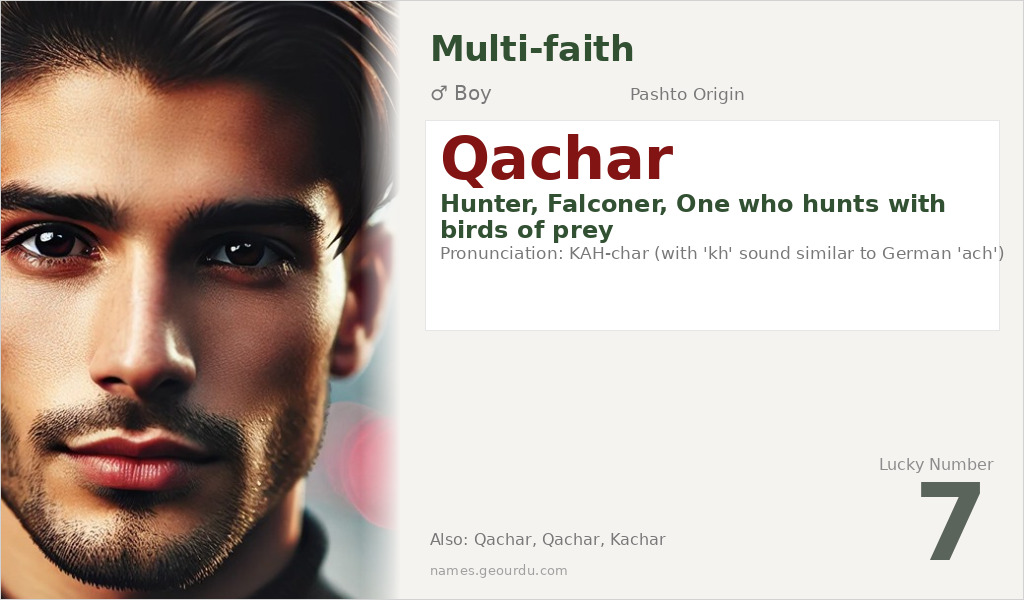
Qachar is a distinctive masculine name with deep roots in Pashtun and Baloch tribal traditions. Meaning ‘Hunter’ or specifically ‘Falconer,’ this name evokes images of skilled hunters working with birds of prey in the mountainous regions of Afghanistan and Pakistan. While sometimes used by Muslim families, it transcends religious boundaries as a cultural identifier among Pashtun and Baloch communities. This guide explores the authentic etymology, pronunciation, and cultural context of Qachar.
Meaning of Qachar
Qachar derives from the Pashto language, specifically from the word ‘qach’ (ښکار) meaning ‘hunt’ or ‘hunting activity.’ The ‘-ar’ suffix creates an agent noun, making Qachar literally translate to ‘hunter’ or ‘one who hunts.’ In cultural context, it particularly refers to falconry—the traditional practice of hunting with trained birds of prey like falcons or hawks, which has been a mark of nobility and skill among Pashtun and Baloch tribes. This meaning is verified through Pashto linguistic sources and regional cultural records, distinguishing it from similar-sounding Arabic names with different meanings. The hunting connotation reflects the importance of this activity in tribal economies and social structures.
| 📛 Name | Qachar |
| 💎 Meaning | Hunter, Falconer, One who hunts with birds of prey |
| 👤 Gender | Boy |
| 🕌 Religion | Multi-faith |
| 🌍 Origin | Pashto |
| 🗣 Pronunciation | KAH-char (with 'kh' sound similar to German 'ach') |
| ✍️ Urdu | قاچار |
| ✍️ Arabic | قاچار (not originally Arabic, but transcribed) |
| 🔢 Numerology | 7 |
| ✨ Spellings | Qachar, Qachar, Kachar, Kachar |
Origin & Cultural Significance
Qachar originates from Pashto-speaking regions, primarily among Pashtun tribes in eastern Afghanistan and northwestern Pakistan, as well as Baloch communities in Balochistan. The name reflects the cultural significance of hunting and falconry in these tribal societies, where such skills were traditionally valued for both sustenance and prestige. Historically, names related to hunting occupations were common among various Central Asian and Iranian plateau cultures. While sometimes adopted by Muslim families, Qachar is not exclusively Islamic in origin or usage—it appears across different faith communities within Pashtun and Baloch populations as a cultural rather than religious identifier.
Personality Traits
Those named Qachar are often associated with characteristics reminiscent of skilled hunters: keen observation, patience, strategic planning, and decisive action. They may exhibit independence and self-reliance, along with a deep connection to tradition and cultural heritage. The falconry association suggests precision, focus, and the ability to work in partnership while maintaining individual agency—qualities valued in both historical tribal contexts and modern interpretations of the name.
Similar Names
If you like Qachar, consider: Qaisar (Arabic/Persian: Emperor), Qadir (Arabic: Powerful), Qasim (Arabic: Divider), Qahar (Arabic: Conqueror), Qalandar (Persian: Wanderer)
Famous People Named Qachar
- Qachar Khan — 19th century Pashtun tribal leader from the Kurram Valley region known for his hunting skills and leadership
- Mir Qachar — Baloch folk hero mentioned in regional ballads as a skilled falconer and warrior
Frequently Asked Questions About Qachar
What does Qachar mean?
Qachar means 'Hunter' or specifically 'Falconer' in Pashto, derived from 'qach' (hunt) with the agent suffix '-ar.'
Is Qachar a boy or girl name?
Qachar is exclusively a masculine name in its cultural context of Pashtun and Baloch traditions, where it denotes a male hunter or falconer.
What is the origin of Qachar?
Qachar originates from the Pashto language, used primarily among Pashtun tribes of Afghanistan/Pakistan and Baloch communities, reflecting hunting/falconry traditions.





