
Table of Contents
Qalandar is a profound name with rich spiritual heritage, evoking images of wandering mystics and free-spirited dervishes. Rooted in Persian Sufi tradition, this name carries centuries of mystical significance across South Asia and the Islamic world. More than just a name, Qalandar represents a spiritual path—one of detachment, devotion, and unconventional wisdom. Discover the fascinating etymology and cultural resonance of this distinctive name.
Meaning of Qalandar
Qalandar derives from the Persian word ‘قَلَنْدَر’ (qalandar), which specifically denotes a wandering mystic, ascetic, or dervish in Sufi Islamic tradition. Unlike generic terms for freedom, Qalandar carries deep spiritual connotations—referring to those who renounce worldly attachments to pursue divine connection through travel and meditation. The term entered Urdu, Punjabi, Sindhi, and other languages via Persian literary and mystical texts, particularly through the poetry of Sufi saints. In linguistic context, it’s distinct from similar terms like ‘dervish’ or ‘fakir’ by emphasizing the wandering, unconventional aspect of spiritual practice. The Qalandariyya Sufi order, founded in the 13th century, institutionalized this spiritual approach across regions from Turkey to South Asia.
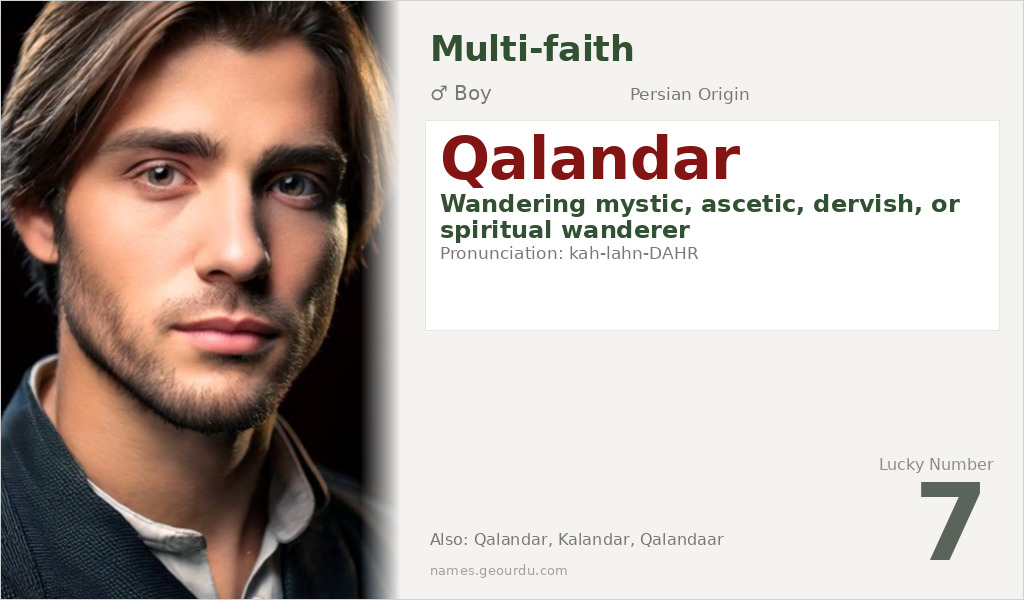
| 📛 Name | Qalandar |
| 💎 Meaning | Wandering mystic, ascetic, dervish, or spiritual wanderer |
| 👤 Gender | Boy |
| 🕌 Religion | Multi-faith |
| 🌍 Origin | Persian |
| 🗣 Pronunciation | kah-lahn-DAHR |
| ✍️ Urdu | قلندر |
| ✍️ Arabic | قلندر |
| 🔢 Numerology | 7 |
| ✨ Spellings | Qalandar, Kalandar, Qalandaar, Kalandaar |
Origin & Cultural Significance
The name Qalandar originates from Persian mystical vocabulary, entering South Asian cultures through Sufi traditions during the medieval period. It gained particular prominence in regions like Punjab, Sindh, and Balochistan where Sufi poetry and philosophy flourished. Historically, Qalandars were often itinerant ascetics who rejected formal religious institutions, instead seeking direct spiritual experience through travel, poetry, and music. This tradition produced celebrated figures like Baba Bulleh Shah in Punjab and Shah Abdul Latif Bhittai in Sindh, both revered as Qalandars. Today, the name remains popular in Muslim-majority regions of South Asia and among diaspora communities, carrying both cultural and spiritual significance beyond any single religion.
Personality Traits
Those named Qalandar often embody qualities of spiritual seeking and intellectual independence. They tend to be contemplative individuals who value inner truth over external validation, sometimes displaying unconventional perspectives. Like the wandering mystics they’re named after, they may possess a natural curiosity about life’s deeper meanings and a resistance to rigid structures. Their personality often blends philosophical depth with practical resilience, reflecting the Qalandar tradition of finding wisdom through experience.
Similar Names
If you like Qalandar, consider: Dervish, Fakir, Sufi, Mystic, Ascetic
Famous People Named Qalandar
- Baba Bulleh Shah — 17th-century Punjabi Sufi poet and philosopher often called a Qalandar
- Shah Abdul Latif Bhittai — 18th-century Sindhi Sufi scholar and poet referred to as Qalandar Latif
Frequently Asked Questions About Qalandar
What does Qalandar mean?
Qalandar means 'wandering mystic,' 'ascetic,' or 'dervish' in Persian, specifically referring to spiritual wanderers in Sufi Islamic tradition.
Is Qalandar a boy or girl name?
Qalandar is traditionally a masculine name, though its spiritual connotations make it theoretically unisex in modern contexts. Historically, it has been used almost exclusively for boys.
What is the origin of Qalandar?
Qalandar originates from Persian (قَلَنْدَر) and entered South Asian languages through Sufi mystical traditions, particularly associated with the Qalandariyya Sufi order.





