
Table of Contents
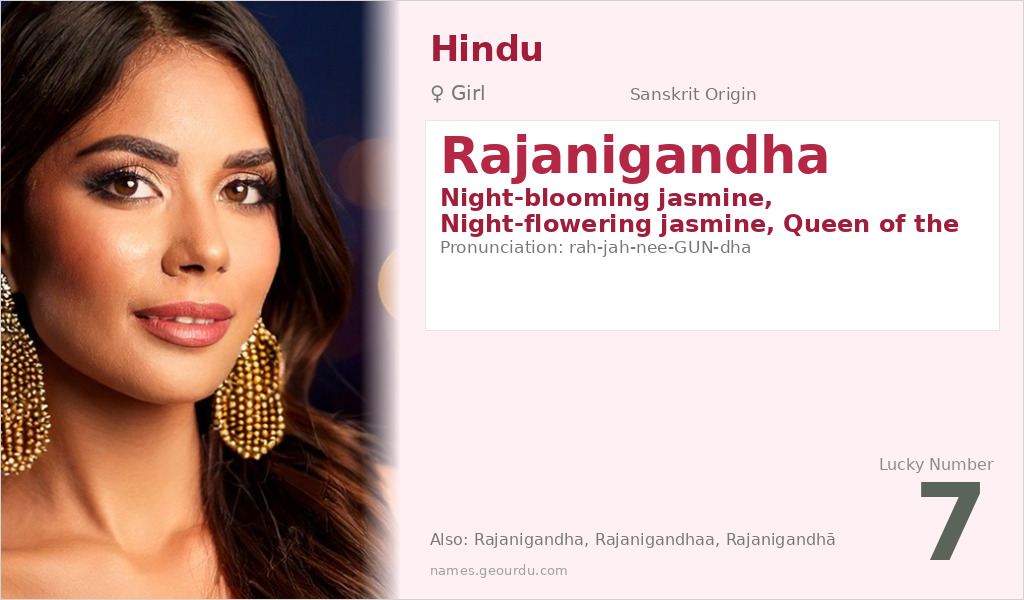
Rajanigandha is a beautiful Sanskrit name that evokes the enchanting fragrance of night-blooming flowers. Primarily used for girls in Hindu communities, this name carries poetic imagery and natural elegance. With its literal meaning of ‘night fragrance’, Rajanigandha specifically refers to the night-blooming jasmine, a flower celebrated in Indian literature and culture for its mysterious beauty.
Meaning of Rajanigandha
Rajanigandha is a compound Sanskrit name with precise botanical significance. The first component ‘Rājani’ (राजनी) derives from the Sanskrit root ‘rāj’ meaning ‘to shine’ but in this context specifically means ‘night’ or ‘darkness’. The second component ‘gandha’ (गन्ध) comes from the Sanskrit root ‘gandh’ meaning ‘to smell’ or ‘fragrance’. Together, they create the meaning ‘night fragrance’, which in Indian botanical terminology specifically refers to Cestrum nocturnum, commonly called night-blooming jasmine or ‘Raat ki Rani’. This flower is famous for releasing its intense, sweet perfume only after sunset, making the name particularly evocative. The name appears in classical Sanskrit literature and has been used metaphorically to describe feminine beauty that reveals itself in subtle ways.
| 📛 Name | Rajanigandha |
| 💎 Meaning | Night-blooming jasmine, Night-flowering jasmine, Queen of the night |
| 👤 Gender | Girl |
| 🕌 Religion | Hindu |
| 🌍 Origin | Sanskrit |
| 🗣 Pronunciation | rah-jah-nee-GUN-dha |
| ✍️ Urdu | راجنی گندھا |
| ✍️ Arabic | راجانيغاندا |
| 🔢 Numerology | 7 |
| ✨ Spellings | Rajanigandha, Rajanigandhaa, Rajanigandhā |
Origin & Cultural Significance
Rajanigandha originates from classical Sanskrit, the ancient liturgical language of Hinduism. As a compound name, it follows the traditional Sanskrit pattern of combining two meaningful elements to create poetic imagery. The name has been used in Indian culture for centuries, both as a direct reference to the night-blooming jasmine plant and as a feminine given name. In Hindu tradition, names derived from flowers and natural elements are particularly favored for girls, symbolizing purity, beauty, and connection to nature. The night-blooming jasmine holds special cultural significance in South Asia, often featured in poetry, literature, and religious symbolism for its mysterious blooming pattern and intoxicating fragrance.
Personality Traits
Those named Rajanigandha are often perceived as having qualities reminiscent of their namesake flower—mysterious, graceful, and possessing hidden depths. They may exhibit a quiet confidence that doesn’t demand attention but naturally draws people in. Like the jasmine that blooms in darkness, they might show their strongest qualities in challenging situations, with resilience and subtle strength that surprises others.
Similar Names
If you like Rajanigandha, consider: Rajani, Gandha, Mallika, Juhi, Chameli, Yasmin, Pushpa, Kusum, Sumana, Madhavi
Famous People Named Rajanigandha
- Rajanigandha (character) — Protagonist of the 1974 Indian film 'Rajanigandha' directed by Basu Chatterjee, based on a story by Mannu Bhandari
- Rajanigandha Sen — Indian actress known for her work in Bengali cinema and television
Frequently Asked Questions About Rajanigandha
What does Rajanigandha mean?
Rajanigandha means 'night-blooming jasmine' or 'night fragrance' in Sanskrit. It specifically refers to the Cestrum nocturnum flower known for its intense fragrance after sunset.
Is Rajanigandha a boy or girl name?
Rajanigandha is exclusively a girl's name in Hindu naming tradition. It follows the pattern of floral names typically given to girls in Indian cultures.
What is the origin of Rajanigandha?
Rajanigandha originates from Sanskrit, the classical language of ancient India. It's a compound name combining 'Rājani' (night) and 'gandha' (fragrance), specifically referring to the night-blooming jasmine plant.





