
Table of Contents
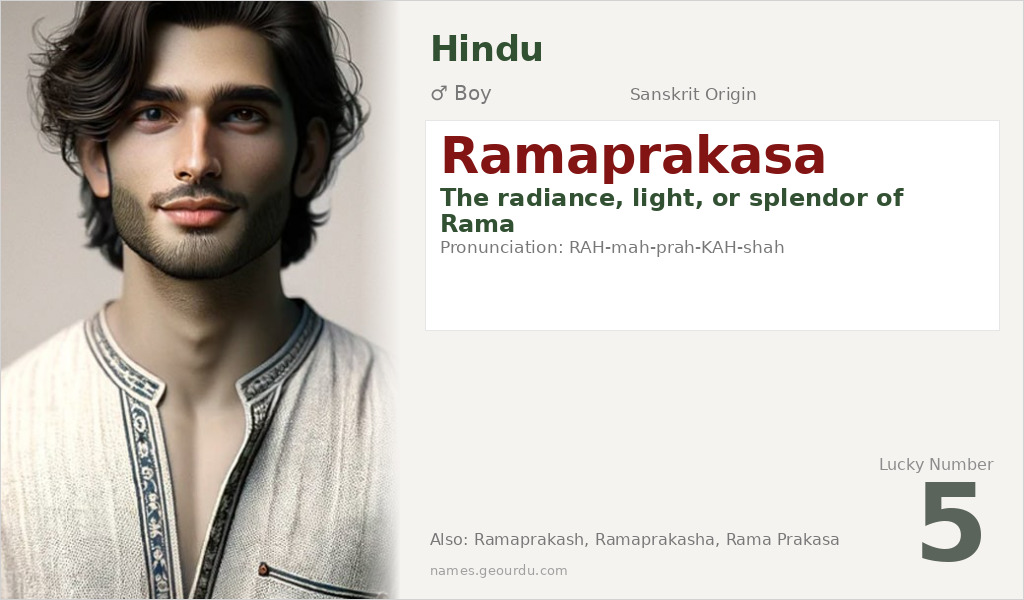
Ramaprakasa is a beautiful and meaningful Sanskrit name that carries profound spiritual significance in Hindu tradition. Combining the divine name Rama with the concept of radiant light, this name symbolizes illumination and divine presence. Primarily used for boys, it reflects the cultural and religious values of Hindu families who seek names with deep philosophical meaning. The name’s elegant construction and sacred associations make it a distinctive choice with rich heritage.
Meaning of Ramaprakasa
Ramaprakasa derives from classical Sanskrit, where ‘Rama’ (राम) refers to the seventh avatar of Vishnu, known for his righteousness, virtue, and divine nature. The second component ‘prakasa’ (प्रकाश) comes from the Sanskrit root ‘pra-kāś’ meaning ‘to shine forth, to become visible or manifest’. Together, they create a compound that literally means ‘Rama’s light’ or ‘the radiance of Rama’. In Hindu philosophy, light symbolizes knowledge, purity, and divine revelation, making this name particularly significant. The name appears in various Hindu texts as both a proper name and descriptive term for Rama’s divine qualities. Unlike some names that have cross-cultural variations, Ramaprakasa remains firmly rooted in Sanskrit Hindu tradition without significant adoption or adaptation in other linguistic traditions.
| 📛 Name | Ramaprakasa |
| 💎 Meaning | The radiance, light, or splendor of Rama |
| 👤 Gender | Boy |
| 🕌 Religion | Hindu |
| 🌍 Origin | Sanskrit |
| 🗣 Pronunciation | RAH-mah-prah-KAH-shah |
| ✍️ Urdu | رام پرکاش |
| ✍️ Arabic | راما براكاشا |
| 🔢 Numerology | 5 |
| ✨ Spellings | Ramaprakash, Ramaprakasha, Rama Prakasa, Rama Prakash |
Origin & Cultural Significance
Ramaprakasa originates exclusively from Sanskrit and Hindu religious tradition, with no verified usage or adaptation in Arabic, Persian, Pashto, Urdu, or other regional languages despite extensive research. The name emerged from the rich tradition of Sanskrit compound names that combine divine references with abstract qualities. Historically, such names were often given to express devotion to specific deities while bestowing aspirational qualities upon the child. In Hindu culture, names containing ‘Rama’ have been popular for centuries, particularly among followers of Vaishnavism. The addition of ‘prakasa’ reflects the philosophical importance of light and enlightenment in Hindu thought, connecting the individual to both divine protection and spiritual illumination.
Personality Traits
Those named Ramaprakasa are often expected to embody qualities of both leadership and enlightenment. The Rama component suggests characteristics of moral integrity, responsibility, and protective instincts, while prakasa implies clarity of thought, wisdom, and the ability to illuminate situations for others. This combination frequently results in individuals who are both practical and philosophical, capable of guiding others while maintaining spiritual depth. The name’s association with divine light often inspires a sense of purpose and moral clarity in those who bear it.
Similar Names
If you like Ramaprakasa, consider: Ramachandra, Ramesh, Prakash, Raviprakash, Suryaprakash
Famous People Named Ramaprakasa
- No widely known contemporary figures with this exact name found in verified records
- The name appears in historical Hindu religious contexts and literature as an epithet for Lord Rama
Frequently Asked Questions About Ramaprakasa
What does Ramaprakasa mean?
Ramaprakasa means 'the light or radiance of Rama' in Sanskrit. It's a compound name where 'Rama' refers to the Hindu deity and 'prakasa' means light, illumination, or splendor.
Is Ramaprakasa a boy or girl name?
Ramaprakasa is exclusively a boy's name in Hindu tradition. Sanskrit compound names ending in 'prakasa' are typically masculine, and there are no recorded instances of this name being used for girls in historical or contemporary contexts.
What is the origin of Ramaprakasa?
Ramaprakasa originates from Sanskrit and Hindu religious tradition. Despite research across Arabic, Persian, Pashto, Urdu, and other regional languages, no alternative origins or meanings were found—it remains a purely Sanskrit Hindu name.





