
Table of Contents
Ratnadhar is a distinguished Sanskrit name that carries the weight of ancient Indian tradition and linguistic elegance. Meaning ‘bearer of jewels’ or ‘holder of gems’, this name evokes images of preciousness, value, and guardianship. Primarily used within Hindu communities, Ratnadhar connects the bearer to a rich cultural heritage where names are carefully chosen for their profound meanings. This exploration delves into the etymology, cultural context, and personality associations of this classical name.
Meaning of Ratnadhar
Ratnadhar is a transparent compound name from Sanskrit, one of the world’s oldest classical languages. It combines ‘ratna’ (रत्न), meaning jewel, gem, or anything precious, with ‘dhar’ (धर), derived from the verbal root √dhṛ meaning to hold, bear, carry, or support. Thus, Ratnadhar literally translates to ‘jewel-bearer’ or ‘one who holds gems’. In Hindu philosophical context, ‘ratna’ can extend beyond physical gems to symbolize virtues, wisdom, or divine qualities. The name appears in various Hindu texts and classical literature, often as an epithet for deities or virtuous characters who embody or protect precious qualities. This construction follows common Sanskrit naming patterns where ‘dhar’ serves as a suffix indicating possession or characteristic.
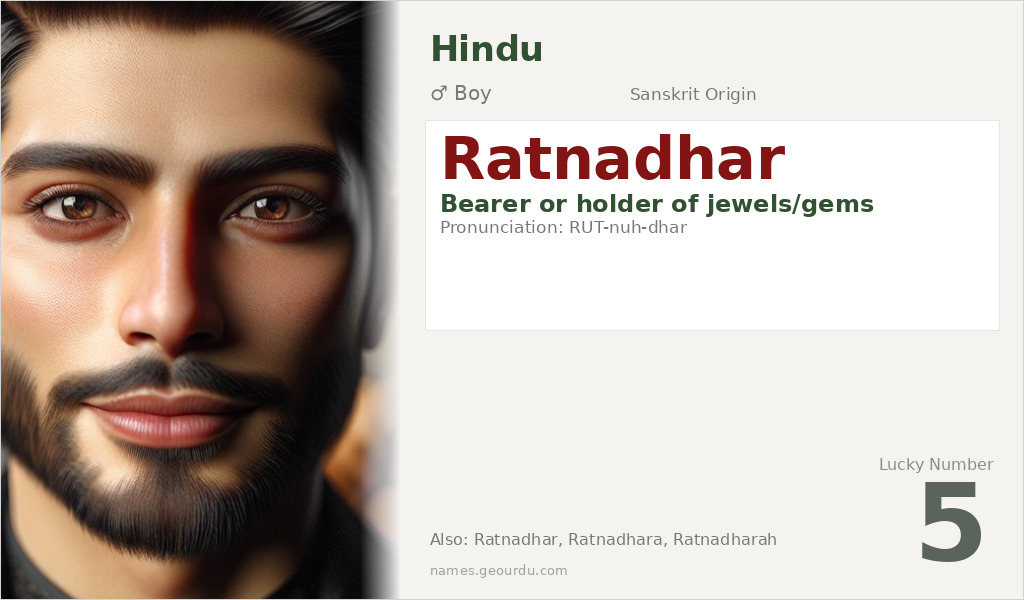
| 📛 Name | Ratnadhar |
| 💎 Meaning | Bearer or holder of jewels/gems |
| 👤 Gender | Boy |
| 🕌 Religion | Hindu |
| 🌍 Origin | Sanskrit |
| 🗣 Pronunciation | RUT-nuh-dhar |
| ✍️ Urdu | رتنا دھر |
| ✍️ Arabic | راتنادهار |
| 🔢 Numerology | 5 |
| ✨ Spellings | Ratnadhar, Ratnadhara, Ratnadharah |
Origin & Cultural Significance
Ratnadhar originates unequivocally from Sanskrit, the primary liturgical language of Hinduism and a cornerstone of Indian cultural heritage. It emerged from the vast corpus of Sanskrit literature, including religious texts, poetry, and philosophical works where compound names with meaningful elements were highly valued. The name reflects the Hindu tradition of bestowing names with auspicious and descriptive meanings, often related to divine qualities, virtues, or natural elements. While Sanskrit names have influenced many South Asian languages, Ratnadhar remains specifically rooted in Hindu tradition without significant adoption or variation in Arabic, Persian, or other linguistic traditions surveyed. Its usage has been primarily in India among Hindu families, particularly those with appreciation for classical Sanskrit nomenclature.
Personality Traits
The name Ratnadhar suggests a personality that is both valuable and steadfast. Like a guardian of treasures, individuals with this name are often seen as reliable, principled, and capable of recognizing true worth in people and situations. They may exhibit a calm, supportive demeanor, providing stability to those around them. The metaphorical ‘jewels’ they bear could manifest as wisdom, integrity, or cherished relationships that they protect and nurture throughout their lives.
Similar Names
If you like Ratnadhar, consider: Ratnesh, Ratnakar, Manidhar, Dhanadhar, Kamaldhar
Famous People Named Ratnadhar
- Ratnadhar Bhaduri — 19th century Bengali scholar and writer
- Ratnadhar — Character in Hindu mythology and literature, often appearing as a virtuous figure or deity epithet
Frequently Asked Questions About Ratnadhar
What does Ratnadhar mean?
Ratnadhar means 'bearer of jewels' or 'holder of gems' in Sanskrit, combining 'ratna' (jewel) and 'dhar' (bearer).
Is Ratnadhar a boy or girl name?
Ratnadhar is exclusively a masculine name in Hindu naming tradition, derived from Sanskrit grammatical gender conventions.
What is the origin of Ratnadhar?
Ratnadhar originates from Sanskrit, the classical language of ancient India, and is used within Hindu cultural and religious contexts.





