
Table of Contents
Richard is a classic masculine name with a rich history spanning centuries and continents. Derived from ancient Germanic elements meaning ‘brave ruler,’ this name has been borne by kings, scientists, artists, and leaders across diverse cultures. Its enduring popularity speaks to the timeless appeal of its strong, noble meaning and versatile sound that works in multiple languages.
Meaning of Richard
The name Richard has a clear and well-documented etymology from Proto-Germanic language roots. It combines two elements: ‘ric’ (rīkijaz) meaning ‘ruler, king, mighty’ and ‘hard’ (harduz) meaning ‘brave, strong, hardy.’ This compound construction was common in Germanic naming traditions, creating names that conveyed desirable warrior-king qualities. The name spread throughout Europe via the Normans and became particularly prominent in England after the Norman Conquest of 1066. Historical records show consistent usage from medieval times through the present day, with the meaning remaining stable across linguistic transformations.
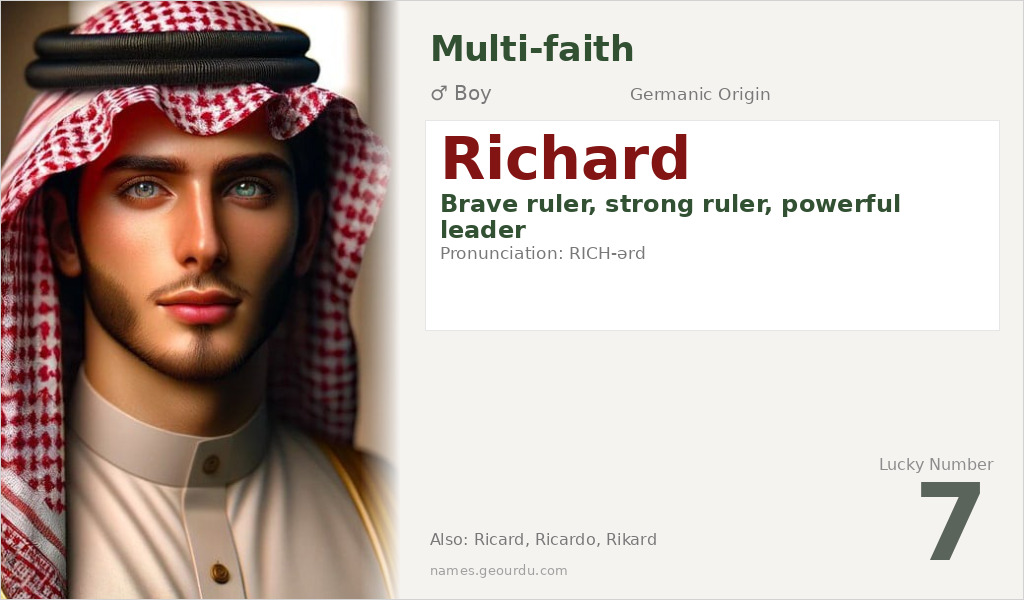
| 📛 Name | Richard |
| 💎 Meaning | Brave ruler, strong ruler, powerful leader |
| 👤 Gender | Boy |
| 🕌 Religion | Multi-faith |
| 🌍 Origin | Germanic |
| 🗣 Pronunciation | RICH-ərd |
| ✍️ Urdu | رچرڈ |
| ✍️ Arabic | ريتشارد |
| 🔢 Numerology | 7 |
| ✨ Spellings | Ricard, Ricardo, Rikard, Rikhard, Ryszard |
Origin & Cultural Significance
Richard originated among Germanic tribes in early medieval Europe, particularly in regions that would become Germany and France. The name gained prominence through Norman nobility who brought it to England, where it became one of the most common royal names. Three English kings bore the name Richard, most famously Richard I (the Lionheart). The name spread globally through European colonization and remains popular in English, French, Spanish (as Ricardo), German, Scandinavian, and many other language communities. Unlike names tied to specific religious traditions, Richard has been adopted by people of various faiths including Christianity, Judaism, and secular contexts.
Personality Traits
People named Richard often exhibit leadership qualities combined with practical intelligence. The name’s meaning suggests someone who is both courageous in facing challenges and capable of wise governance. Historically, bearers of this name have been associated with strength, determination, and analytical thinking. While personality varies by individual, the name’s etymological roots in ‘brave ruler’ create cultural associations with reliability, authority, and resilience.
Similar Names
If you like Richard, consider: Ricardo, Richardson, Richmond, Roderick, Rex
Famous People Named Richard
- Richard the Lionheart — King of England (1157-1199), famous crusader
- Richard Feynman — Nobel Prize-winning American physicist (1918-1988)
Frequently Asked Questions About Richard
What does Richard mean?
Richard means 'brave ruler' or 'strong leader,' derived from the Germanic elements 'ric' (ruler) and 'hard' (brave, strong).
Is Richard a boy or girl name?
Richard is traditionally and overwhelmingly a masculine name, though rare feminine variants like Ricarda exist in some languages.
What is the origin of Richard?
Richard originates from Germanic languages, specifically combining Proto-Germanic elements for 'ruler' and 'brave.' It spread through Norman French to England and then globally.





