
Table of Contents
Robert is one of the most enduring and historically significant names in Western naming traditions. With roots stretching back over a thousand years to Germanic tribes, this name has been borne by kings, saints, poets, and leaders across Europe and the Americas. Its timeless appeal lies in its strong meaning and royal associations that have transcended centuries of cultural change.
Meaning of Robert
The name Robert originates from the Old High German elements ‘hruod’ meaning ‘fame’ and ‘beraht’ meaning ‘bright’ or ‘shining’, combining to create the meaning ‘bright fame’ or ‘shining glory’. This Germanic compound name was common among Frankish nobility before spreading throughout Europe. The Normans brought the name to England after 1066, where it became one of the most popular names in medieval England. Throughout its history, the core meaning has remained remarkably consistent across languages, appearing as Roberto in Italian/Spanish, Robert in French/English, and Ruprecht in German variations.
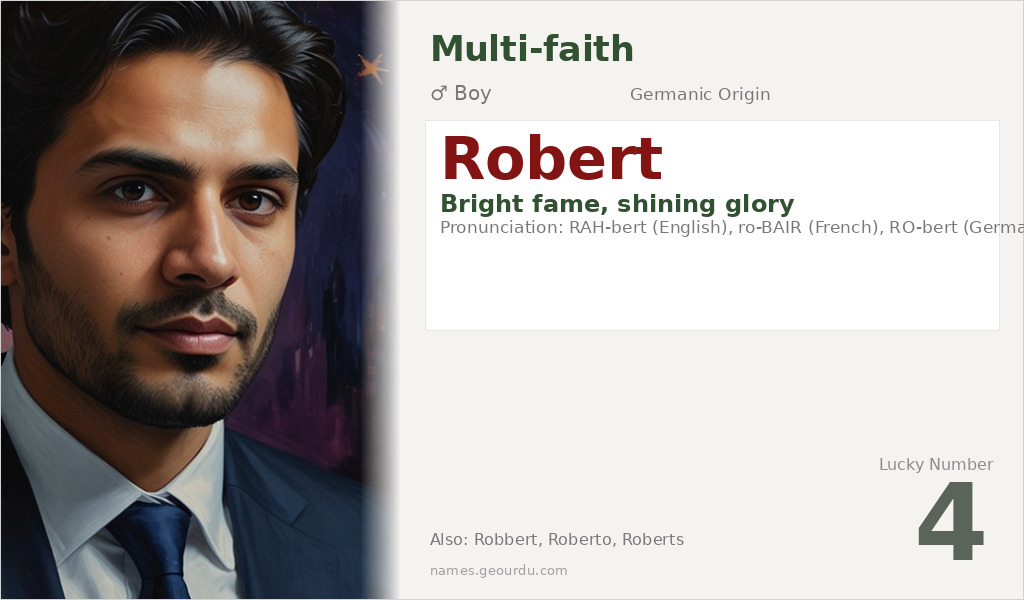
| 📛 Name | Robert |
| 💎 Meaning | Bright fame, shining glory |
| 👤 Gender | Boy |
| 🕌 Religion | Multi-faith |
| 🌍 Origin | Germanic |
| 🗣 Pronunciation | RAH-bert (English), ro-BAIR (French), RO-bert (German) |
| ✍️ Urdu | رابرٹ |
| ✍️ Arabic | روبرت |
| 🔢 Numerology | 4 |
| ✨ Spellings | Robbert, Roberto, Roberts, Rupert, Ruprecht |
Origin & Cultural Significance
Robert has its origins in the Germanic tribes of early medieval Europe, specifically from the Frankish language that evolved into Old High German. The name gained prominence through several saints and royalty, including Saint Robert of Molesme (founder of the Cistercian Order) and Robert I, Duke of Normandy. After the Norman Conquest, it became extremely popular in England, with three kings bearing the name. The name spread throughout Europe during the Middle Ages and was carried to the Americas by European settlers. Today, it remains popular in English, French, German, and Scandinavian-speaking countries, demonstrating its cross-cultural appeal beyond any single religious tradition.
Personality Traits
Throughout history, those named Robert have often been associated with leadership, reliability, and traditional strength. The name carries connotations of stability and respectability, perhaps influenced by its royal heritage and long history of use. Many cultural references depict Roberts as practical problem-solvers with a strong sense of duty, though individual personalities naturally vary widely across different cultures and time periods.
Similar Names
If you like Robert, consider: Rupert, Roderick, Richard, Roger, Robin
Famous People Named Robert
- Robert the Bruce — King of Scots (1306-1329) who led Scotland during the First War of Scottish Independence
- Robert Frost — American poet known for his realistic depictions of rural life and command of American colloquial speech
Frequently Asked Questions About Robert
What does Robert mean?
Robert means 'bright fame' or 'shining glory', derived from the Old High German elements 'hruod' (fame) and 'beraht' (bright).
Is Robert a boy or girl name?
Robert is traditionally and overwhelmingly a masculine name, though very rare feminine variants like Roberta exist. Historically and culturally, it has been used almost exclusively for boys.
What is the origin of Robert?
Robert originates from Germanic languages, specifically Old High German, and was popularized by Frankish and Norman nobility before spreading throughout Europe after the Norman Conquest of England in 1066.





