
Table of Contents
Rudolph is a classic masculine name with deep Germanic roots that has traveled across centuries and continents. Meaning ‘famous wolf,’ this name combines two powerful elements from ancient warrior culture. While often associated with Christmas due to the beloved reindeer character, Rudolph has a rich historical legacy spanning European royalty to modern celebrities. Its enduring appeal lies in its strong, noble connotations and timeless sound.
Meaning of Rudolph
The name Rudolph originates from the Old High German elements ‘hruod’ (meaning ‘fame,’ ‘glory,’ or ‘renown’) and ‘wulf’ (meaning ‘wolf’). This compound name was common among Germanic tribes, where wolf symbolism represented strength, loyalty, and ferocity in battle. The name evolved through various forms including the Latinized ‘Rudolphus’ and entered English via Norman French after 1066. In Germanic naming traditions, animal names like ‘wolf’ were prestigious, often given to warriors and leaders. The combination with ‘fame’ suggests someone destined for renown, making Rudolph a name of significant aspirational meaning in its original context.
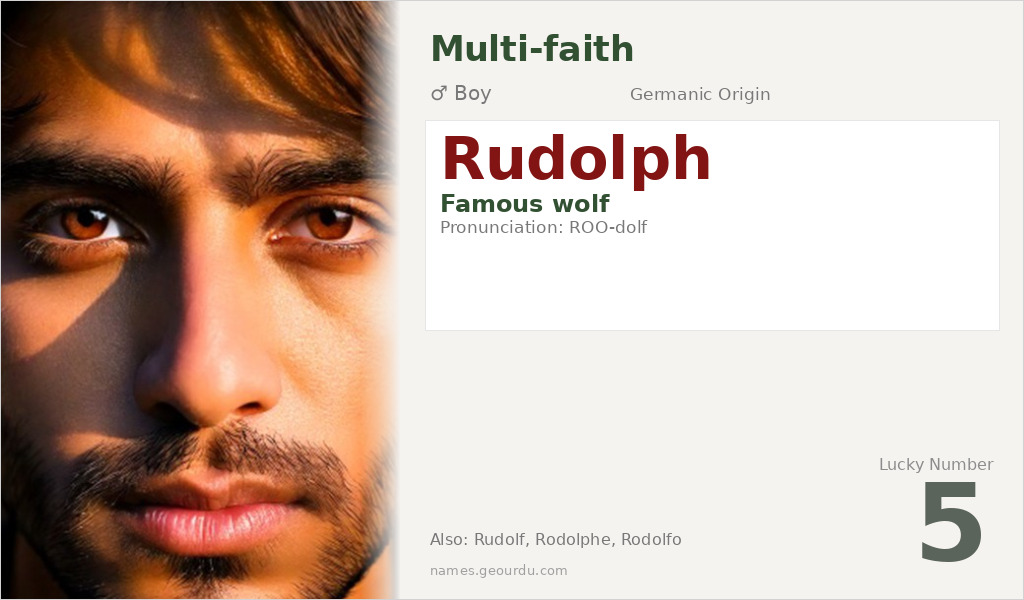
| 📛 Name | Rudolph |
| 💎 Meaning | Famous wolf |
| 👤 Gender | Boy |
| 🕌 Religion | Multi-faith |
| 🌍 Origin | Germanic |
| 🗣 Pronunciation | ROO-dolf |
| ✍️ Urdu | رڈولف |
| ✍️ Arabic | رودولف |
| 🔢 Numerology | 5 |
| ✨ Spellings | Rudolf, Rodolphe, Rodolfo, Rudolphe, Rudolphus |
Origin & Cultural Significance
Rudolph has purely Germanic origins, first appearing among Frankish and other Germanic tribes during the early Middle Ages. The name gained prominence through European nobility, most notably with Rudolf I of Germany (1218-1291), who founded the powerful Habsburg dynasty that ruled much of Europe for centuries. While the name spread throughout Christian Europe, its roots are pre-Christian Germanic pagan. It became popular in English-speaking countries during the 19th century Victorian era when Germanic names were fashionable. Today, Rudolph is used across multiple cultures and religions, though it remains most common in German-speaking regions and among people of European descent.
Personality Traits
People named Rudolph often embody the dual characteristics of their name’s meaning: the ambition and visibility of ‘fame’ combined with the loyalty and protective nature of the ‘wolf.’ They tend to be natural leaders who value both independence and close community ties. Their personality often includes a blend of confidence and compassion, making them effective in roles that require both strength and empathy.
Similar Names
If you like Rudolph, consider: Rolf, Raoul, Rudiger, Wolfgang, Adolf
Famous People Named Rudolph
- Rudolph Valentino — Italian-American silent film actor and sex symbol of the 1920s
- Rudolph the Red-Nosed Reindeer — fictional reindeer created by Robert L. May in 1939
Frequently Asked Questions About Rudolph
What does Rudolph mean?
Rudolph means 'famous wolf,' derived from the Old High German elements 'hruod' (fame) and 'wulf' (wolf).
Is Rudolph a boy or girl name?
Rudolph is exclusively a masculine name with historical usage as a boy's name across Germanic and European cultures for centuries.
What is the origin of Rudolph?
Rudolph has Germanic origins, specifically from Old High German, and was popularized through medieval European nobility before spreading globally.





