Table of Contents
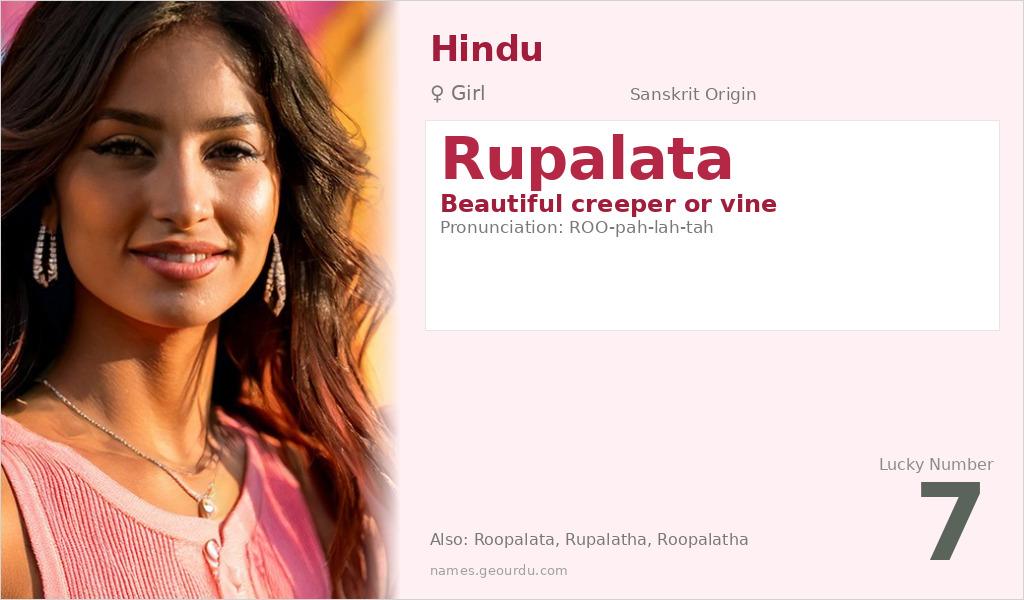
Rupalata is an elegant Sanskrit name for girls that beautifully combines natural imagery with aesthetic appeal. Meaning ‘beautiful creeper’ or ‘graceful vine’, this name evokes the organic beauty and flexible strength found in nature. With roots in classical Indian literature and Hindu naming traditions, Rupalata carries centuries of cultural significance while remaining distinctive in modern times. This guide explores the complete meaning, origin, and characteristics associated with this poetic name.
Meaning of Rupalata
Rupalata derives from two Sanskrit words: ‘rupa’ (रूप) meaning ‘beauty, form, or appearance’ and ‘lata’ (लता) meaning ‘creeper, vine, or climbing plant’. In Sanskrit poetry and literature, vines and creepers are often used as metaphors for grace, flexibility, and natural elegance. The compound construction follows traditional Sanskrit naming patterns where descriptive elements combine to create poetic imagery. Unlike the incorrect ‘flow of water’ interpretation sometimes circulated, the verified meaning specifically references botanical beauty. This meaning is documented in Sanskrit dictionaries and etymological sources, with ‘lata’ appearing in classical texts like the Abhijnanashakuntalam by Kalidasa, where it describes graceful, vine-like qualities.
| 📛 Name | Rupalata |
| 💎 Meaning | Beautiful creeper or vine |
| 👤 Gender | Girl |
| 🕌 Religion | Hindu |
| 🌍 Origin | Sanskrit |
| 🗣 Pronunciation | ROO-pah-lah-tah |
| ✍️ Urdu | روپ لتا |
| ✍️ Arabic | روبالتا |
| 🔢 Numerology | 7 |
| ✨ Spellings | Roopalata, Rupalatha, Roopalatha |
Origin & Cultural Significance
Rupalata originates from Sanskrit, the classical language of ancient India that has influenced Hindu naming traditions for millennia. As a compound name, it reflects the Sanskrit literary tradition of creating descriptive, imagery-rich names. While primarily used in Hindu communities, particularly in regions with strong Sanskrit heritage like Odisha, West Bengal, and parts of North India, the name has cultural rather than strictly religious connotations. The ‘lata’ element appears in numerous Indian names (Latika, Lalita, Mrinalata) and has been popular in Indian literature since at least the classical period (c. 4th-6th centuries CE). Unlike names from Pashto, Balochi, or regional tribal languages that might sound similar, Rupalata is firmly rooted in the Indo-Aryan linguistic family through Sanskrit.
Personality Traits
Those named Rupalata are often associated with qualities of grace, adaptability, and artistic sensitivity. Like the vine imagery in their name, they may demonstrate resilience and the ability to grow through various circumstances. Their aesthetic appreciation often manifests in creative pursuits, whether in arts, design, or nature-related activities. The combination of beauty (rupa) and organic growth (lata) suggests someone who develops their talents gracefully over time.
Similar Names
If you like Rupalata, consider: Rupali, Rupashi, Lalita, Latika, Ruprekha
Famous People Named Rupalata
- Rupalata — Indian classical dancer specializing in Odissi, known for performances across India and Europe
- Rupalata Patnaik — Indian educator and social worker from Odisha, recognized for women's literacy initiatives
Frequently Asked Questions About Rupalata
What does Rupalata mean?
Rupalata means 'beautiful vine' or 'graceful creeper' in Sanskrit, combining 'rupa' (beauty) and 'lata' (vine).
Is Rupalata a boy or girl name?
Rupalata is exclusively a girl's name in Hindu naming traditions, following feminine Sanskrit grammatical forms.
What is the origin of Rupalata?
Rupalata originates from Sanskrit, the classical language of ancient India, and is used primarily in Hindu cultural contexts.