
Table of Contents
Rustom is a powerful masculine name with deep roots in Persian mythology and literature. Derived from the legendary hero Rostam of the Shahnameh epic, this name carries connotations of bravery, strength, and heroism. While often associated with Persian and Parsi communities, Rustom has found acceptance across various cultures and religions. The name’s enduring appeal lies in its connection to one of the most celebrated figures in Persian literary tradition.
Meaning of Rustom
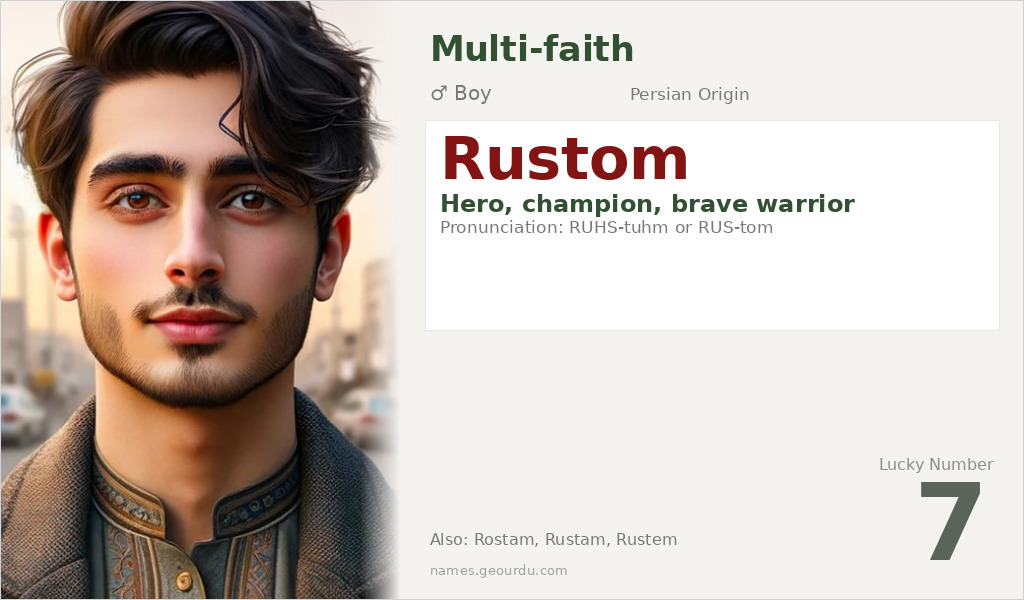
Rustom originates from the Persian name Rostam (رستم), which traces back to Middle Persian ‘Rōdstahm’. The name literally means ‘hero’, ‘champion’, or ‘brave warrior’. In Persian etymology, the components suggest strength and heroic qualities. The legendary Rostam from Ferdowsi’s 10th-century epic Shahnameh embodies these meanings completely—he is depicted as Persia’s greatest warrior, possessing extraordinary strength and completing seven heroic trials. The name has maintained this core meaning as it spread to other languages including Urdu, Pashto, Kurdish, and Turkish, where it is consistently understood to represent heroic qualities.
| 📛 Name | Rustom |
| 💎 Meaning | Hero, champion, brave warrior |
| 👤 Gender | Boy |
| 🕌 Religion | Multi-faith |
| 🌍 Origin | Persian |
| 🗣 Pronunciation | RUHS-tuhm or RUS-tom |
| ✍️ Urdu | رستم |
| ✍️ Arabic | رستم |
| 🔢 Numerology | 7 |
| ✨ Spellings | Rostam, Rustam, Rustem, Rüstem |
Origin & Cultural Significance
Rustom has its origins in ancient Persian culture and mythology, specifically from the character Rostam in the Shahnameh (Book of Kings), written by the Persian poet Ferdowsi around 977-1010 CE. The name spread throughout the Persianate world, including regions that are now Iran, Afghanistan, Central Asia, and the Indian subcontinent. Among Parsis (Zoroastrians who migrated to India), the name became particularly popular as they preserved Persian cultural traditions. In South Asia, the name was adopted by some Muslim and Hindu families, especially in regions with historical Persian influence. Today, Rustom is used by people of various faiths including Muslims, Parsis/Zoroastrians, and some Hindus.
Personality Traits
Those named Rustom are often associated with qualities of courage, leadership, and protectiveness. Drawing from the legendary hero Rostam, they may be perceived as strong-willed individuals who face challenges with determination. The name suggests someone who values honor and loyalty, potentially taking on protective roles in their relationships and communities. While personality traits vary by individual, the name’s heroic connotations often influence how Rustoms are perceived and how they may see themselves.
Similar Names
If you like Rustom, consider: Rostam, Rustam, Rustem, Rüstem, Rostom
Famous People Named Rustom
- Rostam Farrokhzād — Legendary Persian hero in the Shahnameh epic, son of Zāl and Rudaba
- Rustomji Cowasji Banaji — Prominent 19th century Parsi businessman and philanthropist in India
- Rustom Sohrab Pavri — Indian Parsi cricketer who played for Bombay and Parsis in the late 19th century
Frequently Asked Questions About Rustom
What does Rustom mean?
Rustom means 'hero', 'champion', or 'brave warrior'. It originates from the Persian name Rostam, famously associated with the legendary hero in the Shahnameh epic.
Is Rustom a boy or girl name?
Rustom is exclusively a masculine name. It has never been used as a feminine name in any of the cultures where it appears.
What is the origin of Rustom?
Rustom originates from Persian language and culture. It comes from the name Rostam, the legendary hero in Ferdowsi's Shahnameh epic, and has spread to various cultures including Parsi/Zoroastrian, Muslim, and some Hindu communities.





