
Table of Contents
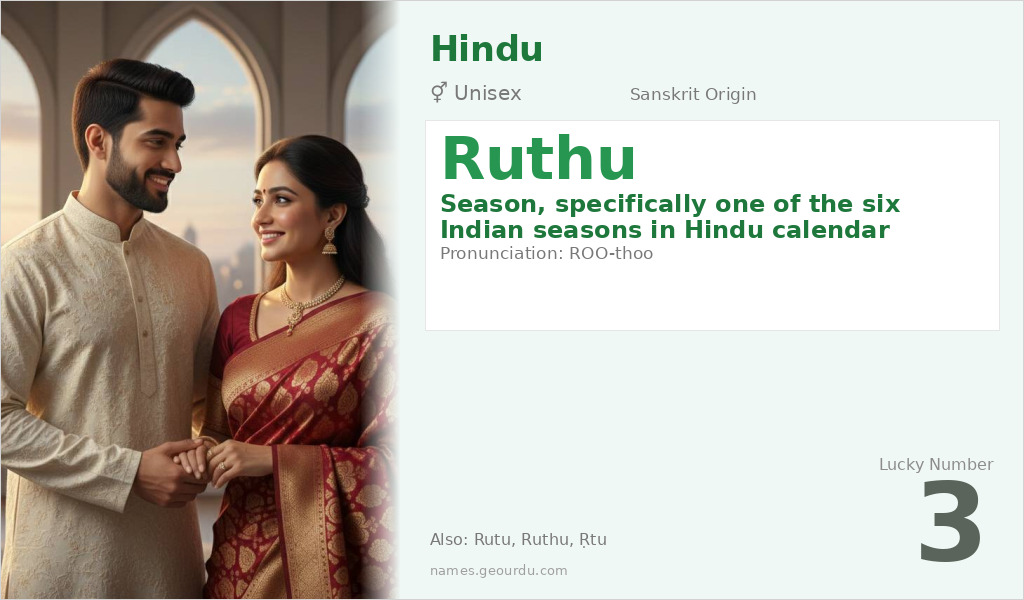
Ruthu is a beautiful name rooted in ancient Sanskrit tradition, carrying the poetic meaning of ‘season.’ Unlike ordinary seasonal names, Ruthu specifically references the six traditional seasons of the Hindu calendar, connecting the bearer to natural cycles and cultural heritage. This name has been used for centuries in Indian communities and continues to be appreciated for its lyrical quality and deep meaning. Whether for boys or girls, Ruthu offers a connection to India’s rich linguistic and calendrical traditions.
Meaning of Ruthu
The name Ruthu derives directly from the Sanskrit word ‘ऋतु’ (ṛtu), which specifically means ‘season’ or ‘a fixed period of time.’ In Hindu tradition, this isn’t a generic seasonal reference but specifically denotes one of the six Ruthus: Vasanta (spring), Grishma (summer), Varsha (monsoon), Sharad (autumn), Hemanta (pre-winter), and Shishira (winter). The term appears in the Rigveda (circa 1500-1200 BCE), one of the oldest known texts in any Indo-European language, where it’s used to describe seasonal cycles and ritual periods. This Sanskrit root has influenced numerous modern Indian languages, with ‘Ritu’ being a common variant. The name thus carries both linguistic antiquity and specific cultural significance beyond mere translation.
| 📛 Name | Ruthu |
| 💎 Meaning | Season, specifically one of the six Indian seasons in Hindu calendar |
| 👤 Gender | Unisex |
| 🕌 Religion | Hindu |
| 🌍 Origin | Sanskrit |
| 🗣 Pronunciation | ROO-thoo |
| ✍️ Urdu | رتھو |
| ✍️ Arabic | روثو |
| 🔢 Numerology | 3 |
| ✨ Spellings | Rutu, Ruthu, Ṛtu |
Origin & Cultural Significance
Ruthu originates from ancient Sanskrit, the classical language of India that has influenced most South Asian languages. The concept of Ruthu is deeply embedded in Hindu calendrical systems, astronomy, and agricultural traditions. Unlike Western four-season models, the traditional Indian six-season system (Shadṛtu) reflects the subcontinent’s distinct climatic patterns. The name has been used historically in India and among Hindu communities worldwide, though it remains relatively uncommon compared to its variant ‘Ritu.’ While primarily associated with Hindu culture due to its Sanskrit origins and calendrical significance, the name’s seasonal meaning gives it broad appeal beyond religious boundaries.
Personality Traits
Those named Ruthu are often associated with qualities of change, adaptation, and natural rhythm. Like the seasons they’re named for, they may exhibit different facets of personality at different times, showing versatility and resilience. They often have an appreciation for nature’s cycles and may demonstrate patience through life’s various phases. Their connection to seasonal transitions can manifest as creativity, adaptability, and a balanced approach to life’s changes.
Similar Names
If you like Ruthu, consider: Ritu, Ruth, Ruthika, Ruthvika, Ruthvik
Famous People Named Ruthu
- Ruthu (character) — A character in Indian television series 'Mahabharat' (2013)
- Ruthu (artist) — Contemporary Indian visual artist known for seasonal-themed installations
Frequently Asked Questions About Ruthu
What does Ruthu mean?
Ruthu means 'season' in Sanskrit, specifically referring to one of the six traditional seasons in the Hindu calendar system.
Is Ruthu a boy or girl name?
Ruthu is a unisex name, though it's more commonly used for girls in contemporary practice. Historically in Sanskrit literature, the word 'ṛtu' is grammatically masculine but has been used for both genders as a name.
What is the origin of Ruthu?
Ruthu originates from Sanskrit, the ancient classical language of India, and is deeply connected to Hindu calendrical traditions and seasonal cycles.