Table of Contents
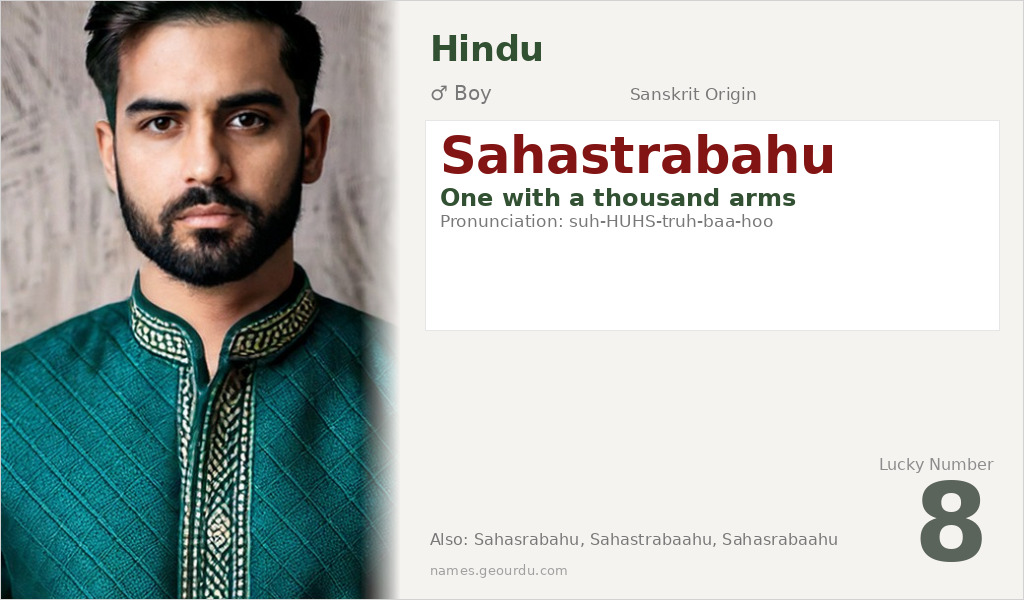
Sahastrabahu is a powerful Sanskrit name steeped in Hindu mythology, carrying the profound meaning of ‘one with a thousand arms.’ This name evokes images of divine protection and omnipotence, referencing deities who possess extraordinary capabilities. While uncommon in modern usage, it remains significant in religious and cultural contexts. Discover the rich etymology and mythological background of this distinctive name.
Meaning of Sahastrabahu
Sahastrabahu is a compound Sanskrit name with clear etymological roots. ‘Sahasra’ (सहस्र) means ‘thousand’ in Sanskrit, while ‘bāhu’ (बाहु) translates to ‘arm.’ Together, they form ‘Sahastrabahu’ (सहस्त्रबाहु), literally meaning ‘thousand-armed.’ This name appears in ancient Hindu scriptures like the Mahabharata and various Puranas as an epithet for gods, particularly Vishnu and Kartikeya. It symbolizes the ability to perform countless actions simultaneously, representing omnipotence, protection, and divine intervention. The concept reflects the Hindu philosophical idea of the divine being present everywhere and capable of infinite actions.
| 📛 Name | Sahastrabahu |
| 💎 Meaning | One with a thousand arms |
| 👤 Gender | Boy |
| 🕌 Religion | Hindu |
| 🌍 Origin | Sanskrit |
| 🗣 Pronunciation | suh-HUHS-truh-baa-hoo |
| ✍️ Urdu | سہسترباہو |
| ✍️ Arabic | ساهسترا با هو |
| 🔢 Numerology | 8 |
| ✨ Spellings | Sahasrabahu, Sahastrabaahu, Sahasrabaahu |
Origin & Cultural Significance
Sahastrabahu originates from classical Sanskrit, the ancient liturgical language of Hinduism. It emerges from Hindu mythology where deities are described with extraordinary attributes to emphasize their power and capabilities. The name is specifically associated with Vishnu, the preserver god in the Hindu trinity, who is sometimes depicted with multiple arms in iconography to represent his many divine functions. In some regional traditions, Kartikeya (also known as Skanda or Murugan), the god of war, is also called Sahastrabahu. While rarely used as a personal name today, it remains important in religious texts and philosophical discussions about divine nature.
Personality Traits
The name Sahastrabahu suggests personality traits associated with strength, protection, and multitasking ability. Those bearing this name might be perceived as individuals with broad capabilities who can handle numerous responsibilities simultaneously. The mythological connotations imply a protective nature and leadership qualities. While these associations are symbolic rather than predictive, they reflect cultural perceptions of the name’s meaning.
Similar Names
If you like Sahastrabahu, consider: Sahasraksha, Sahasrapat, Bahu, Sahasrajit, Sahasranama
Famous People Named Sahastrabahu
- No widely known contemporary figures bear this name, but in Hindu mythology, Vishnu is often described as Sahastrabahu in scriptures like the Vishnu Purana
- Kartikeya (Skanda), the god of war, is also referred to as Sahastrabahu in some regional traditions for his martial prowess
Frequently Asked Questions About Sahastrabahu
What does Sahastrabahu mean?
Sahastrabahu means 'one with a thousand arms' in Sanskrit. It's a compound name from 'sahasra' (thousand) and 'bāhu' (arm), symbolizing divine power and protection in Hindu mythology.
Is Sahastrabahu a boy or girl name?
Sahastrabahu is exclusively a boy's name in Hindu tradition. It's used as an epithet for male deities like Vishnu and Kartikeya in Sanskrit scriptures.
What is the origin of Sahastrabahu?
Sahastrabahu originates from Sanskrit, the ancient language of Hinduism. It comes from Hindu mythology where it describes gods with extraordinary capabilities, particularly Vishnu and Kartikeya.