Table of Contents
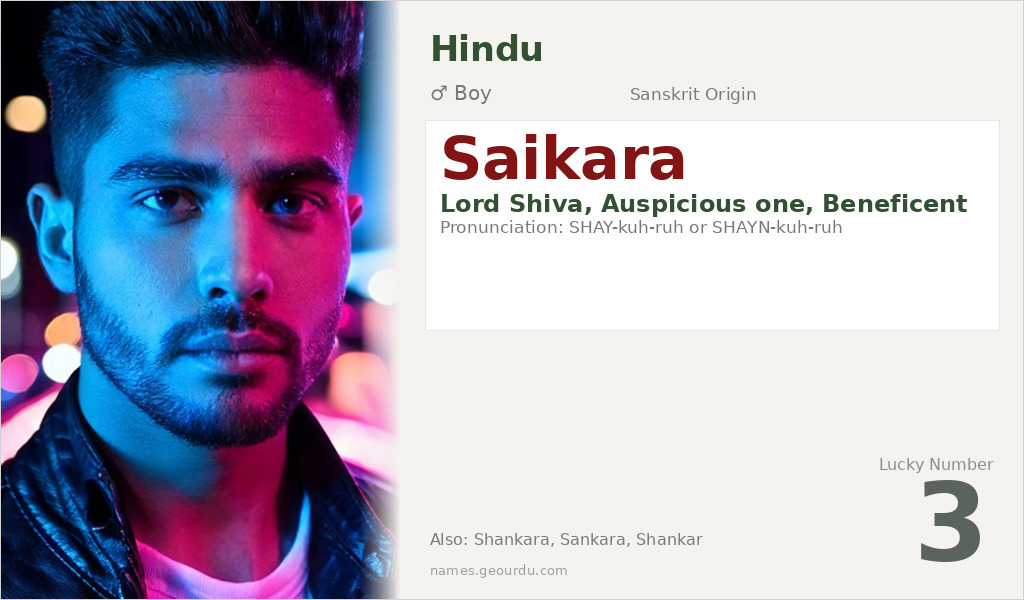
Saikara is a profound Sanskrit name with deep roots in Hindu tradition and philosophy. As an epithet of Lord Shiva, it carries spiritual significance and represents auspiciousness and benevolence. This name has been cherished for centuries in Indian culture, symbolizing divine creativity and philosophical depth. Parents choosing Saikara often seek to imbue their child with spiritual wisdom and positive qualities.
Meaning of Saikara
Saikara originates from the Sanskrit word ‘Śaṅkara’, which is composed of two elements: ‘śam’ meaning ‘auspicious, beneficent, welfare’ and ‘kara’ meaning ‘maker, doer, causer’. The complete meaning translates to ‘maker of auspiciousness’ or ‘doer of good’. In Hindu theology, this is one of the principal names of Lord Shiva, representing his role as the benevolent creator and sustainer. The name appears extensively in Vedic literature, including the Rigveda and various Puranas, where Shiva is praised as Śaṅkara. This etymological construction follows common Sanskrit naming patterns where divine attributes are combined with action-oriented suffixes to create meaningful names.
| 📛 Name | Saikara |
| 💎 Meaning | Lord Shiva, Auspicious one, Beneficent |
| 👤 Gender | Boy |
| 🕌 Religion | Hindu |
| 🌍 Origin | Sanskrit |
| 🗣 Pronunciation | SHAY-kuh-ruh or SHAYN-kuh-ruh |
| ✍️ Urdu | شیکرا |
| ✍️ Arabic | شايكارا |
| 🔢 Numerology | 3 |
| ✨ Spellings | Shankara, Sankara, Shankar, Sankar, Shaikara |
Origin & Cultural Significance
Saikara has its origins in ancient Sanskrit, the classical language of India that dates back over 3,500 years. As a name for Lord Shiva, it holds significant religious importance in Hinduism, particularly within Shaivism traditions. The name gained prominence through philosophical texts and devotional literature, most notably through the works of Adi Shankara (also spelled Adi Shankaracharya), the 8th-century philosopher who systematized Advaita Vedanta philosophy. While the name is predominantly used in Hindu communities across India, Nepal, and the diaspora, its Sanskrit roots give it linguistic connections to other Indo-European languages. The name represents a continuation of ancient naming traditions that connect individuals to divine qualities and philosophical concepts.
Personality Traits
Those named Saikara are often perceived as having a contemplative and spiritually oriented nature. They may exhibit qualities of wisdom, creativity, and a philosophical approach to life’s challenges. With roots in one of Shiva’s names, individuals with this name might be seen as having transformative potential and the ability to bring positive change to their surroundings. Their personality often blends deep introspection with practical action, reflecting the name’s meaning of ‘doer of good’.
Similar Names
If you like Saikara, consider: Shiva, Mahadev, Rudra, Ishwar, Mahesh
Famous People Named Saikara
- Adi Shankara — 8th century Indian philosopher and theologian who consolidated Advaita Vedanta
- Shankar Mahadevan — Indian playback singer and composer known for Bollywood music
Frequently Asked Questions About Saikara
What does Saikara mean?
Saikara means 'Lord Shiva', 'auspicious one', or 'maker of good' in Sanskrit. It is derived from the Sanskrit elements 'śam' (auspicious) and 'kara' (maker).
Is Saikara a boy or girl name?
Saikara is traditionally a masculine name used for boys in Hindu culture. It is specifically associated with Lord Shiva, who is male in Hindu theology.
What is the origin of Saikara?
Saikara originates from Sanskrit, the ancient classical language of India. It is a Hindu name with religious significance as an epithet of Lord Shiva, dating back to Vedic times.