
Table of Contents
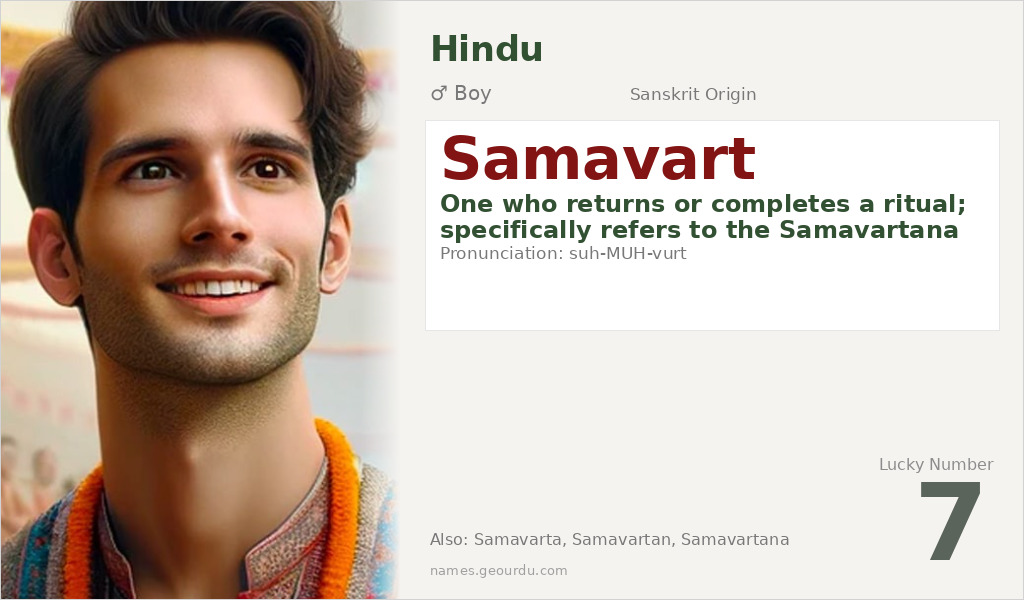
Samavart is a distinctive Hindu boy’s name rooted in ancient Sanskrit tradition, evoking themes of completion and ritual transition. Unlike common names, it draws directly from the Samavartana ceremony, marking the end of Vedic studies in Hinduism. This name carries deep cultural and religious resonance, offering a unique choice for parents seeking a name with historical and spiritual weight. Explore its meaning, origin, and significance in this detailed guide.
Meaning of Samavart
Samavart originates from Sanskrit, where ‘sama’ means ‘together, complete, or equal’ and ‘vart’ derives from the root ‘vartana’, meaning ‘to turn or return’. Specifically, it refers to the Samavartana (or Snana) ceremony in Hinduism, a ritual bath that signifies the completion of the Brahmacharya (student) phase and the return to household life after years of Vedic education. Thus, the name symbolizes transition, accomplishment, and renewal. It is not a direct reference to Lord Vishnu, as mistakenly stated in some sources, but is embedded in Hindu ritualistic practices. The name is rare and primarily used in religious or traditional contexts, emphasizing values of learning and spiritual milestones.
| 📛 Name | Samavart |
| 💎 Meaning | One who returns or completes a ritual; specifically refers to the Samavartana ceremony in Hinduism marking the completion of Vedic studies |
| 👤 Gender | Boy |
| 🕌 Religion | Hindu |
| 🌍 Origin | Sanskrit |
| 🗣 Pronunciation | suh-MUH-vurt |
| ✍️ Urdu | سماورٹ |
| ✍️ Arabic | سامافارت |
| 🔢 Numerology | 7 |
| ✨ Spellings | Samavarta, Samavartan, Samavartana |
Origin & Cultural Significance
Samavart has its origins in ancient Sanskrit texts and Hindu rituals, particularly within the Dharmashastras (legal and ethical scriptures) that outline life stages (Ashramas). The Samavartana ceremony is a key rite of passage in traditional Hindu education, dating back thousands of years and still observed in some communities today. As a name, it is more common in India among families with strong ties to Vedic traditions or priestly lineages. It reflects a cultural emphasis on education, discipline, and spiritual growth, though it remains uncommon compared to other Sanskrit-derived names. The name’s usage is largely confined to Hindu contexts, without significant spread to other religions or regions.
Personality Traits
Those named Samavart are often perceived as thoughtful, methodical, and dedicated, mirroring the name’s association with ritual completion and scholarly pursuits. They may exhibit a calm and introspective nature, valuing tradition, knowledge, and personal growth. In social settings, they might be seen as reliable and disciplined, with a focus on achieving goals and honoring cultural heritage.
Similar Names
If you like Samavart, consider: Samarth, Samar, Samvit, Vartik, Samyak
Famous People Named Samavart
- No widely known contemporary figures with this name found; it is rare and primarily used in traditional or religious contexts in India.
Frequently Asked Questions About Samavart
What does Samavart mean?
Samavart means 'one who returns or completes a ritual' in Sanskrit, specifically referring to the Samavartana ceremony in Hinduism that marks the end of Vedic studies.
Is Samavart a boy or girl name?
Samavart is traditionally a boy's name in Hindu culture, derived from masculine Sanskrit roots and associated with male-centric rituals in Vedic tradition.
What is the origin of Samavart?
Samavart originates from Sanskrit and Hindu tradition, directly linked to the Samavartana ritual ceremony in India, with no verified connections to other languages or cultures.





