
Table of Contents
Sambhar is a distinctive Hindu boy name with deep roots in Sanskrit language and Indian culture. Unlike many modern names, Sambhar carries a direct connection to nature, specifically referring to the majestic sambar deer found throughout the Indian subcontinent. This name evokes images of grace, wilderness, and natural beauty, making it a unique choice for parents seeking a name with ecological significance. While not extremely common, it holds cultural resonance through mythological references and natural symbolism.
Meaning of Sambhar
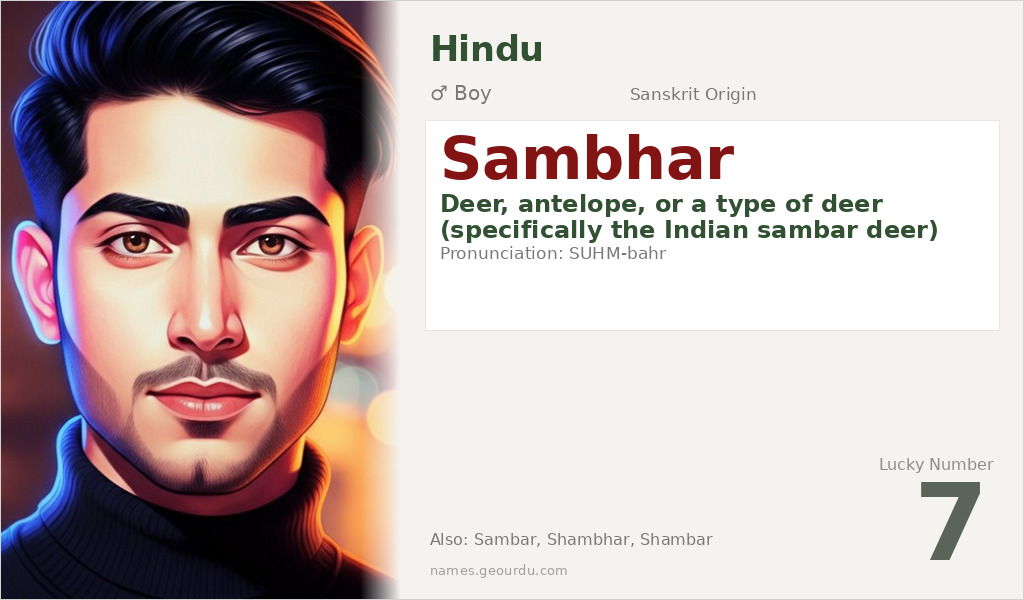
The name Sambhar originates from the Sanskrit word ‘śambara’ (शम्बर), which literally translates to ‘deer’ or ‘antelope’. In classical Sanskrit literature, this term specifically refers to the Indian sambar deer (Rusa unicolor), the largest deer species native to the Indian subcontinent. The mythological dimension comes from Śambara, a demon king mentioned in the Rigveda (1.51.6, 1.54.4, 1.112.14) who was defeated by Indra. In the Puranas, Śambara appears as an asura with magical powers who abducted Pradyumna, Krishna’s son. The name’s etymology is well-documented in Sanskrit dictionaries and zoological classifications, with the animal name being the primary contemporary reference.
| 📛 Name | Sambhar |
| 💎 Meaning | Deer, antelope, or a type of deer (specifically the Indian sambar deer) |
| 👤 Gender | Boy |
| 🕌 Religion | Hindu |
| 🌍 Origin | Sanskrit |
| 🗣 Pronunciation | SUHM-bahr |
| ✍️ Urdu | سنبھر |
| ✍️ Arabic | سامبار |
| 🔢 Numerology | 7 |
| ✨ Spellings | Sambar, Shambhar, Shambar, Sambhar |
Origin & Cultural Significance
Sambhar has its origins in ancient Sanskrit language and Hindu mythology. The name appears in Vedic texts dating back over 3,000 years, where Śambara is mentioned as a powerful demon defeated by the god Indra. Beyond mythology, the name gained practical usage as the designation for the sambar deer, an important animal in Indian ecosystems and culture. In modern times, the name is most recognized in connection with Sambhar Lake in Rajasthan, the largest salt lake in India, which according to legend was created during the battle between Śambara and Indra. While used as a personal name, it remains relatively uncommon compared to other Sanskrit-derived names.
Personality Traits
Those named Sambhar are often associated with qualities reminiscent of the deer: gracefulness, alertness, and sensitivity. They may possess a natural elegance in their movements and interactions, combined with keen observational skills. Like the sambar deer that is known for its vigilance in forest environments, individuals with this name might demonstrate heightened awareness of their surroundings and intuitive understanding of social dynamics. The name suggests someone who moves through life with both caution and beauty, balancing strength with gentleness.
Similar Names
If you like Sambhar, consider: Mrigendra, Harina, Kasturi, Rishya, Mayur
Famous People Named Sambhar
- Sambhar Singh — Indian cricketer who played for Rajasthan in domestic cricket
- Sambhar Lake — Not a person but a famous salt lake in Rajasthan, India, named after the demon king Śambara from mythology
Frequently Asked Questions About Sambhar
What does Sambhar mean?
Sambhar means 'deer' or specifically refers to the Indian sambar deer. It originates from the Sanskrit word 'śambara' (शम्बर).
Is Sambhar a boy or girl name?
Sambhar is traditionally a boy's name in Hindu naming conventions, though names based on animals can sometimes be used for both genders in modern contexts.
What is the origin of Sambhar?
Sambhar originates from Sanskrit language and Hindu mythology. It appears in Vedic texts as the name of a demon king and later became associated with the sambar deer species.





