
Table of Contents
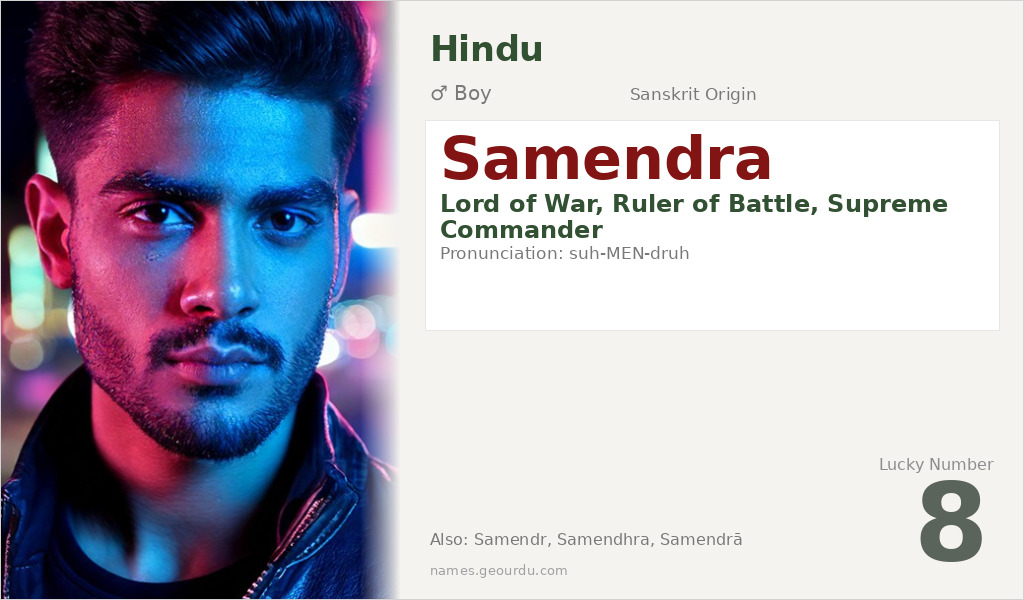
Samendra is a powerful and meaningful name with deep roots in ancient Indian culture and Sanskrit tradition. Derived from classical Sanskrit elements, this name carries connotations of leadership, strength, and divine authority. As a Hindu boy’s name, Samendra reflects the rich mythological heritage of India while offering parents a distinctive choice with profound significance. The name’s martial associations make it particularly suitable for families valuing strength, protection, and noble leadership.
Meaning of Samendra
Samendra is a compound Sanskrit name formed from ‘Samara’ (समर), meaning ‘war’ or ‘battle’, and ‘Indra’ (इन्द्र), meaning ‘lord’, ‘ruler’, or ‘king’. In Hindu mythology, Indra is the king of the gods (Devas) and the god of rain, thunder, and war, making this combination particularly potent. The name therefore translates precisely to ‘Lord of War’ or ‘Ruler of Battle’, suggesting supreme command and authority in conflict situations. This etymology places Samendra within a tradition of Sanskrit names that combine elements to create meaningful compounds, similar to names like Samarendra (Lord of Equal Rulers) or Samarjit (Victorious in Battle). The name appears in various classical Sanskrit texts and continues to be used in modern Hindu naming traditions.
| 📛 Name | Samendra |
| 💎 Meaning | Lord of War, Ruler of Battle, Supreme Commander |
| 👤 Gender | Boy |
| 🕌 Religion | Hindu |
| 🌍 Origin | Sanskrit |
| 🗣 Pronunciation | suh-MEN-druh |
| ✍️ Urdu | سامندر |
| ✍️ Arabic | ساميندرا |
| 🔢 Numerology | 8 |
| ✨ Spellings | Samendr, Samendhra, Samendrā |
Origin & Cultural Significance
Samendra originates from classical Sanskrit, the ancient liturgical language of Hinduism, Buddhism, and Jainism. As a compound name, it follows the traditional Sanskrit practice of combining meaningful elements to create names with specific connotations. The name’s components draw directly from Hindu mythology, where Indra is one of the principal deities in the Rigveda and later texts. Historically, names containing ‘Indra’ have been popular among Hindu families, particularly those with Kshatriya (warrior) heritage, as they symbolize strength, protection, and divine favor. While primarily used in India and among Hindu communities worldwide, the name’s Sanskrit roots give it cultural significance across South Asia and in diaspora communities.
Personality Traits
Those named Samendra are often perceived as natural leaders with strong protective instincts and strategic minds. The name’s meaning suggests someone who approaches challenges with courage and determination, capable of making difficult decisions in complex situations. While the martial connotations might imply aggression, the name actually suggests disciplined strength and responsible leadership. Individuals with this name may exhibit qualities of resilience, authority, and the ability to inspire others during challenging times.
Similar Names
If you like Samendra, consider: Samar, Indra, Samarendra, Samarjit, Yudhishthira
Famous People Named Samendra
- Samendra Chandra — Indian classical musician and composer
- Samendra Singh — Contemporary Indian author and poet
Frequently Asked Questions About Samendra
What does Samendra mean?
Samendra means 'Lord of War' or 'Ruler of Battle' in Sanskrit, combining 'Samara' (war) and 'Indra' (lord/ruler).
Is Samendra a boy or girl name?
Samendra is exclusively a boy's name in Hindu naming tradition, derived from masculine Sanskrit elements and associated with the male deity Indra.
What is the origin of Samendra?
Samendra originates from classical Sanskrit, the ancient language of Hindu scriptures, and is specifically a Hindu name with roots in Indian mythology and tradition.





