Table of Contents
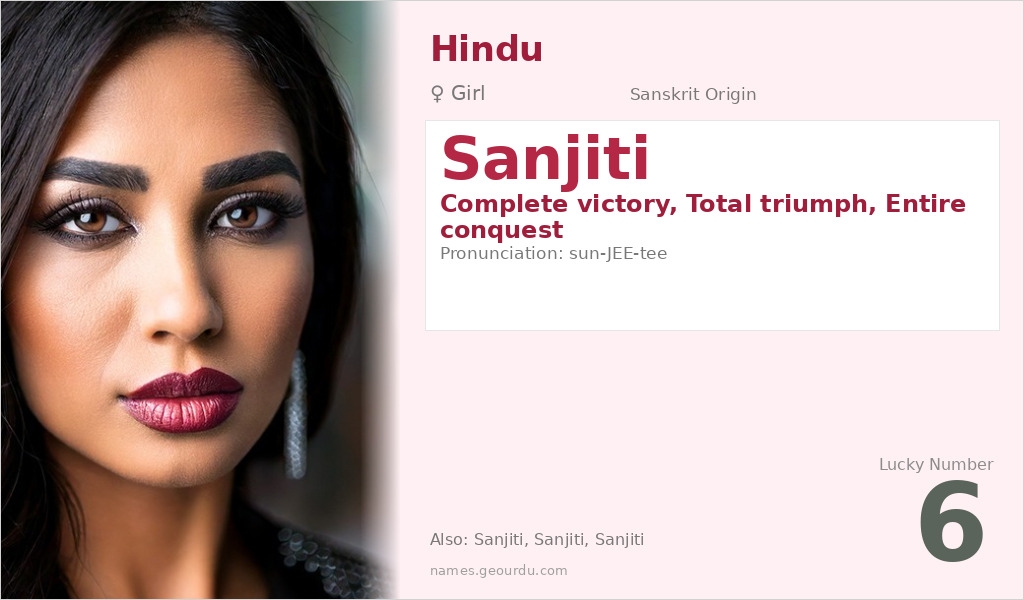
Sanjiti is a beautiful and powerful Sanskrit name for girls that carries the profound meaning of ‘complete victory’ or ‘total triumph’. Rooted in ancient Indian literature and philosophy, this name embodies strength, determination, and ultimate success. Popular among Hindu families, Sanjiti represents both cultural heritage and aspirational qualities for a child’s future. The name’s linguistic elegance and meaningful depth make it a timeless choice for parents seeking a name with both traditional roots and contemporary relevance.
Meaning of Sanjiti
Sanjiti originates from the Sanskrit language, specifically from the word ‘Sanjaya’ (संजय), which combines ‘sam’ (सं) meaning ‘complete’ or ‘together’ with the root ‘ji’ (जि) meaning ‘to conquer’ or ‘to win’. This creates the fundamental meaning of ‘complete victory’ or ‘total triumph’. The feminine form ‘Sanjiti’ follows standard Sanskrit morphology where the suffix ‘-ti’ is added to create feminine nouns from verbal roots. In Vedic and classical Sanskrit literature, the concept of ‘sanjaya’ appears in philosophical contexts referring to spiritual victory or complete mastery. The name’s etymology reflects the ancient Indian cultural emphasis on dharma (righteous victory) rather than mere conquest, making it a name with both literal and philosophical significance.
| 📛 Name | Sanjiti |
| 💎 Meaning | Complete victory, Total triumph, Entire conquest |
| 👤 Gender | Girl |
| 🕌 Religion | Hindu |
| 🌍 Origin | Sanskrit |
| 🗣 Pronunciation | sun-JEE-tee |
| ✍️ Urdu | سنجیتی |
| ✍️ Arabic | سانجيتي |
| 🔢 Numerology | 6 |
| ✨ Spellings | Sanjiti, Sanjiti, Sanjiti, Sanjiti |
Origin & Cultural Significance
Sanjiti has its origins in ancient Sanskrit literature and Hindu cultural traditions. The name appears in various forms throughout Indian history, most notably in the Mahabharata where Sanjaya serves as an important character who narrates the Bhagavad Gita to the blind king Dhritarashtra. While the masculine form Sanjaya is more commonly documented in historical texts, the feminine Sanjiti developed as a natural linguistic evolution within Sanskrit naming conventions. The name is particularly popular in North Indian states like Uttar Pradesh, Bihar, and Madhya Pradesh, though it has spread throughout the Hindu diaspora. In contemporary India, Sanjiti represents a connection to classical Sanskrit heritage while maintaining modern appeal, often chosen by parents who value both cultural tradition and the aspirational qualities the name embodies.
Personality Traits
Those named Sanjiti are often perceived as natural leaders with strong determination and strategic thinking. The name’s meaning of ‘complete victory’ tends to influence personality perceptions, with Sanjitis frequently described as persistent, goal-oriented individuals who approach challenges with thorough preparation. They typically exhibit balanced qualities of strength and compassion, understanding that true victory involves ethical conduct and consideration for others. While individual personalities vary, the cultural associations with the name often create expectations of resilience, intelligence, and the ability to overcome obstacles through thoughtful action rather than mere force.
Similar Names
If you like Sanjiti, consider: Sanjana, Sanjaya, Sanjita, Sanjivani, Sanjukta
Famous People Named Sanjiti
- Sanjiti — Indian classical dancer and choreographer known for her contributions to Bharatanatyam
- Sanjiti Mishra — Contemporary Indian poet and writer from Uttar Pradesh
Frequently Asked Questions About Sanjiti
What does Sanjiti mean?
Sanjiti means 'complete victory' or 'total triumph' in Sanskrit, derived from the root words 'sam' (complete) and 'ji' (to conquer).
Is Sanjiti a boy or girl name?
Sanjiti is exclusively a feminine name in Hindu naming traditions, following Sanskrit grammatical rules for feminine noun formation with the '-ti' suffix.
What is the origin of Sanjiti?
Sanjiti originates from Sanskrit, the classical language of ancient India, with roots in Hindu literature and philosophy, particularly associated with concepts of righteous victory in texts like the Mahabharata.