
Table of Contents
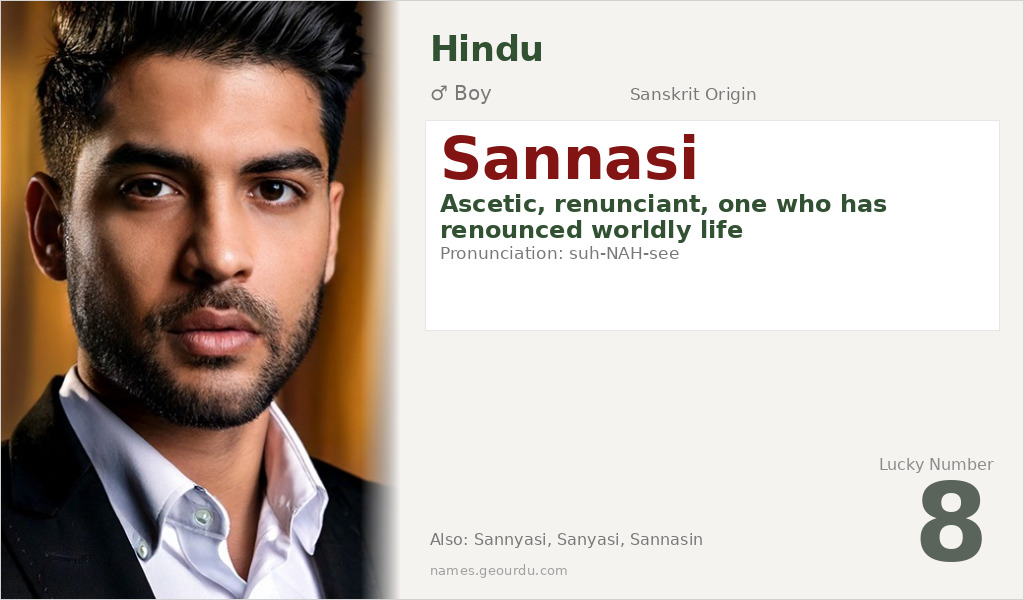
Sannasi is a profound Hindu boy name with rich spiritual significance rooted in ancient Sanskrit tradition. Meaning ‘ascetic’ or ‘one who has renounced worldly life’, this name carries the weight of Hindu philosophical ideals and represents the highest stage of spiritual pursuit. Unlike common modern names, Sannasi evokes images of wisdom, detachment, and spiritual dedication that have been valued in Indian culture for millennia. Choosing this name connects a child to a tradition of contemplative wisdom and philosophical depth.
Meaning of Sannasi
Sannasi derives directly from the Sanskrit word ‘sannyāsin’ (संन्यासिन्), which is composed of ‘sam’ (complete) and ‘nyāsa’ (renunciation). In Hindu philosophy, a sannyāsin is someone who has entered the fourth and final stage of life (sannyāsa ashrama), having renounced all material possessions, family ties, and worldly desires to pursue spiritual liberation (moksha). The term appears in ancient Hindu texts like the Upanishads and Bhagavad Gita, where it describes those who have attained the highest level of spiritual detachment. This is not merely a name but a title of great respect in Hindu tradition, representing someone who has dedicated their life entirely to spiritual practice and self-realization.
| 📛 Name | Sannasi |
| 💎 Meaning | Ascetic, renunciant, one who has renounced worldly life |
| 👤 Gender | Boy |
| 🕌 Religion | Hindu |
| 🌍 Origin | Sanskrit |
| 🗣 Pronunciation | suh-NAH-see |
| ✍️ Urdu | سنیاسی |
| ✍️ Arabic | سانياسي |
| 🔢 Numerology | 8 |
| ✨ Spellings | Sannyasi, Sanyasi, Sannasin, Sannyasin |
Origin & Cultural Significance
Sannasi originates from Sanskrit, the classical language of ancient India and the primary liturgical language of Hinduism. The concept of sannyāsa (renunciation) is central to Hindu philosophy, dating back to the Upanishadic period (circa 800-200 BCE). Throughout Indian history, famous sannyāsins like Adi Shankara, Ramanuja, and modern figures like Swami Vivekananda have shaped Hindu thought and practice. While primarily used in Hindu communities across India, the name is particularly common in South Indian states where Sanskrit-derived names remain popular. The name represents not just an individual but an ideal—the pursuit of spiritual truth over material existence.
Personality Traits
Those named Sannasi are often associated with qualities of wisdom, introspection, and spiritual depth. They may exhibit natural tendencies toward contemplation, philosophical thinking, and valuing simplicity over materialism. The name suggests someone who approaches life with thoughtful consideration rather than impulsiveness, and who may possess an innate understanding of life’s deeper meanings. While not necessarily ascetic in the literal sense, individuals with this name often embody the philosophical ideals their name represents.
Similar Names
If you like Sannasi, consider: Sannyas, Tyagi, Vairagi, Muni, Yogi
Famous People Named Sannasi
- Sannasi Appavu — 19th century Indian freedom fighter from Tamil Nadu who participated in the Indian Rebellion of 1857
- Various Hindu ascetics and spiritual teachers throughout Indian history have been called Sannasi as a title or name
Frequently Asked Questions About Sannasi
What does Sannasi mean?
Sannasi means 'ascetic', 'renunciant', or 'one who has renounced worldly life'. It comes from the Sanskrit word 'sannyāsin' which literally means 'one who has completely renounced'.
Is Sannasi a boy or girl name?
Sannasi is traditionally a boy name in Hindu culture, though the concept of sannyāsa (renunciation) is gender-neutral in Hindu philosophy. The name form Sannasi is predominantly masculine in usage.
What is the origin of Sannasi?
Sannasi originates from Sanskrit, the ancient classical language of India. It comes specifically from Hindu philosophical tradition where 'sannyāsin' refers to someone in the fourth stage of life who has renounced all worldly attachments to pursue spiritual liberation.





