
Table of Contents
Sarang is a beautiful name with deep roots in Indian culture and Sanskrit language. Meaning ‘deer’ or ‘antelope’, it evokes images of grace, beauty, and natural elegance. Beyond its literal meaning, Sarang also represents one of the most important ragas in Indian classical music, connecting the name to artistic expression. This dual significance makes Sarang a meaningful choice that bridges nature and culture.
Meaning of Sarang
The name Sarang originates from the Sanskrit word ‘śāraṅga’ (शारङ्ग), which specifically refers to a spotted deer or antelope. In Sanskrit literature, deer are frequently depicted as symbols of beauty, gentleness, and swift movement. Additionally, Sarang is the name of a significant raga in both Hindustani and Carnatic classical music traditions, characterized by its bright, joyful melodic structure. This musical association adds a layer of artistic meaning to the name, connecting it to India’s rich cultural heritage. The raga Sarang is traditionally performed during the afternoon hours and is known for its evocative emotional quality.
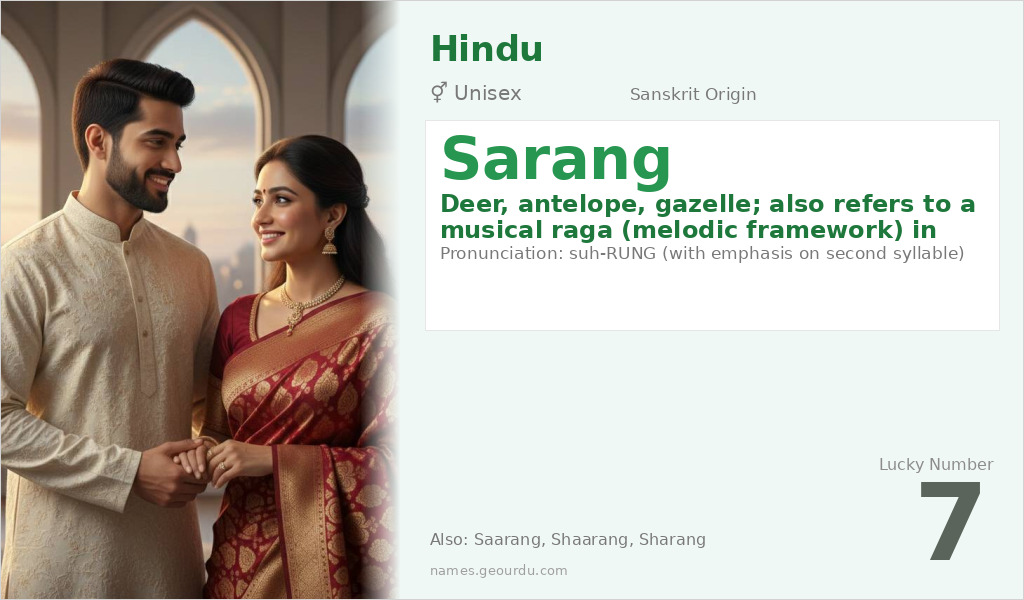
| 📛 Name | Sarang |
| 💎 Meaning | Deer, antelope, gazelle; also refers to a musical raga (melodic framework) in Indian classical music |
| 👤 Gender | Unisex |
| 🕌 Religion | Hindu |
| 🌍 Origin | Sanskrit |
| 🗣 Pronunciation | suh-RUNG (with emphasis on second syllable) |
| ✍️ Urdu | سارنگ |
| ✍️ Arabic | سارانغ |
| 🔢 Numerology | 7 |
| ✨ Spellings | Saarang, Shaarang, Sharang, Sarangh |
Origin & Cultural Significance
Sarang has its origins in ancient Sanskrit, the classical language of India that forms the basis of many Hindu texts and traditions. The name appears in various Sanskrit literary works where deer imagery is used symbolically. In Hindu culture, deer are sometimes associated with deities like Shiva and are mentioned in epics like the Ramayana and Mahabharata. The musical raga Sarang has been part of Indian classical traditions for centuries, with references in medieval musical texts. While primarily used in Hindu communities, the name has gained broader appeal due to its pleasant sound and meaningful connotations.
Personality Traits
People named Sarang are often perceived as having qualities associated with deer—graceful, alert, and gentle. They may possess artistic inclinations, particularly in music, reflecting the name’s connection to the classical raga. Their intuitive nature helps them navigate social situations with sensitivity, while their creative spirit drives them toward expressive pursuits. The deer symbolism also suggests a certain elegance in movement and thought, making Sarangs often appreciated for their aesthetic sensibilities.
Similar Names
If you like Sarang, consider: Mrigendra, Harina, Kasturi, Rishabha, Mayura
Famous People Named Sarang
- Sarang Sathaye — Indian comedian and content creator
- Sarang Dev Pandit — Indian classical musician specializing in the Sarang raga
Frequently Asked Questions About Sarang
What does Sarang mean?
Sarang means 'deer' or 'antelope' in Sanskrit. It also refers to a classical Indian musical raga known for its bright, joyful character.
Is Sarang a boy or girl name?
While traditionally more common for boys in Hindu communities, Sarang is increasingly used as a unisex name in modern times, suitable for both genders.
What is the origin of Sarang?
Sarang originates from Sanskrit, the ancient Indian language. It has both literal meaning (deer) and cultural significance as a raga in Indian classical music traditions.