
Table of Contents
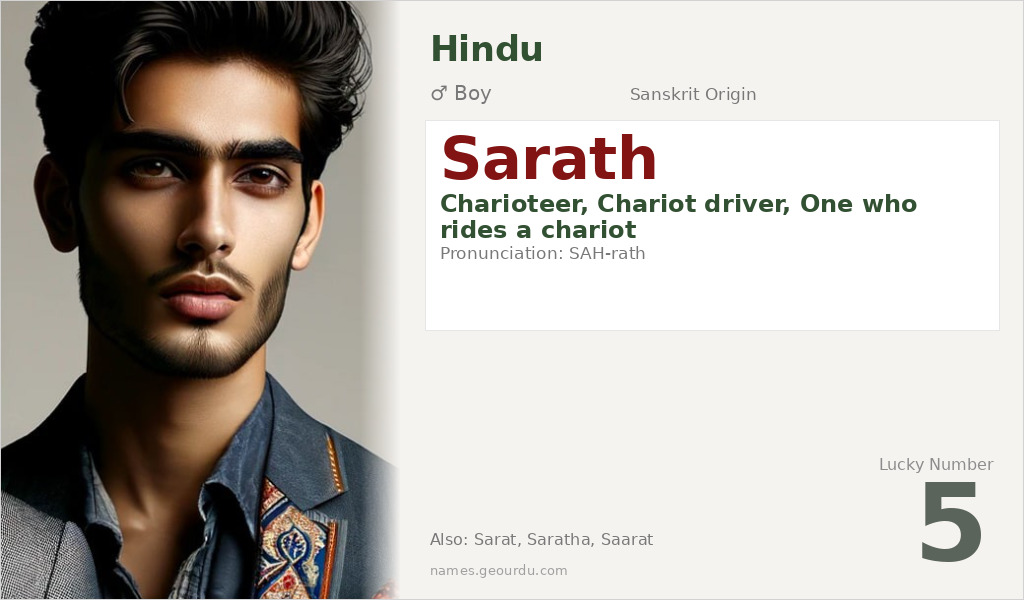
Sarath is a distinguished Hindu boy name with profound roots in ancient Indian culture and mythology. Derived from Sanskrit, this name evokes images of skilled charioteers guiding warriors to victory in epic battles. More than just a historical reference, Sarath symbolizes guidance, partnership, and strategic navigation through life’s challenges. Discover the rich heritage and contemporary relevance of this traditional name.
Meaning of Sarath
The name Sarath originates from the Sanskrit word ‘सारथि’ (sārathi), which specifically means ‘charioteer’ or ‘chariot driver’. In the context of ancient Indian literature, a sārathi was not merely a driver but a crucial companion and guide to warriors, responsible for maneuvering the chariot during battle while offering counsel and protection. This term appears prominently in the Mahabharata where Lord Krishna serves as Arjuna’s sārathi, delivering the spiritual teachings of the Bhagavad Gita. The name thus carries connotations of skillful guidance, trusted partnership, and the ability to navigate difficult paths toward righteous goals.
| 📛 Name | Sarath |
| 💎 Meaning | Charioteer, Chariot driver, One who rides a chariot |
| 👤 Gender | Boy |
| 🕌 Religion | Hindu |
| 🌍 Origin | Sanskrit |
| 🗣 Pronunciation | SAH-rath |
| ✍️ Urdu | سارتھ |
| ✍️ Arabic | سارات |
| 🔢 Numerology | 5 |
| ✨ Spellings | Sarat, Saratha, Saarat, Saraath |
Origin & Cultural Significance
Sarath has its origins in classical Sanskrit literature and Hindu tradition, particularly from the epic period of ancient India (approximately 400 BCE to 400 CE). The name is directly connected to the chariot culture that was central to warfare and royal processions in Vedic and post-Vedic society. While primarily used in Hindu communities across India, Sri Lanka, and the diaspora, the name has also been adopted in some Buddhist contexts due to shared cultural heritage. Unlike many modern invented names, Sarath has documented historical usage and appears in traditional naming practices rather than contemporary innovations.
Personality Traits
Those named Sarath often embody the qualities of their namesake—they tend to be natural guides who help others navigate life’s challenges with wisdom and skill. Like the charioteer who must balance control with adaptability, Saraths typically demonstrate strategic thinking and reliability in partnerships. They often excel in roles requiring direction, mentorship, or coordinated effort, bringing people together toward common objectives with steady leadership.
Similar Names
If you like Sarath, consider: Sarathi, Sarathkumar, Sarat Chandra, Sarthak, Sarvesh
Famous People Named Sarath
- Sarath Kumar — Indian film actor and politician known for Tamil cinema
- Sarath Fonseka — Sri Lankan politician and former Commander of the Sri Lanka Army
Frequently Asked Questions About Sarath
What does Sarath mean?
Sarath means 'charioteer' or 'chariot driver', derived from the Sanskrit word 'सारथि' (sārathi). It refers specifically to the skilled driver of a warrior's chariot in ancient Indian epics.
Is Sarath a boy or girl name?
Sarath is traditionally a masculine name in Hindu naming conventions, though names can sometimes be adapted across genders in modern usage. Historically and culturally, it has been used exclusively for boys.
What is the origin of Sarath?
Sarath originates from Sanskrit, the classical language of ancient India, and is deeply rooted in Hindu mythology and literature, particularly the Mahabharata where the charioteer plays a significant role.





