
Table of Contents
Seemanta is a distinctive Sanskrit name with deep cultural roots in Hindu tradition. Meaning ‘boundary’ or ‘frontier,’ this name carries connotations of limits, transitions, and new beginnings. Historically significant in Indian literature and rituals, Seemanta offers a meaningful choice for parents seeking a name with both linguistic elegance and philosophical depth. Its connection to ancient traditions makes it particularly resonant within Hindu communities.
Meaning of Seemanta
Seemanta originates from the Sanskrit compound word सीमान्त (sīmānta), combining ‘sīmā’ meaning boundary, limit, or frontier, and ‘anta’ meaning end, edge, or conclusion. The term appears in classical Sanskrit texts including the Mahabharata, where it denotes geographical boundaries between kingdoms. In Hindu ritual context, ‘sīmāntonnayana’ refers to the ceremony marking the parting of a pregnant woman’s hair, symbolizing protection during transition. Thus, while the name fundamentally means ‘boundary,’ it carries layered meanings of protection during liminal states and the demarcation between different realms or phases of life.
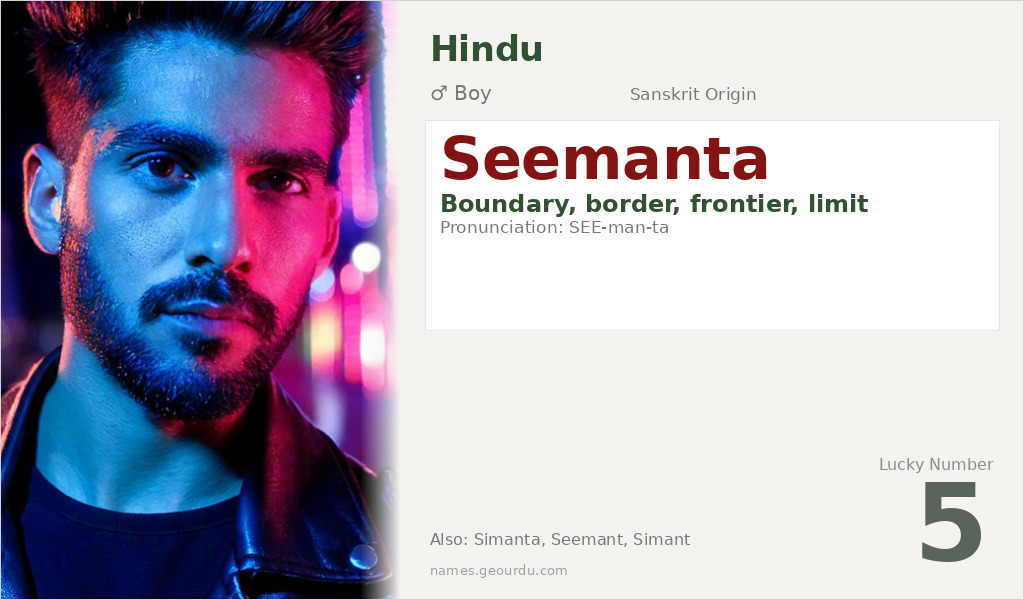
| 📛 Name | Seemanta |
| 💎 Meaning | Boundary, border, frontier, limit |
| 👤 Gender | Boy |
| 🕌 Religion | Hindu |
| 🌍 Origin | Sanskrit |
| 🗣 Pronunciation | SEE-man-ta |
| ✍️ Urdu | سیمانتا |
| ✍️ Arabic | سيمانتا |
| 🔢 Numerology | 5 |
| ✨ Spellings | Simanta, Seemant, Simant, Sīmānta |
Origin & Cultural Significance
Seemanta has its roots in ancient Sanskrit language and Hindu cultural traditions. The name appears in classical Indian literature, including references in the Mahabharata where it describes territorial boundaries. In Hindu rituals, particularly the ‘sīmāntonnayana’ ceremony performed during pregnancy, the term gained specific cultural significance related to protection and transition. While primarily used in Hindu communities across India, especially in regions with strong Sanskrit traditions like Odisha, Bengal, and Maharashtra, the name maintains its classical linguistic purity without significant regional variations. Its continued usage reflects the preservation of Sanskrit naming traditions in modern Hindu practice.
Personality Traits
Those named Seemanta often exhibit qualities associated with boundaries and transitions—they tend to be adaptable, curious, and comfortable with change. Their natural inclination toward exploration and defining limits makes them effective in roles requiring discernment and judgment. The numerological association with number 5 further emphasizes their dynamic nature, love for freedom, and progressive outlook on life.
Similar Names
If you like Seemanta, consider: Simantini, Seema, Antara, Avinash, Siddhartha
Famous People Named Seemanta
- Seemanta Sharma — Indian classical musician and composer
- Seemanta Mohanty — Odia writer and literary critic
Frequently Asked Questions About Seemanta
What does Seemanta mean?
Seemanta means 'boundary,' 'frontier,' or 'limit' in Sanskrit. It specifically refers to territorial borders or the parting line of hair in ritual context.
Is Seemanta a boy or girl name?
Seemanta is traditionally a masculine name in Hindu naming conventions, though some modern variations like Seemantini exist for girls.
What is the origin of Seemanta?
Seemanta originates from Sanskrit language and Hindu cultural traditions, with documented usage in classical Indian texts like the Mahabharata.





