Table of Contents
Seethalakshmi is a beautiful and deeply meaningful Hindu name that combines two of the most revered goddesses in Indian tradition. This Sanskrit compound name brings together Sita, the ideal wife and embodiment of virtue from the Ramayana, with Lakshmi, the goddess of wealth and prosperity. Popular particularly in South India, this name represents the divine feminine principle in its dual aspects of spiritual purity and material abundance. Choosing this name for a girl child reflects a desire for her to embody both the virtuous qualities of Sita and the prosperous blessings of Lakshmi.
Meaning of Seethalakshmi
Seethalakshmi is a compound Sanskrit name with profound theological significance. The first component ‘Seetha’ (also spelled Sita) refers to the divine consort of Lord Rama in the Hindu epic Ramayana, representing purity, devotion, and ideal womanhood. The second component ‘Lakshmi’ is the goddess of wealth, fortune, and prosperity in Hinduism. Together, the name signifies ‘Goddess Lakshmi in her form as Sita’ or ‘Lakshmi who is Sita.’ This reflects the Hindu belief that Sita is an avatar or manifestation of Lakshmi, specifically born on Earth to accompany Lord Rama (an avatar of Vishnu, Lakshmi’s consort). The name thus encapsulates the concept of the divine feminine embodying both spiritual virtue and material abundance.
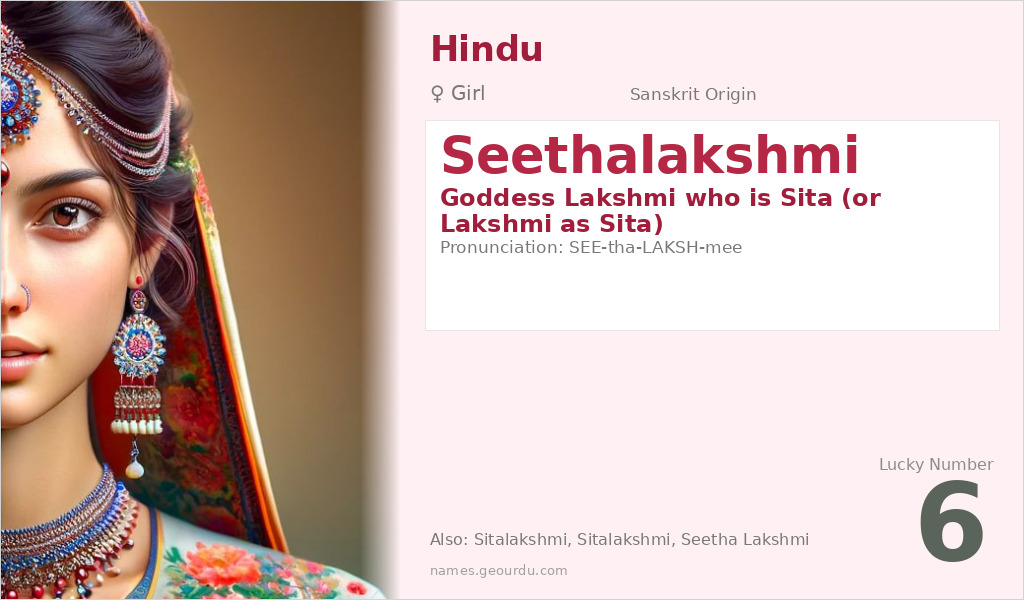
| 📛 Name | Seethalakshmi |
| 💎 Meaning | Goddess Lakshmi who is Sita (or Lakshmi as Sita) |
| 👤 Gender | Girl |
| 🕌 Religion | Hindu |
| 🌍 Origin | Sanskrit |
| 🗣 Pronunciation | SEE-tha-LAKSH-mee |
| ✍️ Urdu | سیتھا لکشمی |
| ✍️ Arabic | سيتا لاكشمي |
| 🔢 Numerology | 6 |
| ✨ Spellings | Sitalakshmi, Sitalakshmi, Seetha Lakshmi, Sita Lakshmi |
Origin & Cultural Significance
Seethalakshmi originates from classical Sanskrit, the ancient liturgical language of Hinduism. The name emerged from Hindu religious and cultural traditions, particularly in South India where compound deity names are common in naming conventions. It reflects the syncretic nature of Hindu devotion where multiple aspects of the divine are honored together. The name gained popularity as parents sought to invoke the blessings of both Sita (for moral character and devotion) and Lakshmi (for prosperity and good fortune) upon their daughters. While used throughout India, it remains particularly prevalent in Tamil Nadu, Karnataka, Andhra Pradesh, and Kerala where Sanskrit-derived names with religious significance are traditionally favored.
Personality Traits
Those named Seethalakshmi are often perceived as having a balanced personality that combines strength with gentleness. They typically exhibit the steadfast devotion and moral integrity associated with Sita, along with the graciousness and ability to attract abundance linked to Lakshmi. These individuals often become pillars of their families and communities, known for their nurturing nature and ability to maintain harmony. Their presence is frequently described as both grounding and uplifting, reflecting the dual divine qualities their name represents.
Similar Names
If you like Seethalakshmi, consider: Sitadevi, Lakshmisita, Sitaram, Lakshminarayan, Radhalakshmi
Famous People Named Seethalakshmi
- Seethalakshmi (Indian actress) — South Indian actress known for her work in Tamil and Telugu cinema during the 1950s-1970s
- Seethalakshmi (Carnatic musician) — Renowned veena player and classical musician from Tamil Nadu
Frequently Asked Questions About Seethalakshmi
What does Seethalakshmi mean?
Seethalakshmi means 'Goddess Lakshmi as Sita' or 'Lakshmi who is Sita' in Sanskrit. It's a compound name combining two revered Hindu goddesses, representing both spiritual virtue and material prosperity.
Is Seethalakshmi a boy or girl name?
Seethalakshmi is exclusively a girl's name in Hindu tradition, as it references two important feminine deities – Sita and Lakshmi. The name is given to honor these goddesses and invoke their qualities in the child.
What is the origin of Seethalakshmi?
Seethalakshmi originates from Sanskrit, the classical language of Hinduism. It emerged from Hindu religious traditions, particularly in South India, where compound deity names are common in naming practices.