
Table of Contents
Servan is a distinctive name with deep historical roots that span centuries and cultures. While often associated with service and humility, this name carries a rich linguistic heritage that transcends any single religious tradition. From medieval Europe to modern usage, Servan has maintained its connection to devotion and duty. This exploration reveals the true origins and meanings behind this enduring name.
Meaning of Servan
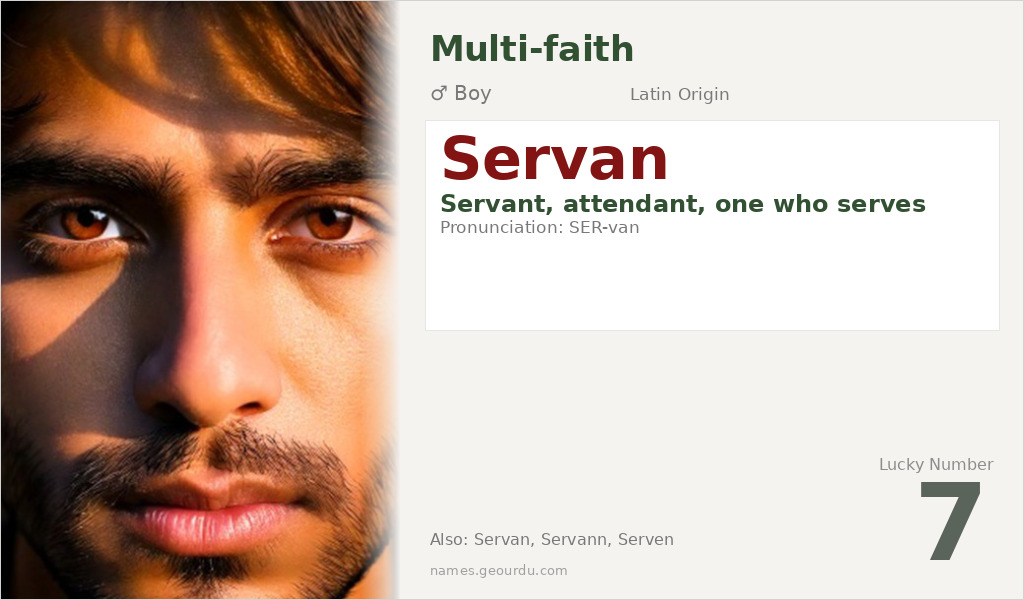
The name Servan originates from the Latin word ‘servus’, which directly translates to ‘servant’, ‘slave’, or ‘attendant’. This root evolved through Old French as ‘serf’ and ‘servant’, reflecting the social roles in medieval European societies. Unlike many names that have religious reinterpretations, Servan maintains its original secular meaning of service and subordination. The name appears in historical records across France, Germany, and other European regions, often as both a given name and surname for those in service positions. While sometimes interpreted as ‘Service Of God’ in Christian contexts, this represents a theological adaptation rather than the original linguistic meaning.
| 📛 Name | Servan |
| 💎 Meaning | Servant, attendant, one who serves |
| 👤 Gender | Boy |
| 🕌 Religion | Multi-faith |
| 🌍 Origin | Latin |
| 🗣 Pronunciation | SER-van |
| ✍️ Urdu | سرون |
| ✍️ Arabic | سيرفان |
| 🔢 Numerology | 7 |
| ✨ Spellings | Servan, Servann, Serven, Servin |
Origin & Cultural Significance
Servan has its primary origins in Latin, the language of ancient Rome, where ‘servus’ described those in servile positions. During the Middle Ages, the name spread throughout Europe, particularly in French-speaking regions where it became established as both a first name and family name. The name appears in historical records of saints and clergy, most notably Saint Servan of Valence in 5th-century France. While sometimes adopted in Christian contexts, the name predates Christianity and has been used in various cultural settings without exclusive religious affiliation. Its persistence into modern times demonstrates the enduring appeal of names connoting humility and service.
Personality Traits
Those named Servan are often associated with qualities of reliability, humility, and dedication. The name’s meaning suggests someone who approaches life with a service-oriented mindset, valuing practical contributions over personal recognition. This can manifest as strong organizational skills, loyalty to community or family, and a preference for structured environments where their dependable nature can shine.
Similar Names
If you like Servan, consider: Servais, Servatius, Serge, Sergio, Servius
Famous People Named Servan
- Servan of Valence — 5th-century French bishop and saint
- Servan Schreiber — French journalist and author
Frequently Asked Questions About Servan
What does Servan mean?
Servan means 'servant', 'attendant', or 'one who serves', deriving directly from the Latin word 'servus'.
Is Servan a boy or girl name?
Servan is traditionally a masculine name, though some modern variations might be used for any gender. Historically, it has been exclusively male across European cultures where it originated.
What is the origin of Servan?
Servan originates from Latin, specifically from the word 'servus' meaning servant. It spread through medieval Europe, particularly in French-speaking regions, and appears in historical records dating back to the 5th century.





