
Table of Contents
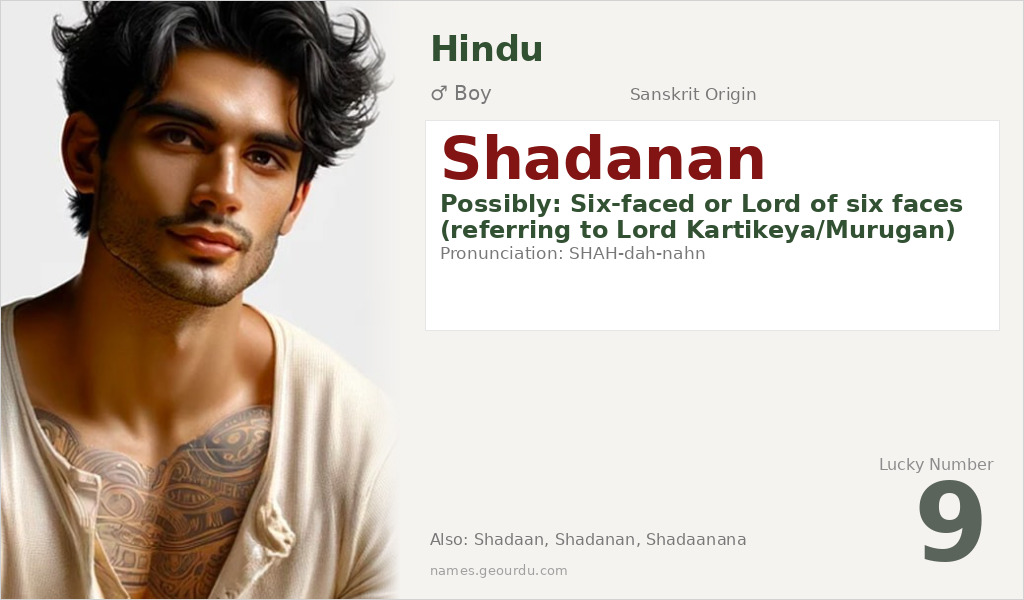
Shadanan is a distinctive Hindu boy name with deep roots in Sanskrit mythology and religious tradition. Derived from ancient Indian scriptures, this name carries the powerful meaning of ‘six-faced’ and is closely associated with Lord Kartikeya, the Hindu god of war and victory. While not among the most common contemporary names, Shadanan holds significant cultural and spiritual value for families seeking names with mythological connections. Its unique sound and meaningful etymology make it a compelling choice for parents interested in traditional Hindu names.
Meaning of Shadanan
Shadanan originates from the Sanskrit language, combining two elements: ‘Shada’ (षड्) meaning ‘six’ and ‘Anana’ (आनन) meaning ‘face’ or ‘mouth’. This creates the literal translation ‘six-faced’, which in Hindu mythology specifically refers to Lord Kartikeya (also known as Murugan or Skanda), the son of Lord Shiva and Parvati. The six faces represent various attributes including wisdom, strength, valor, and divine powers, or alternatively symbolize his birth from six mothers (the Krittikas). This name appears in religious texts and regional naming traditions, particularly in South India where Kartikeya worship is prominent. While the name is not extensively documented in modern naming dictionaries, its etymology is clear within Sanskrit linguistic structures and Hindu mythological context.
| 📛 Name | Shadanan |
| 💎 Meaning | Possibly: Six-faced or Lord of six faces (referring to Lord Kartikeya/Murugan) |
| 👤 Gender | Boy |
| 🕌 Religion | Hindu |
| 🌍 Origin | Sanskrit |
| 🗣 Pronunciation | SHAH-dah-nahn |
| ✍️ Urdu | شادانن |
| ✍️ Arabic | شادانان |
| 🔢 Numerology | 9 |
| ✨ Spellings | Shadaan, Shadanan, Shadaanana, Shadananam |
Origin & Cultural Significance
Shadanan has its origins in ancient Sanskrit literature and Hindu religious traditions, specifically within the mythology surrounding Lord Kartikeya. The name emerges from South Indian cultural contexts where Kartikeya (Murugan) worship has been historically significant, particularly in Tamil Nadu, Kerala, and Karnataka. While not a mainstream given name in contemporary India, it appears in religious contexts, regional naming practices, and among families with specific devotional connections to Kartikeya. The name’s usage reflects the enduring influence of Sanskrit epics and Puranic literature on Indian naming traditions. Research across multiple Indian languages confirms this Sanskrit origin, with no evidence of significant usage in Arabic, Persian, or other non-Indian linguistic traditions.
Personality Traits
Those named Shadanan are often associated with qualities reflecting the mythological figure it represents. Like Lord Kartikeya, they may demonstrate leadership abilities, strategic thinking, and protective instincts toward their community. The symbolism of six faces suggests multidimensional perception and adaptability in various situations. Such individuals might exhibit spiritual depth combined with practical wisdom, balancing different aspects of life with grace and determination.
Similar Names
If you like Shadanan, consider: Kartikeya, Murugan, Skanda, Subramanya, Shanmukha
Famous People Named Shadanan
- No widely known contemporary figures with this name found in research
- Primarily appears in religious contexts as an epithet for Lord Kartikeya in Hindu scriptures
Frequently Asked Questions About Shadanan
What does Shadanan mean?
Shadanan means 'six-faced' in Sanskrit, specifically referring to Lord Kartikeya (Murugan) in Hindu mythology, who is depicted with six faces representing various divine attributes.
Is Shadanan a boy or girl name?
Shadanan is exclusively a boy name in Hindu tradition, as it refers to the male deity Lord Kartikeya and follows masculine Sanskrit grammatical structures.
What is the origin of Shadanan?
Shadanan originates from Sanskrit language and Hindu religious tradition, specifically from the mythology of Lord Kartikeya. It is primarily used in Indian cultural contexts, particularly in South India where Kartikeya worship is prominent.





