
Table of Contents
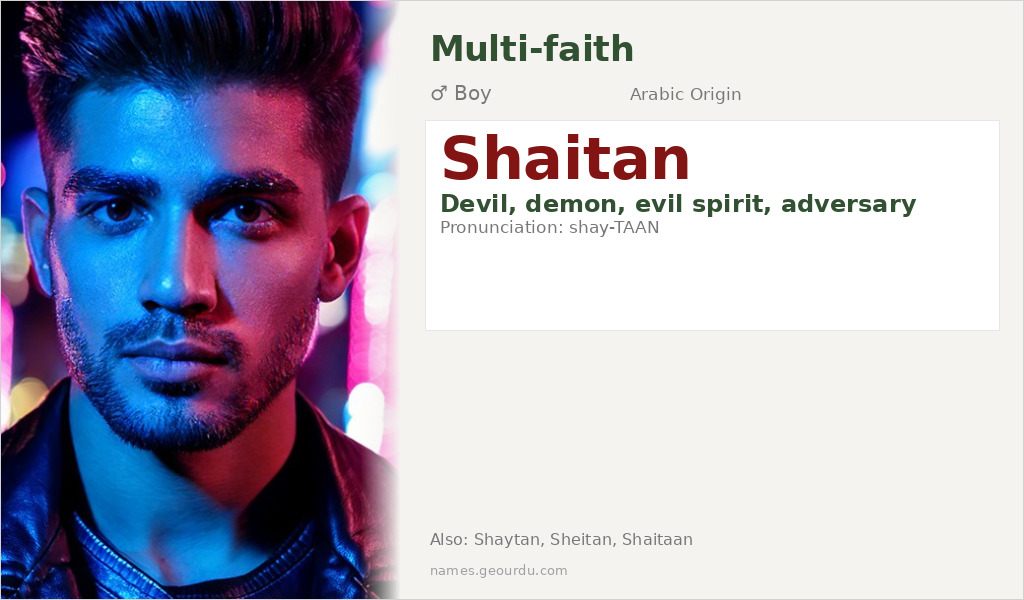
Shaitan is one of the most significant religious terms in Abrahamic faiths, particularly Islam, where it refers to the devil and evil spirits. While sometimes confused as a personal name, it is almost never used as such due to its profoundly negative connotations. This article explores the etymology, cultural significance, and proper understanding of this important term across multiple languages and religious traditions.
Meaning of Shaitan
Shaitan (شَيْطَان) is an Arabic noun derived from the triliteral root ش-ط-ن (sh-ṭ-n), which conveys meanings of distance, remoteness, and being cast away. Linguistically, it describes something or someone that is far from goodness or righteousness. In Islamic theology, Shaitan specifically refers to Iblis (Satan), the jinn who refused to bow to Adam and was cast out of heaven, as well as to all demons and evil spirits that tempt humans. The term appears 88 times in the Quran and has been adopted into numerous languages including Persian (شیطان), Urdu (شیطان), Turkish (şeytan), and even Swahili (shetani) with consistent demonic meanings.
| 📛 Name | Shaitan |
| 💎 Meaning | Devil, demon, evil spirit, adversary |
| 👤 Gender | Boy |
| 🕌 Religion | Multi-faith |
| 🌍 Origin | Arabic |
| 🗣 Pronunciation | shay-TAAN |
| ✍️ Urdu | شیطان |
| ✍️ Arabic | شَيْطَان |
| 🔢 Numerology | |
| ✨ Spellings | Shaytan, Sheitan, Shaitaan, Shaytaan |
Origin & Cultural Significance
The term Shaitan originates from pre-Islamic Arabic, where it referred to evil spirits or demons. It was incorporated into Islamic theology through the Quran in the 7th century CE, becoming the standard Arabic term for Satan and all evil supernatural beings. The concept spread throughout the Muslim world and into neighboring cultures through trade, conquest, and religious exchange. While the word exists in Hindu-majority regions like India and Pakistan due to historical Muslim presence and linguistic borrowing, it maintains its Islamic theological meaning and is not part of Hindu naming traditions or mythology.
Personality Traits
Since Shaitan is not used as a personal name in any culture, assigning personality traits would be inappropriate. In religious and cultural contexts where the term appears, it represents the embodiment of evil, temptation, and rebellion against divine authority. The concept serves as a moral and theological counterpoint to righteousness in Islamic tradition, warning against pride, disobedience, and moral corruption.
Similar Names
If you like Shaitan, consider: Iblis, Azazel, Lucifer, Mephistopheles, Diablo
Famous People Named Shaitan
- None — Shaitan is not used as a personal name in any culture due to its negative meaning
Frequently Asked Questions About Shaitan
What does Shaitan mean?
Shaitan means devil, demon, or evil spirit in Arabic. It is the primary term for Satan in Islamic theology and appears frequently in the Quran.
Is Shaitan a boy or girl name?
Shaitan is not used as a personal name for either gender in any culture due to its negative meaning. It is exclusively a religious/theological term.
What is the origin of Shaitan?
Shaitan originates from Arabic, specifically from Islamic religious texts. The word comes from the root ش-ط-ن meaning 'to be far away' and was incorporated into Islamic theology in the 7th century CE.





