
Table of Contents
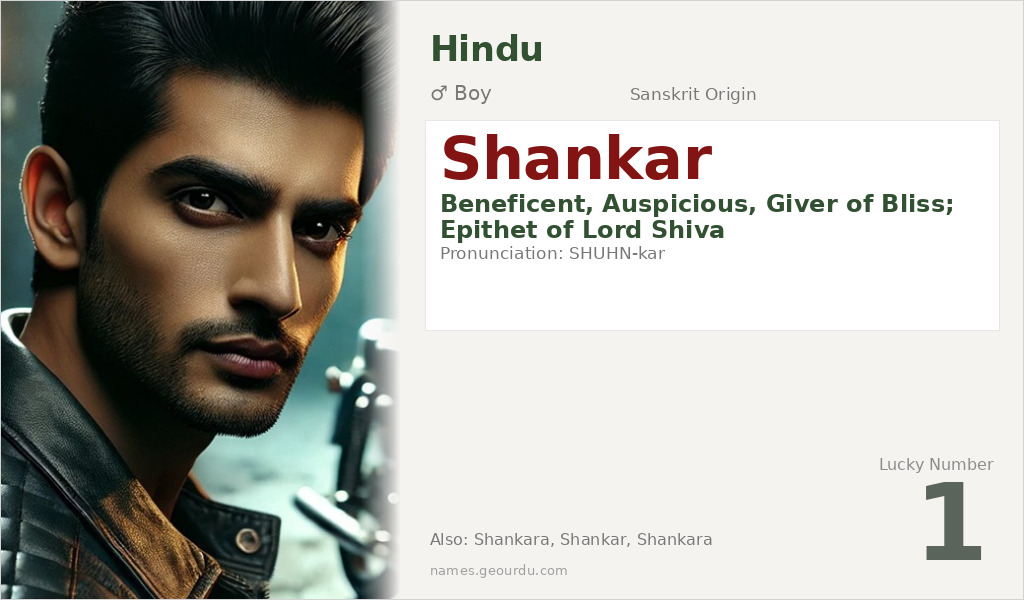
Shankar is a profound and revered name deeply rooted in Hindu tradition, symbolizing auspiciousness and spiritual bliss. Derived from ancient Sanskrit, it is most famously associated with Lord Shiva, one of the principal deities in Hinduism. This name carries a rich cultural heritage and continues to be a popular choice for boys in India and among Hindu communities worldwide. Explore the etymology, significance, and modern usage of this timeless name.
Meaning of Shankar
The name Shankar originates from Sanskrit, combining ‘śam’ (auspicious, beneficent) and ‘kara’ (maker, doer), literally meaning ‘the one who makes auspiciousness’ or ‘giver of bliss’. In Hindu mythology, it is a primary epithet of Lord Shiva, representing his role as a benevolent destroyer who paves the way for renewal and transformation. This etymological construction highlights the name’s spiritual depth, emphasizing qualities of grace and positive change. The name has been documented in classical Sanskrit literature, including the Vedas and Puranas, where it is used to denote Shiva’s compassionate and auspicious nature. Its linguistic roots are firmly established in Indo-Aryan languages, with no significant variations in meaning across regional dialects or other language families.
| 📛 Name | Shankar |
| 💎 Meaning | Beneficent, Auspicious, Giver of Bliss; Epithet of Lord Shiva |
| 👤 Gender | Boy |
| 🕌 Religion | Hindu |
| 🌍 Origin | Sanskrit |
| 🗣 Pronunciation | SHUHN-kar |
| ✍️ Urdu | شنکر |
| ✍️ Arabic | شانكار |
| 🔢 Numerology | 1 |
| ✨ Spellings | Shankara, Shankar, Shankara, Sankar |
Origin & Cultural Significance
Shankar has its origins in ancient India, stemming directly from Sanskrit, the liturgical language of Hinduism. It is intrinsically linked to Hindu religious texts and practices, where it serves as a key name for Lord Shiva, revered as part of the Trimurti (Brahma, Vishnu, Shiva). The name spread across South Asia through Sanskritization and Hindu cultural expansion, becoming common in regions like India, Nepal, and Sri Lanka. While primarily a Hindu name, it has also been adopted in some Buddhist contexts in these regions due to cultural overlaps. There is no verified usage or meaning in languages like Arabic, Persian, Pashto, or African dialects, as it remains specific to Sanskrit-derived traditions.
Personality Traits
People named Shankar are often perceived as serene, wise, and spiritually attuned, embodying the auspicious qualities of their namesake. They may exhibit strong leadership and a calming presence, capable of guiding others through challenges. Their introspective nature can lead to deep philosophical insights, making them respected figures in their communities.
Similar Names
If you like Shankar, consider: Shiva, Mahadev, Rudra, Bholenath, Nataraj
Famous People Named Shankar
- Shankar Mahadevan — Indian playback singer and composer known for Bollywood hits and fusion music
- Shankar Nag — Indian actor and director in Kannada cinema, renowned for his role in 'Malgudi Days'
Frequently Asked Questions About Shankar
What does Shankar mean?
Shankar means 'Beneficent', 'Auspicious', or 'Giver of Bliss' in Sanskrit, derived from 'śam' (auspicious) and 'kara' (maker). It is a key epithet of Lord Shiva in Hinduism.
Is Shankar a boy or girl name?
Shankar is exclusively a boy's name in Hindu tradition, associated with the male deity Lord Shiva. There are no documented uses as a girl's name in any culture.
What is the origin of Shankar?
Shankar originates from Sanskrit, an ancient Indo-Aryan language of India, and is deeply embedded in Hindu religious and cultural contexts, with no verified origins in other language families like Arabic or Persian.





