
Table of Contents
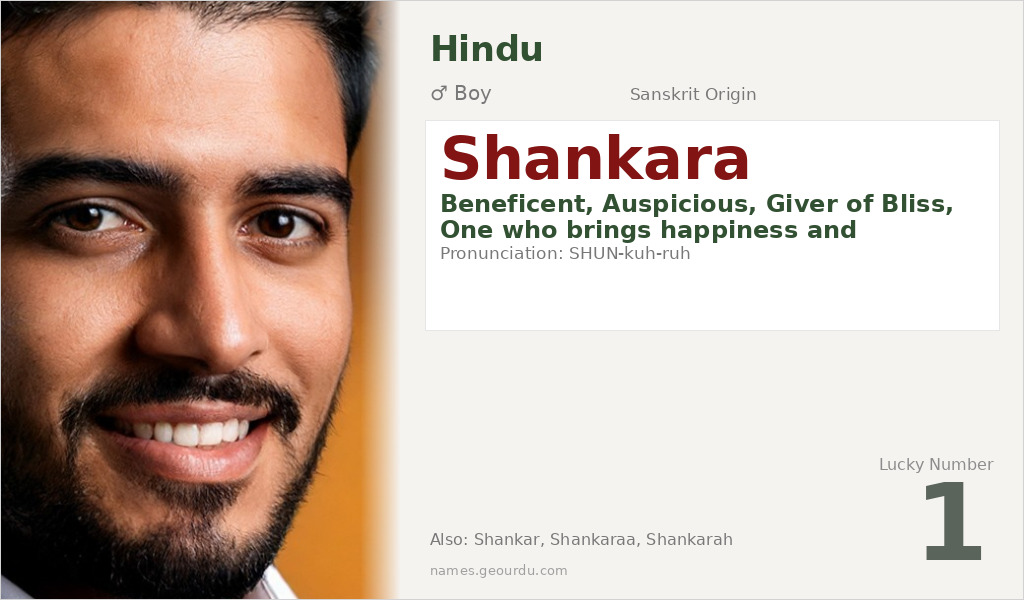
Shankara is a profound and ancient name with deep roots in Hindu spirituality and Sanskrit language. Primarily given to boys, it carries the beautiful meaning of ‘Beneficent’ or ‘One who brings auspiciousness’. This name is closely associated with Lord Shiva, one of the principal deities in Hinduism, symbolizing destruction of evil and bestowal of blessings. Choosing Shankara connects a child to a rich cultural heritage of wisdom and divine grace.
Meaning of Shankara
The name Shankara originates from Sanskrit, an ancient Indo-Aryan language central to Hindu scriptures. It is formed from the roots ‘śam’ (meaning auspiciousness, welfare, or bliss) and ‘kara’ (meaning maker or giver), creating the compound meaning ‘giver of bliss’ or ‘one who causes auspiciousness’. In Hindu theology, Shankara is a primary epithet of Lord Shiva, emphasizing his role as a benevolent destroyer who removes obstacles and grants prosperity. The name appears in revered texts like the Vedas and Puranas, where Shiva is invoked as Shankara to signify his compassionate nature. This etymological construction is common in Sanskrit names, reflecting desired qualities or divine attributes. Thus, Shankara is not just a name but a spiritual concept embodying happiness and divine favor.
| 📛 Name | Shankara |
| 💎 Meaning | Beneficent, Auspicious, Giver of Bliss, One who brings happiness and prosperity |
| 👤 Gender | Boy |
| 🕌 Religion | Hindu |
| 🌍 Origin | Sanskrit |
| 🗣 Pronunciation | SHUN-kuh-ruh |
| ✍️ Urdu | شنکر |
| ✍️ Arabic | شانكارا |
| 🔢 Numerology | 1 |
| ✨ Spellings | Shankar, Shankaraa, Shankarah, Sankara |
Origin & Cultural Significance
Shankara has its origins in ancient India, specifically within the Sanskrit linguistic and Hindu religious traditions. It emerged as a theonym (divine name) for Lord Shiva, used in rituals, prayers, and philosophical discourses dating back over two millennia. The name gained broader usage as a personal name, particularly in Hindu communities across India, Nepal, and the diaspora, often chosen to honor Shiva’s virtues. Historically, figures like Adi Shankara, the influential 8th-century philosopher, popularized the name through his teachings and establishment of monastic orders. In modern times, Shankara remains a classic choice, reflecting enduring cultural values and spiritual aspirations. Its usage spans regions with Hindu influence, though it is most common in South Asia.
Personality Traits
Those named Shankara are often perceived as calm, insightful, and morally grounded individuals. They may exhibit leadership qualities tempered with empathy, drawing inspiration from the name’s association with wisdom and benevolence. Their spiritual or philosophical inclinations can make them seekers of truth, with a knack for resolving conflicts and fostering harmony in their communities.
Similar Names
If you like Shankara, consider: Shiva, Vishnu, Krishna, Rudra, Mahadeva
Famous People Named Shankara
- Adi Shankara — 8th-century Indian philosopher and theologian who founded the Advaita Vedanta school of Hinduism
- Shankar Mahadevan — Indian playback singer and composer known for Bollywood music
Frequently Asked Questions About Shankara
What does Shankara mean?
Shankara means 'Beneficent', 'Auspicious', or 'Giver of Bliss' in Sanskrit, derived from the roots 'śam' (bliss) and 'kara' (giver).
Is Shankara a boy or girl name?
Shankara is traditionally a boy name in Hindu culture, though it is rarely used for girls; its association with male deities like Lord Shiva reinforces this gender usage.
What is the origin of Shankara?
Shankara originates from Sanskrit, an ancient Indian language, and is deeply rooted in Hindu tradition as an epithet of Lord Shiva, with historical use dating back centuries.





