
Table of Contents
Shanmuka is a profound and ancient name rooted in Hindu mythology, directly referencing the six-faced deity Kartikeya. This name carries deep spiritual and cultural significance, particularly in South Indian traditions where Murugan (Kartikeya) is widely venerated. As a masculine name, it symbolizes divine protection, wisdom, and valor. Exploring Shanmuka reveals a rich tapestry of Sanskrit etymology and devotional practices.
Meaning of Shanmuka
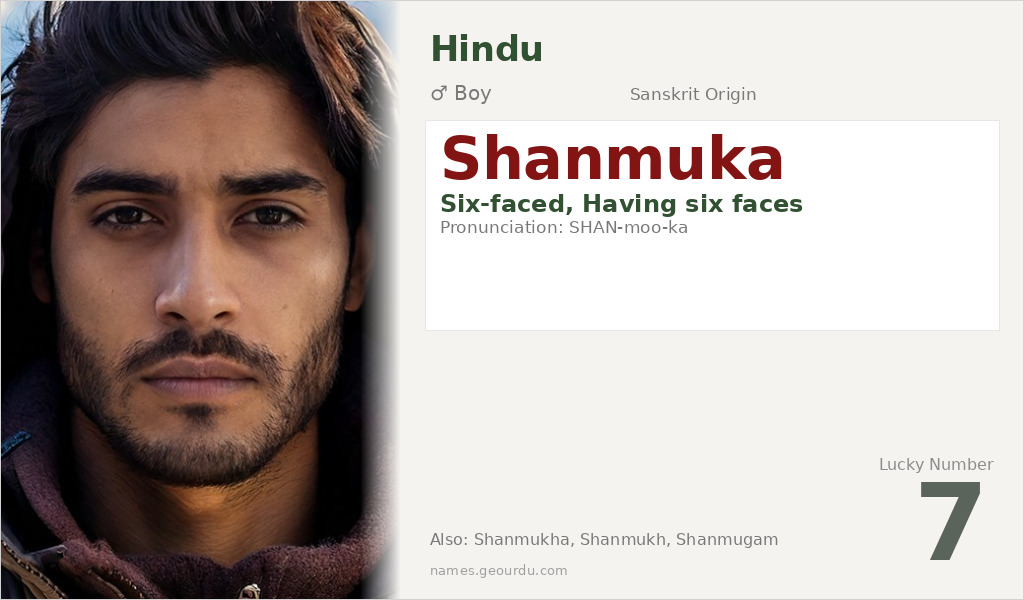
Shanmuka originates from the Sanskrit words ‘ṣaṇ’ (षण्), meaning ‘six,’ and ‘mukha’ (मुख), meaning ‘face,’ ‘mouth,’ or ‘entrance.’ Thus, it translates precisely to ‘six-faced’ or ‘having six faces.’ This is a direct epithet of Kartikeya, the Hindu god of war and victory, who is often depicted with six heads to symbolize his omniscience and ability to perceive all directions. In classical texts like the Skanda Purana, he is called Ṣaṇmukha, emphasizing his role as a commander of the divine army. The name is phonetically adapted in regional languages, such as Tamil, where it appears as Shanmugam or Shanmugan, retaining the same essential meaning. Its usage is almost exclusively religious and mythological, with no significant secular meanings in other languages.
| 📛 Name | Shanmuka |
| 💎 Meaning | Six-faced, Having six faces |
| 👤 Gender | Boy |
| 🕌 Religion | Hindu |
| 🌍 Origin | Sanskrit |
| 🗣 Pronunciation | SHUN-moo-kah |
| ✍️ Urdu | شن مکھ |
| ✍️ Arabic | شانموكا |
| 🔢 Numerology | 7 |
| ✨ Spellings | Shanmukha, Shanmukh, Shanmugam, Shanmugan, Shanmuganathan |
Origin & Cultural Significance
Shanmuka has its origins in ancient Sanskrit literature and Hindu mythology, specifically within the traditions surrounding Kartikeya (also known as Skanda or Murugan). Kartikeya is a prominent deity in Hinduism, revered as the son of Shiva and Parvati, and the brother of Ganesha. The name Shanmuka is used in scriptures like the Mahabharata and various Puranas to describe his six-faced form, which represents his supreme wisdom and martial prowess. Culturally, it is most prevalent in South India, especially among Tamil, Telugu, and Kannada communities, where Murugan worship is central. The name is often given to boys in devout Hindu families, reflecting a desire to invoke the deity’s blessings of courage, protection, and success. It does not have verified roots in other linguistic families like Arabic, Persian, or African languages, remaining firmly within the Sanskrit and Dravidian cultural spheres.
Personality Traits
Named after the six-faced god Kartikeya, individuals with the name Shanmuka are often perceived as dynamic and resilient. They may embody traits such as strategic acumen, bravery, and a nurturing spirit, mirroring the deity’s role as a protector and leader. Their multifaceted nature can make them adaptable and insightful, with a deep-rooted sense of duty and spirituality guiding their actions.
Similar Names
If you like Shanmuka, consider: Kartikeya, Murugan, Skanda, Subramanya, Saravanan
Famous People Named Shanmuka
- Shanmuga Sundaram — Indian classical musician and composer
- Shanmukha Srinivas — Indian film actor known for Telugu cinema
Frequently Asked Questions About Shanmuka
What does Shanmuka mean?
Shanmuka means 'six-faced' or 'having six faces' in Sanskrit, referring to the Hindu god Kartikeya.
Is Shanmuka a boy or girl name?
Shanmuka is exclusively a boy's name, as it denotes the masculine deity Kartikeya in Hindu tradition.
What is the origin of Shanmuka?
Shanmuka originates from Sanskrit and Hindu mythology, specifically as an epithet for Kartikeya, with strong cultural ties to South India.





