
Table of Contents
Shanmukha is a powerful and ancient name steeped in Hindu mythology, evoking the image of the six-faced god Kartikeya. As a name for boys, it carries connotations of strength, wisdom, and divine protection. This guide explores the rich etymology, cultural roots, and modern relevance of Shanmukha, offering insights for parents and name enthusiasts. Discover why this name remains a cherished choice in Hindu communities and beyond.
Meaning of Shanmukha
Shanmukha derives from the Sanskrit words ‘ṣaṇ’ (meaning six) and ‘mukha’ (meaning face, mouth, or entrance), literally translating to ‘six-faced’ or ‘having six faces.’ This name is a direct reference to Lord Kartikeya, the Hindu god of war and son of Shiva and Parvati, who is often depicted with six faces symbolizing his omnidirectional vision and multifaceted abilities. In linguistic terms, it is a tatpurusha compound, common in Sanskrit naming traditions, where the first element modifies the second. The name appears in classical texts like the Mahabharata and various Puranas, underscoring its deep mythological and literary roots. Its meaning emphasizes attributes such as vigilance, intelligence, and divine power, making it a name of significant spiritual weight.
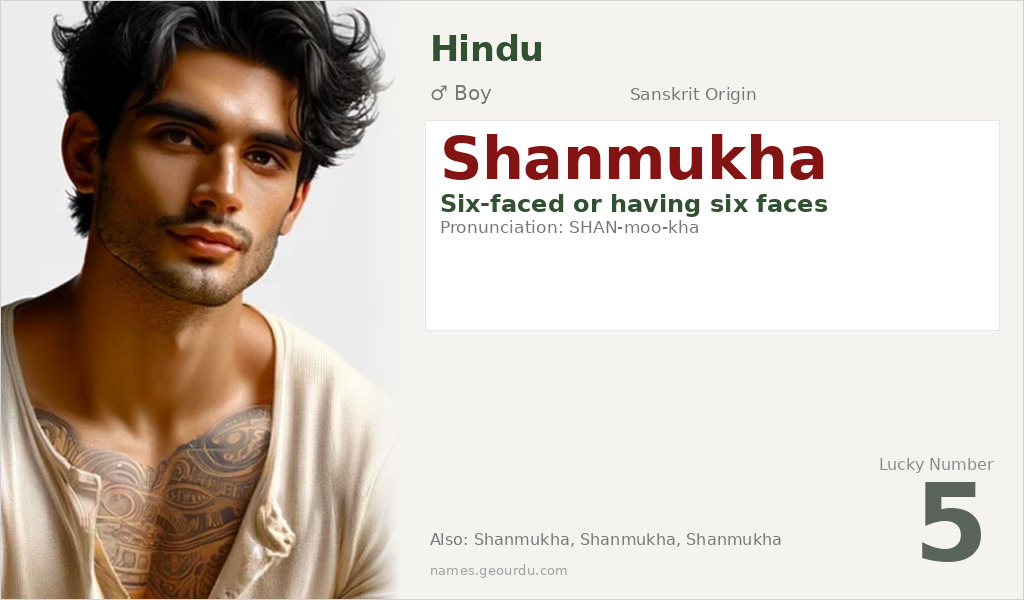
| 📛 Name | Shanmukha |
| 💎 Meaning | Six-faced or having six faces |
| 👤 Gender | Boy |
| 🕌 Religion | Hindu |
| 🌍 Origin | Sanskrit |
| 🗣 Pronunciation | SHAN-moo-kha |
| ✍️ Urdu | شن مکھ |
| ✍️ Arabic | شانموخا |
| 🔢 Numerology | 5 |
| ✨ Spellings | Shanmukha, Shanmukha, Shanmukha, Shanmukha |
Origin & Cultural Significance
Originating from Sanskrit, an ancient Indo-Aryan language of India, Shanmukha has been used for centuries within Hindu culture, particularly in South India and among Tamil, Telugu, and Kannada communities. It is closely associated with the worship of Kartikeya (also known as Murugan in Tamil tradition), a major deity in Hinduism revered for his valor and wisdom. The name’s usage extends beyond mythology into given names, reflecting a desire to invoke the god’s protective and heroic qualities. Historically, it has been popular in regions like Tamil Nadu, Karnataka, and Andhra Pradesh, often chosen for boys born into devout Hindu families. In modern times, it remains in use, though less common than variants like Kartikeya or Murugan, and is sometimes adapted in contemporary contexts.
Personality Traits
People named Shanmukha are often perceived as charismatic and multi-talented, with a natural inclination toward leadership and exploration. Their personality may mirror the six-faced symbolism, suggesting adaptability, insight, and a broad perspective on life. They tend to be energetic and resilient, facing challenges with courage and intelligence, much like the deity they are named after. This name inspires a sense of duty and protection, often associated with individuals who are guardians in their communities or families.
Similar Names
If you like Shanmukha, consider: Kartikeya, Murugan, Skanda, Subrahmanya, Arumugan
Famous People Named Shanmukha
- Shanmukha Srinivas — Indian film actor known for Telugu cinema
- Shanmukha Priya — Indian playback singer in Telugu and Tamil films
Frequently Asked Questions About Shanmukha
What does Shanmukha mean?
Shanmukha means 'six-faced' or 'having six faces' in Sanskrit, referring to the Hindu god Kartikeya, son of Lord Shiva.
Is Shanmukha a boy or girl name?
Shanmukha is traditionally a boy name in Hindu culture, as it is associated with the male deity Kartikeya.
What is the origin of Shanmukha?
Shanmukha originates from Sanskrit, an ancient Indian language, and is deeply rooted in Hindu mythology and South Asian naming traditions.





