
Table of Contents
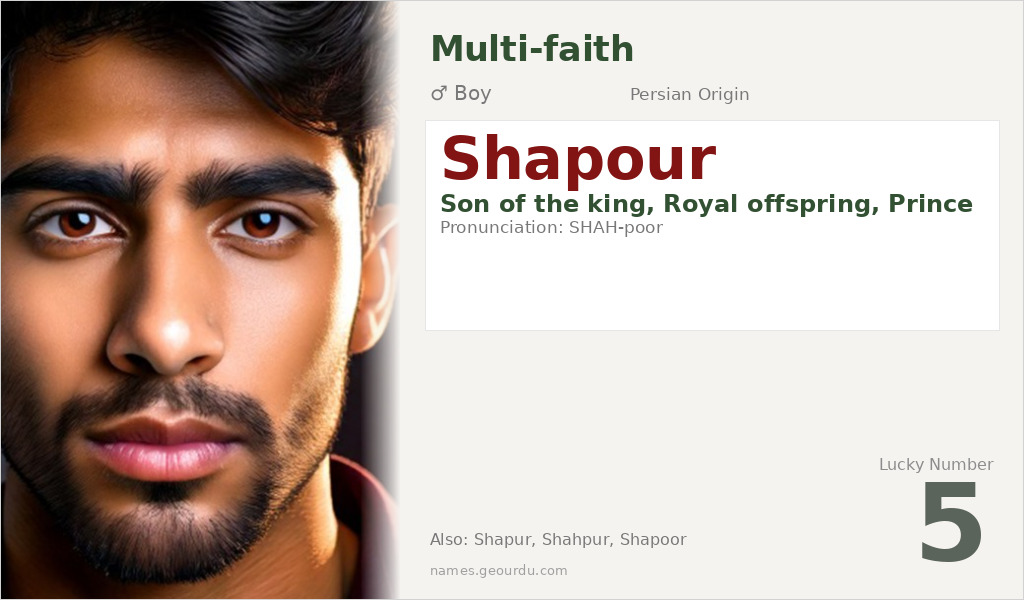
Shapour is a name steeped in ancient Persian royalty, evoking images of mighty emperors and epic tales from the Shahnameh. More than just a character from legend, it carries the powerful meaning of ‘son of the king,’ symbolizing leadership and noble heritage. This name connects the bearer to a rich historical legacy that spans centuries. Discover the true origin and significance of this distinguished name.
Meaning of Shapour
The name Shapour originates from Middle Persian (Pahlavi) as ‘Shāh-pūr,’ a compound of two elements: ‘Shāh,’ meaning ‘king’ or ‘ruler,’ and ‘pūr,’ meaning ‘son’ or ‘offspring.’ Thus, it translates directly to ‘son of the king’ or ‘royal offspring,’ essentially equating to ‘prince.’ This etymology is well-documented in historical Persian texts and inscriptions from the Sassanian Empire. The name was notably borne by several Sassanian shahs, including Shapur I, who famously captured the Roman Emperor Valerian. Its usage in Ferdowsi’s Shahnameh (the Book of Kings) further cemented its association with Persian monarchy and heroism. Linguistically, it reflects the Indo-European roots of Persian, related to Sanskrit ‘putra’ (son) and other Iranian languages.
| 📛 Name | Shapour |
| 💎 Meaning | Son of the king, Royal offspring, Prince |
| 👤 Gender | Boy |
| 🕌 Religion | Multi-faith |
| 🌍 Origin | Persian |
| 🗣 Pronunciation | SHAH-poor |
| ✍️ Urdu | شاپور |
| ✍️ Arabic | شابور |
| 🔢 Numerology | 5 |
| ✨ Spellings | Shapur, Shahpur, Shapoor, Šāpūr |
Origin & Cultural Significance
Shapour has its roots in pre-Islamic Persia, specifically the Sassanian Empire (224–651 CE), where it was used as a royal name for emperors. It originates from Persian culture and was historically associated with Zoroastrianism, the dominant religion of Persia at the time. Following the Arab conquest and the spread of Islam, the name continued in use among Persian-speaking populations, including Muslims, Zoroastrians, and later other communities in regions like Iran, Afghanistan, and parts of South Asia. Its appearance in the Shahnameh, written in the 10th century, helped preserve its cultural significance. Today, it is used multi-denominationally but remains a symbol of Persian heritage and historical identity.
Personality Traits
Those named Shapour are often perceived as possessing a natural authority and dignified presence, reflecting the name’s royal meaning. They may exhibit traits such as ambition, resilience, and a strategic mindset, akin to the historical rulers who bore the name. Their connection to tradition can make them respectful of heritage, while their leadership qualities inspire confidence in others. This name suggests a person who carries themselves with pride and purpose.
Similar Names
If you like Shapour, consider: Shahriar, Khosrow, Darius, Cyrus, Ardeshir
Famous People Named Shapour
- Shapur I — Sassanian Emperor of Persia (240–270 CE) who defeated Roman emperors and expanded the empire
- Shapur II — Sassanian Emperor (309–379 CE) known as 'Shapur the Great' for his long reign and military campaigns
Frequently Asked Questions About Shapour
What does Shapour mean?
Shapour means 'son of the king' or 'prince.' It comes from the Persian words 'Shāh' (king) and 'pūr' (son).
Is Shapour a boy or girl name?
Shapour is exclusively a boy's name, with historical usage for male rulers and figures in Persian culture.
What is the origin of Shapour?
Shapour originates from Persian (Iranian) language and culture, dating back to the Sassanian Empire of ancient Persia.





