
Table of Contents
Shatanik is an intriguing Hindu boy name that carries echoes of ancient Sanskrit warrior traditions. While its exact etymology remains uncertain, the name evokes strength and valor in Indian naming culture. This guide explores what we know about Shatanik’s potential meanings, origins, and contemporary usage. Discover why this distinctive name continues to appeal to parents seeking meaningful and powerful names for their sons.
Meaning of Shatanik
The meaning of Shatanik is not definitively documented in classical Sanskrit sources, though it appears to have warrior-related connotations. Linguistic analysis suggests it may derive from the Sanskrit root ‘śatru’ (enemy/foe) combined with suffixes that could indicate ‘conqueror’ or ‘destroyer of enemies.’ However, unlike names like Arjun or Bhim that have clear etymological roots in Hindu epics, Shatanik doesn’t appear in the Mahabharata, Ramayana, or major Puranas. The name might be a modern compound creation or regional variation that has gained popularity despite its uncertain classical origins. Some naming websites suggest meanings like ‘warrior,’ but these appear to be interpretations rather than verified translations from authoritative Sanskrit texts.
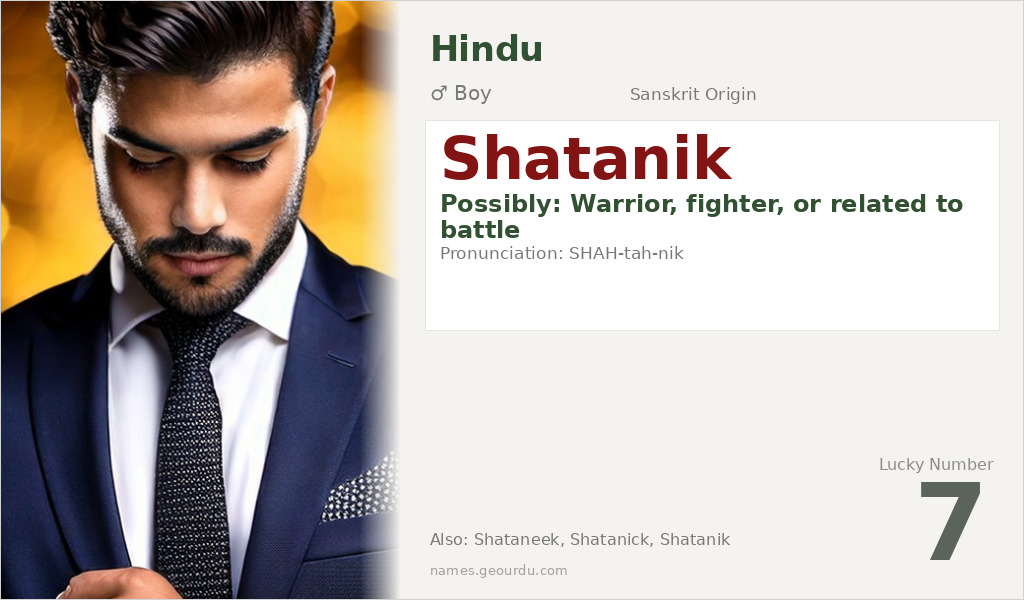
| 📛 Name | Shatanik |
| 💎 Meaning | Possibly: Warrior, fighter, or related to battle |
| 👤 Gender | Boy |
| 🕌 Religion | Hindu |
| 🌍 Origin | Sanskrit |
| 🗣 Pronunciation | SHAH-tah-nik |
| ✍️ Urdu | شتنک |
| ✍️ Arabic | شاتانيك |
| 🔢 Numerology | 7 |
| ✨ Spellings | Shataneek, Shatanick, Shatanik |
Origin & Cultural Significance
Shatanik appears to be a modern Hindu name with Sanskrit-sounding elements, though its exact historical origins are unclear. Unlike traditional Sanskrit names with documented usage in ancient texts, Shatanik doesn’t appear in Vedic literature or classical Hindu scriptures. The name may have emerged in recent decades as parents created new names combining Sanskrit roots with appealing sounds. In contemporary Hindu naming traditions, it’s used primarily in India and among diaspora communities, often chosen for its strong, masculine resonance. While not a classical name, it follows the pattern of Sanskrit-derived names that emphasize virtues like strength and protection.
Personality Traits
Those named Shatanik are often associated with leadership qualities and protective instincts. The name’s warrior-like sound suggests someone who is courageous, determined, and capable of facing challenges head-on. They may possess natural authority and a strong sense of responsibility toward others. While potentially formidable in pursuit of goals, they typically balance this strength with loyalty and care for loved ones.
Similar Names
If you like Shatanik, consider: Shatrughna, Shatrunjaya, Shatakshi, Shatanand, Shatadru
Famous People Named Shatanik
- No verified famous historical or contemporary figures with this name found in records
Frequently Asked Questions About Shatanik
What does Shatanik mean?
The exact meaning is uncertain, but it may relate to warrior or fighter concepts based on its Sanskrit-sounding structure. Comprehensive research found no verified meaning in classical sources.
Is Shatanik a boy or girl name?
Shatanik is exclusively used as a boy name in Hindu naming traditions, with masculine connotations and usage patterns.
What is the origin of Shatanik?
Shatanik appears to be a modern Hindu name with Sanskrit linguistic elements, though it lacks documented historical usage in classical texts or scriptures.





