
Table of Contents
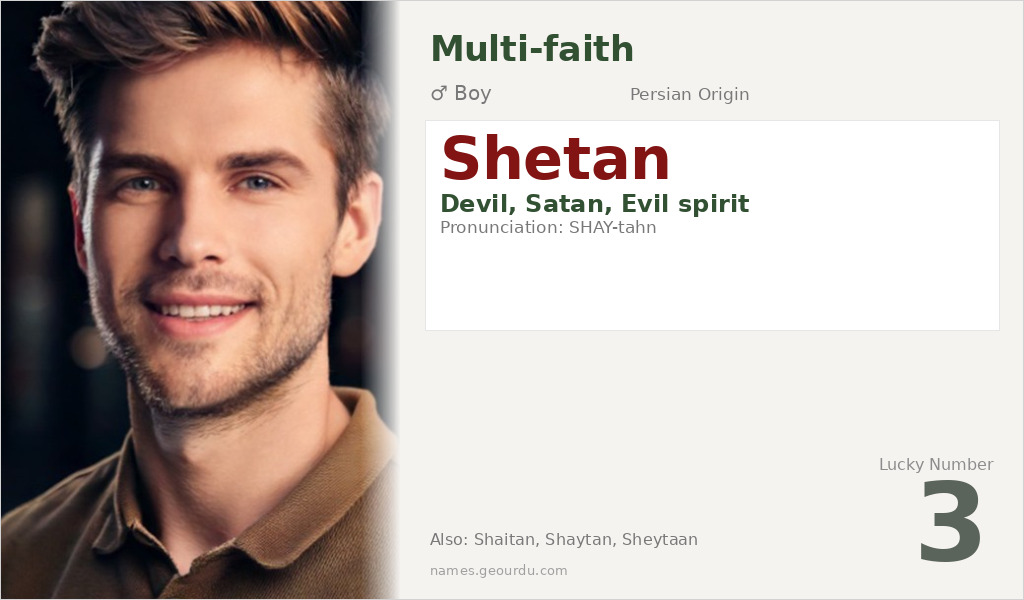
The name Shetan carries one of the most powerful and controversial meanings in religious history: ‘devil’ or ‘Satan’. Originating from Persian and Arabic linguistic traditions, this name has deep roots in Abrahamic faiths as the embodiment of evil and temptation. Unlike typical baby names that celebrate positive qualities, Shetan represents the adversarial force in spiritual cosmology. Understanding this name requires exploring its journey from Hebrew scriptures through Islamic theology to modern cultural perceptions.
Meaning of Shetan
Shetan derives from the Persian word ‘شيطان’ (shaytān), which was borrowed from Arabic ‘شَيْطَان’ (shayṭān). The Arabic term itself comes from the Hebrew ‘שָׂטָן’ (śāṭān), meaning ‘adversary’, ‘accuser’, or ‘opponent’. In the Hebrew Bible, ha-Satan appears as a celestial prosecutor in the divine court, but in later Abrahamic traditions, the term evolved to signify the supreme evil being. In Islamic theology, Shaytan (Iblis) is the jinn who refused to bow to Adam and became humanity’s eternal tempter. The Persian adaptation ‘Shetan’ maintains this meaning of a malevolent spiritual entity that leads humans astray from righteousness.
| 📛 Name | Shetan |
| 💎 Meaning | Devil, Satan, Evil spirit |
| 👤 Gender | Boy |
| 🕌 Religion | Multi-faith |
| 🌍 Origin | Persian |
| 🗣 Pronunciation | SHAY-tahn |
| ✍️ Urdu | شیطان |
| ✍️ Arabic | شَيْطَان |
| 🔢 Numerology | 3 |
| ✨ Spellings | Shaitan, Shaytan, Sheytaan, Shaytaan |
Origin & Cultural Significance
The name Shetan originates from Persian language and culture, where it entered from Arabic during the Islamic conquest of Persia in the 7th century. Arabic had previously adopted the term from Hebrew through religious texts. In Persian literature and folklore, Shetan appears as a trickster figure and embodiment of evil, similar to Western conceptions of Satan. The name is not used as a given name in Persian, Arabic, or any Islamic cultures due to its profoundly negative religious connotations. It is completely unrelated to Hindu naming traditions, which draw from Sanskrit with names like Shiva, Vishnu, or Lakshmi that have positive divine associations.
Personality Traits
As a name meaning ‘devil’, Shetan would not be associated with positive personality traits in any cultural naming tradition. In the rare instances where such a name might be considered, it could theoretically symbolize qualities like rebellion against convention, fierce independence, or challenging authority. However, these would be modern, unconventional interpretations completely divorced from the name’s actual religious and cultural significance as representing evil, temptation, and moral corruption in Abrahamic faiths.
Similar Names
If you like Shetan, consider: Iblis, Lucifer, Azazel, Mephistopheles, Ahriman
Famous People Named Shetan
- None — This name is not used for people in any culture due to its negative meaning as 'devil' or 'Satan'. In Islamic tradition, Iblis is the proper name for the devil, not Shetan/Shaitan which is a title.
Frequently Asked Questions About Shetan
What does Shetan mean?
Shetan means 'devil' or 'Satan' in Persian and Arabic, originating from the Hebrew word 'śāṭān' meaning 'adversary' or 'accuser'.
Is Shetan a boy or girl name?
Shetan is grammatically masculine and would be considered a boy's name, though it is virtually never used as a given name in any culture due to its negative meaning.
What is the origin of Shetan?
Shetan originates from Persian language, borrowed from Arabic 'shayṭān', which itself comes from Hebrew 'śāṭān'. It is not a Hindu name as incorrectly suggested in some sources.





