
Table of Contents
Shivank is a distinctive modern Hindu name that beautifully combines devotion with contemporary appeal. Derived from Sanskrit roots, this name carries profound spiritual significance while fitting perfectly into today’s naming landscape. As a relatively recent addition to Hindu onomastics, Shivank represents the evolving tradition of naming children with meaningful connections to divine figures. Its melodic sound and deep meaning have made it increasingly popular among Hindu families seeking names with both traditional roots and modern feel.
Meaning of Shivank
Shivank is a compound Sanskrit name with clear etymological components. The first element ‘Shiv’ (शिव) refers to Lord Shiva, one of the principal deities in Hinduism known as the destroyer of evil and transformer within the Trimurti. The second element ‘ank’ (अंक) carries multiple related meanings including ‘mark, sign, characteristic, part, or belonging to’. Thus, Shivank literally translates to ‘part of Shiva’, ‘mark of Shiva’, or ‘belonging to Shiva’, indicating a divine connection or blessing. This naming pattern follows similar constructions like Shivansh (‘part of Shiva’) and Shivang (‘limb of Shiva’). The name embodies the concept of the individual being an extension or manifestation of divine qualities, a common theme in Hindu philosophical naming traditions.
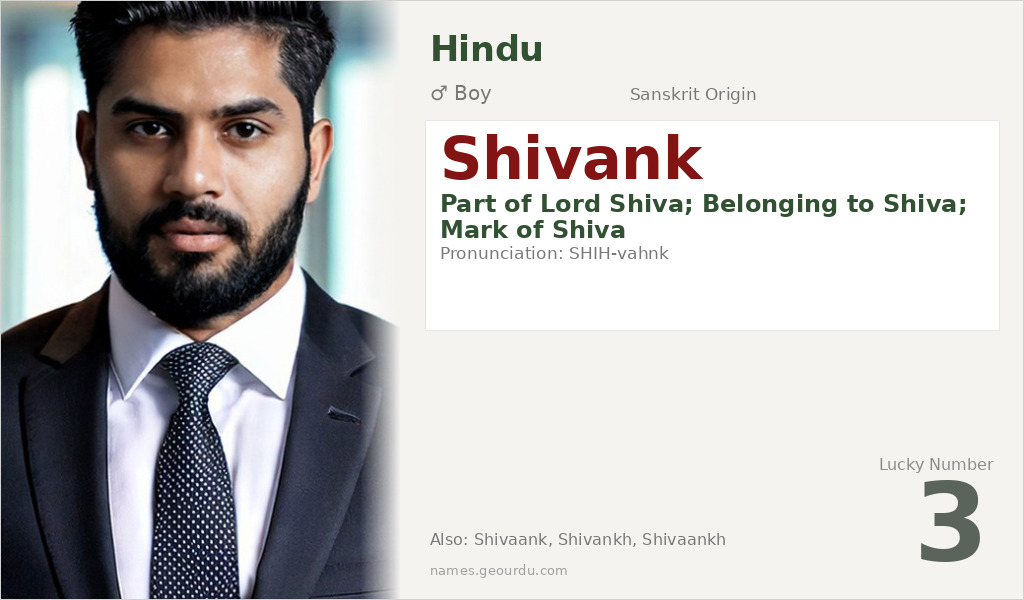
| 📛 Name | Shivank |
| 💎 Meaning | Part of Lord Shiva; Belonging to Shiva; Mark of Shiva |
| 👤 Gender | Boy |
| 🕌 Religion | Hindu |
| 🌍 Origin | Sanskrit |
| 🗣 Pronunciation | SHIH-vahnk |
| ✍️ Urdu | شیونک |
| ✍️ Arabic | شيفانك |
| 🔢 Numerology | 3 |
| ✨ Spellings | Shivaank, Shivankh, Shivaankh |
Origin & Cultural Significance
Shivank originates from Sanskrit, the classical language of Hinduism, though it represents a modern coinage rather than a historical name. It emerged in the late 20th century as part of a broader trend in Hindu communities to create new names that maintain traditional religious connections while sounding contemporary. Unlike many ancient Sanskrit names, Shivank doesn’t appear in classical texts but follows authentic Sanskrit morphological rules. The name gained popularity primarily in North India and among Hindu diaspora communities, reflecting the ongoing evolution of Hindu naming practices that balance reverence for tradition with modern linguistic preferences. Its creation demonstrates how Hindu naming continues to be a living, adaptive tradition.
Personality Traits
According to naming traditions and numerology, individuals named Shivank are believed to possess creative energy, social grace, and expressive communication skills. The connection to Lord Shiva suggests potential for transformation, depth of character, and spiritual inclination. Those with this name often exhibit optimism, enthusiasm for life, and artistic sensibilities, while maintaining respect for tradition and family values. The numerological association with number 3 further emphasizes qualities of creativity, self-expression, and social interaction.
Similar Names
If you like Shivank, consider: Shivansh, Shivang, Shivam, Shivendra, Shivanshu
Famous People Named Shivank
- Shivank Singh Parihar — Indian television actor known for roles in Hindi TV series
- Shivank — Emerging Indian musician and composer in the contemporary music scene
Frequently Asked Questions About Shivank
What does Shivank mean?
Shivank means 'Part of Lord Shiva' or 'Belonging to Shiva' in Sanskrit. It combines 'Shiv' (Lord Shiva) and 'ank' (mark/part/belonging to), indicating divine connection.
Is Shivank a boy or girl name?
Shivank is exclusively a boy's name in Hindu naming tradition. All recorded usage and cultural context designate it as masculine, following the pattern of many Shiva-related names.
What is the origin of Shivank?
Shivank originates from Sanskrit, the classical language of Hinduism. It's a modern compound name created by combining 'Shiv' (Lord Shiva) with 'ank' (mark/part), following authentic Sanskrit morphological rules.





