
Table of Contents
Shripadma is a beautiful and spiritually significant Sanskrit name that combines divine elements of Hindu tradition. Meaning ‘Lotus of Lakshmi’, this name evokes the sacred imagery of the goddess of prosperity and the pure lotus flower that symbolizes enlightenment. While relatively uncommon in modern usage, Shripadma carries deep cultural resonance for Hindu families seeking a name with both aesthetic beauty and religious meaning. This guide explores the complete etymology, cultural context, and characteristics associated with this distinctive name.
Meaning of Shripadma
Shripadma derives from classical Sanskrit, combining two significant elements: ‘Shri’ and ‘Padma’. ‘Shri’ (श्री) represents prosperity, beauty, and divine grace, most commonly associated with Goddess Lakshmi, the Hindu deity of wealth, fortune, and beauty. ‘Padma’ (पद्म) specifically refers to the sacred lotus flower (Nelumbo nucifera), which holds immense symbolic importance across Dharmic traditions. In Hindu iconography, Lakshmi is typically depicted standing or seated on a lotus, making this combination particularly meaningful. The lotus symbolizes purity, spiritual awakening, and beauty that rises above worldly mud, while ‘Shri’ adds the dimension of divine grace and prosperity. Thus, Shripadma literally translates to ‘Lotus of Lakshmi’ or ‘Lotus of Sri’, representing the sacred flower associated with the goddess.
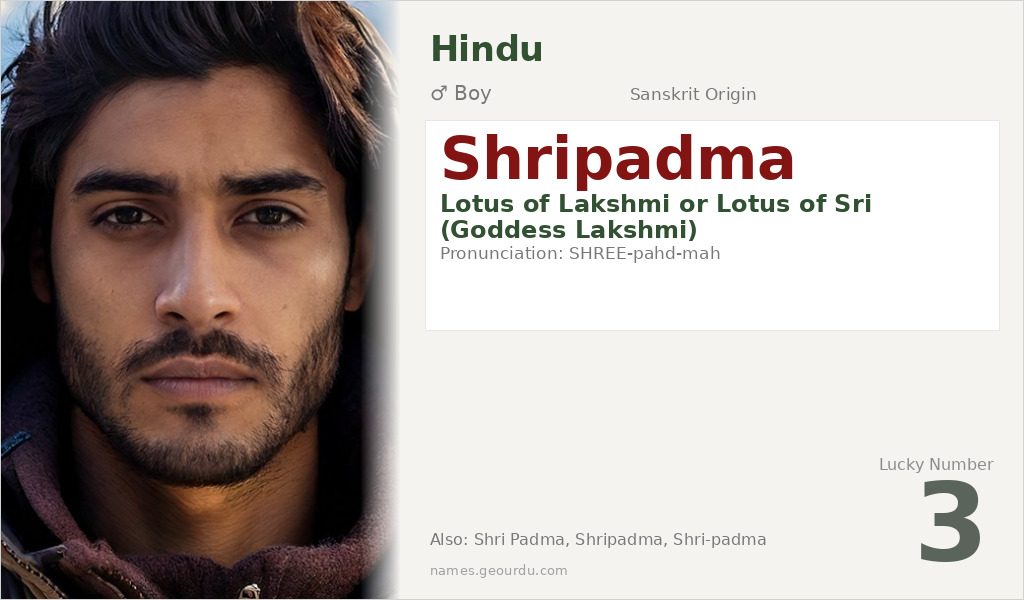
| 📛 Name | Shripadma |
| 💎 Meaning | Lotus of Lakshmi or Lotus of Sri (Goddess Lakshmi) |
| 👤 Gender | Boy |
| 🕌 Religion | Hindu |
| 🌍 Origin | Sanskrit |
| 🗣 Pronunciation | SHREE-pahd-mah |
| ✍️ Urdu | شری پدم |
| ✍️ Arabic | شري بادما |
| 🔢 Numerology | 3 |
| ✨ Spellings | Shri Padma, Shripadma, Shri-padma |
Origin & Cultural Significance
Shripadma originates from Sanskrit, the classical language of ancient India and the primary liturgical language of Hinduism, Buddhism, and Jainism. As a compound Sanskrit name, it follows traditional naming patterns where divine attributes or symbols are combined to create meaningful names. The name reflects the deep integration of nature symbolism (the lotus) with divine feminine energy (Shri/Lakshmi) in Hindu culture. While not among the most common Sanskrit names today, it represents a classical naming tradition that values both phonetic beauty and spiritual significance. The name’s components appear frequently in Hindu scriptures, poetry, and religious texts, though the specific compound ‘Shripadma’ is less commonly used as a personal name than its individual elements might suggest.
Personality Traits
Those named Shripadma are often associated with the symbolic qualities of both the lotus and divine grace. The lotus element suggests resilience, purity, and spiritual depth—an ability to maintain beauty and integrity despite challenging circumstances. The ‘Shri’ component adds qualities of grace, prosperity, and artistic sensibility. Together, these traits often manifest as creative expression, optimism, and a natural elegance in social interactions. The name’s connection to Lakshmi also implies potential for leadership, generosity, and an appreciation for beauty in all forms.
Similar Names
If you like Shripadma, consider: Padmashri, Padmanabha, Shrinath, Padmaja, Shrikant
Famous People Named Shripadma
- No widely known contemporary figures with this name found in records
- The name appears in some historical Hindu texts and regional records, but no prominent modern personalities were identified
Frequently Asked Questions About Shripadma
What does Shripadma mean?
Shripadma means 'Lotus of Lakshmi' or 'Lotus of Sri' in Sanskrit. It combines 'Shri' (referring to Goddess Lakshmi and meaning prosperity/beauty) with 'Padma' (meaning lotus flower).
Is Shripadma a boy or girl name?
Shripadma is primarily used as a boy's name in Hindu tradition, though Sanskrit compound names can sometimes be adapted across genders. The masculine usage is more documented in naming practices.
What is the origin of Shripadma?
Shripadma originates from Sanskrit, the classical language of ancient India. It's a compound name combining two Sanskrit words with deep religious and cultural significance in Hindu tradition.





