
Table of Contents
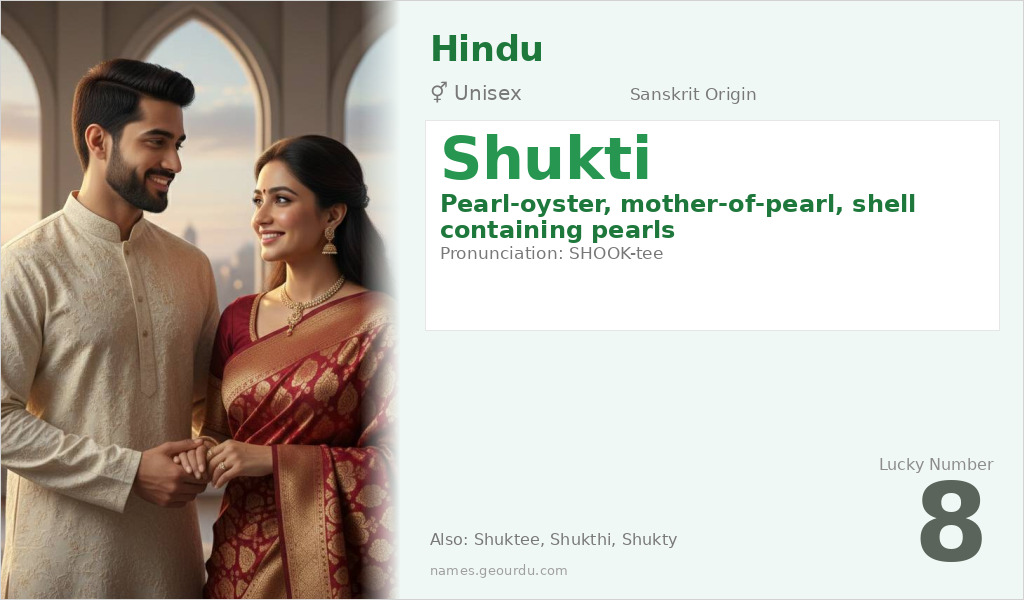
Shukti is a beautiful Sanskrit name that carries the poetic meaning of ‘pearl-oyster’ or ‘mother-of-pearl shell’. Unlike many modern names, Shukti has direct roots in classical Sanskrit literature and Ayurvedic tradition. This name symbolizes hidden beauty, protection, and natural elegance – qualities associated with the precious pearls formed within oysters. While primarily used in Hindu communities, its linguistic purity makes it appealing across cultural boundaries.
Meaning of Shukti
Shukti (शुक्ति) derives from the Sanskrit language, specifically from the root word ‘śuc’ which means ‘to be bright, pure, or clean’. This connection to brightness and purity perfectly describes the luminous quality of pearls found within oysters. In classical Sanskrit texts, shukti specifically refers to the bivalve mollusk that produces pearls, not just any shell. The term appears in ancient Indian medical texts (Ayurveda) where pearl-oyster shells were ground for medicinal purposes, and in literary works where they symbolized hidden treasures. The name thus carries connotations of natural beauty, protection (the shell), and valuable inner qualities (the pearl).
| 📛 Name | Shukti |
| 💎 Meaning | Pearl-oyster, mother-of-pearl, shell containing pearls |
| 👤 Gender | Unisex |
| 🕌 Religion | Hindu |
| 🌍 Origin | Sanskrit |
| 🗣 Pronunciation | SHOOK-tee |
| ✍️ Urdu | شکتی |
| ✍️ Arabic | شوكتي |
| 🔢 Numerology | 8 |
| ✨ Spellings | Shuktee, Shukthi, Shukty |
Origin & Cultural Significance
Shukti originates from classical Sanskrit, one of the oldest languages in the Indo-European family. In Hindu tradition, pearls and their shells have held significant cultural and spiritual value for millennia. Pearls are mentioned in Vedic texts as symbols of purity and lunar energy, while oyster shells were used in traditional medicine and jewelry. The name appears in Sanskrit literature dating back over two thousand years, particularly in works describing natural elements and precious materials. While primarily associated with Hindu culture today, the word ‘shukti’ itself is purely linguistic rather than religious, making it potentially adaptable across different faiths that appreciate Sanskrit heritage.
Personality Traits
Those named Shukti are often thought to embody the dual nature of the pearl-oyster: outwardly protective and resilient, yet inwardly nurturing something precious. They may develop their most valuable qualities through life’s challenges, much like pearls form through irritation within the shell. This name suggests someone who reveals their true beauty gradually, values authenticity over superficial appearance, and possesses both practical strength and aesthetic sensitivity. The connection to pearls also implies luminosity, purity, and timeless elegance in character.
Similar Names
If you like Shukti, consider: Mukta (Sanskrit: pearl), Moti (Hindi: pearl), Lavanya (Sanskrit: grace, beauty), Shubha (Sanskrit: auspicious), Shuchi (Sanskrit: pure, bright)
Famous People Named Shukti
- No widely known contemporary public figures with this name found in research
Frequently Asked Questions About Shukti
What does Shukti mean?
Shukti means 'pearl-oyster' or 'mother-of-pearl shell' in Sanskrit, specifically referring to the bivalve mollusk that produces pearls.
Is Shukti a boy or girl name?
Shukti is historically a unisex name in Sanskrit tradition, though in modern usage it may be more commonly given to girls in Hindu communities.
What is the origin of Shukti?
Shukti originates from classical Sanskrit, one of the oldest Indo-European languages, with roots in ancient Indian literature and Ayurvedic texts.