Table of Contents
Shvetang is a distinctive Sanskrit name with deep roots in Hindu tradition and classical literature. Meaning ‘fair-limbed’ or ‘having white limbs’, this name carries connotations of purity, radiance, and divine beauty. While relatively uncommon today, it represents a connection to India’s rich linguistic and philosophical heritage. Parents choosing this name often appreciate its poetic quality and spiritual resonance.
Meaning of Shvetang
Shvetang is a compound Sanskrit name formed from two elements: ‘shveta’ (श्वेत) and ‘anga’ (अङ्ग). ‘Shveta’ means white, fair, bright, or pure—a term used in Vedic texts to describe both physical fairness and spiritual purity. ‘Anga’ refers to limbs, body parts, or components. Combined, Shvetang literally translates to ‘one with fair limbs’ or ‘white-limbed’. In Hindu philosophical context, whiteness symbolizes sattva (purity), knowledge, and divine qualities. The name appears in classical Sanskrit literature describing celestial beings, sages, or noble characters distinguished by their luminous appearance.
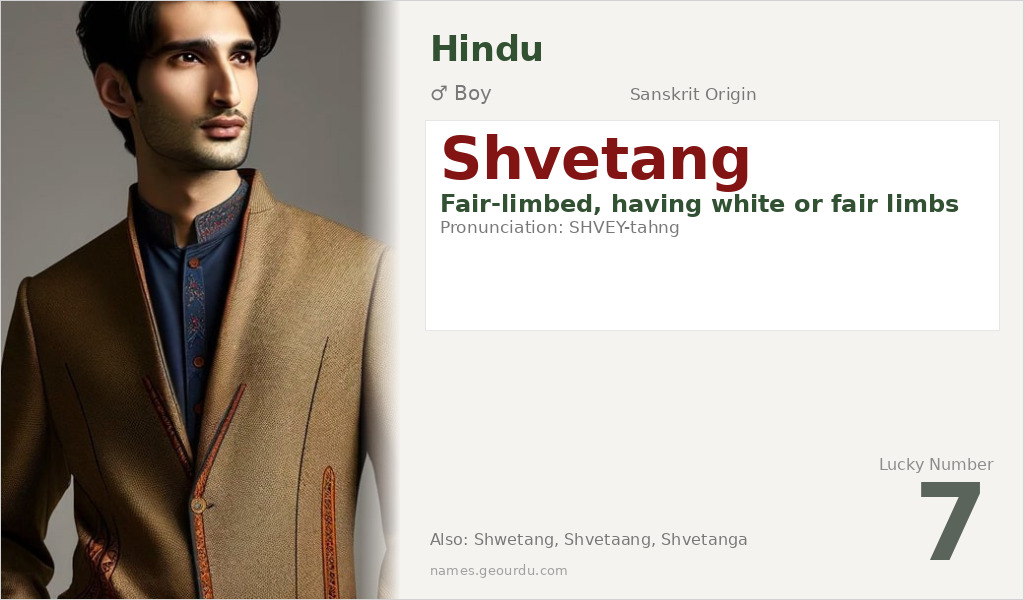
| 📛 Name | Shvetang |
| 💎 Meaning | Fair-limbed, having white or fair limbs |
| 👤 Gender | Boy |
| 🕌 Religion | Hindu |
| 🌍 Origin | Sanskrit |
| 🗣 Pronunciation | SHVEY-tahng |
| ✍️ Urdu | شویتنگ |
| ✍️ Arabic | شفيتانغ |
| 🔢 Numerology | 7 |
| ✨ Spellings | Shwetang, Shvetaang, Shvetanga |
Origin & Cultural Significance
Shvetang originates from classical Sanskrit, the ancient liturgical language of Hinduism. As a compound name, it follows traditional Sanskrit naming patterns where descriptive elements create meaningful combinations. The name reflects Hindu aesthetic and spiritual values where physical attributes metaphorically represent inner qualities. While not among the most common Sanskrit names today, it maintains cultural authenticity and appears in modern usage among families valuing traditional Sanskrit nomenclature. Its usage is primarily concentrated in Hindu communities across India, particularly among those with Sanskrit scholarly or priestly backgrounds.
Personality Traits
Those named Shvetang are often associated with qualities of purity, introspection, and intellectual depth. The name’s etymological connection to brightness and fairness suggests someone who values truth, clarity, and spiritual growth. In cultural context, such individuals might be perceived as calm, analytical, and aesthetically sensitive, with potential interests in philosophy, arts, or spiritual practices that align with the name’s Sanskrit heritage.
Similar Names
If you like Shvetang, consider: Shvetaketu, Shvetambar, Arjun, Tejas, Prabhas
Famous People Named Shvetang
- Shvetang Vats — Contemporary Indian classical musician specializing in Hindustani vocal traditions
- Shvetang Shukla — Modern Sanskrit scholar and author of Vedic commentary works
Frequently Asked Questions About Shvetang
What does Shvetang mean?
Shvetang means 'fair-limbed' or 'having white limbs' in Sanskrit, combining 'shveta' (white/fair) and 'anga' (limb).
Is Shvetang a boy or girl name?
Shvetang is exclusively a masculine name in Hindu naming tradition, derived from Sanskrit grammatical gender conventions.
What is the origin of Shvetang?
Shvetang originates from classical Sanskrit, the ancient language of Hindu scriptures and Indian philosophical texts.