
Table of Contents
Sibt is a profound Arabic name with deep roots in Islamic tradition and history. Meaning ‘grandson’ or ‘descendant,’ this name carries significant religious and cultural weight, particularly in reference to the progeny of the Prophet Muhammad. While less common than some other Arabic names, Sibt represents lineage, heritage, and continuity through generations. Choosing this name connects a child to an important concept in Islamic family values and historical legacy.
Meaning of Sibt
Sibt (سبط) is derived from the Arabic root س-ب-ط (s-b-t), which relates to progeny, offspring, and lineage. The primary meaning is ‘grandson,’ specifically referring to a daughter’s son. In Islamic contexts, it gained particular prominence as the term used for the grandsons of Prophet Muhammad — Hasan and Husayn — who are collectively known as ‘al-Sibtayn’ (the two grandsons). While the word can sometimes mean ‘tribe’ or ‘people’ in broader Arabic usage, in personal naming contexts, it almost exclusively carries the meaning of ‘grandson’ or ‘descendant.’ This makes it a name that celebrates family continuity and honors ancestral connections.
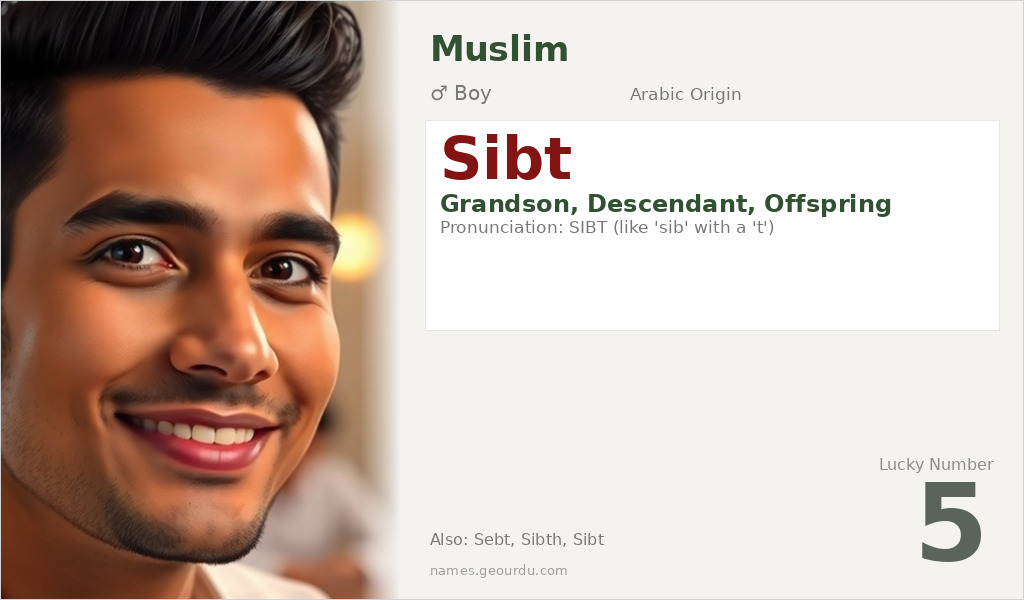
| 📛 Name | Sibt |
| 💎 Meaning | Grandson, Descendant, Offspring |
| 👤 Gender | Boy |
| 🕌 Religion | Muslim |
| 🌍 Origin | Arabic |
| 🗣 Pronunciation | SIBT (like 'sib' with a 't') |
| ✍️ Urdu | سبط |
| ✍️ Arabic | سِبْط |
| 🔢 Numerology | 5 |
| ✨ Spellings | Sebt, Sibth, Sibt |
Origin & Cultural Significance
Sibt originates from Classical Arabic and has been used in Islamic cultures for centuries. Its significance was elevated in early Islamic history when it became specifically associated with Hasan and Husayn, the beloved grandsons of Prophet Muhammad through his daughter Fatimah and son-in-law Ali. This connection gives the name special religious importance in Shia Islam particularly, though it is recognized across Muslim communities. The name appears in historical texts and genealogical records, maintaining its meaning without significant variation across Arabic-speaking regions and Muslim cultures that use Arabic names.
Personality Traits
Those named Sibt often grow into individuals who value family above all else. They typically demonstrate strong protective instincts toward loved ones and carry themselves with a sense of dignified heritage. Their connection to the name’s meaning often manifests as responsibility toward continuing family traditions and maintaining honorable lineage. While personalities vary, the name’s association with progeny and legacy tends to influence a person who thinks generationally rather than just in the moment.
Similar Names
If you like Sibt, consider: Hasan, Husayn, Nasab, Walad, Dhurriyah, Farzand, Aulad, Nasl, Sulalah, Zurriyah
Famous People Named Sibt
- Sibt ibn al-Jawzi — 13th-century Islamic scholar and historian from Baghdad
- Sibt Ali — Historical figure in Islamic history, though less documented than major figures
Frequently Asked Questions About Sibt
What does Sibt mean?
Sibt means 'grandson' or 'descendant' in Arabic, specifically referring to offspring through a daughter. It comes from the Arabic root س-ب-ط (s-b-t) relating to progeny.
Is Sibt a boy or girl name?
Sibt is exclusively a boy's name in Arabic and Islamic naming traditions. It refers to male grandchildren/descendants and has masculine grammatical form in Arabic.
What is the origin of Sibt?
Sibt originates from Classical Arabic and holds particular significance in Islamic culture due to its association with the grandsons of Prophet Muhammad. It's primarily used in Muslim communities across Arabic-speaking regions and beyond.





