
Table of Contents
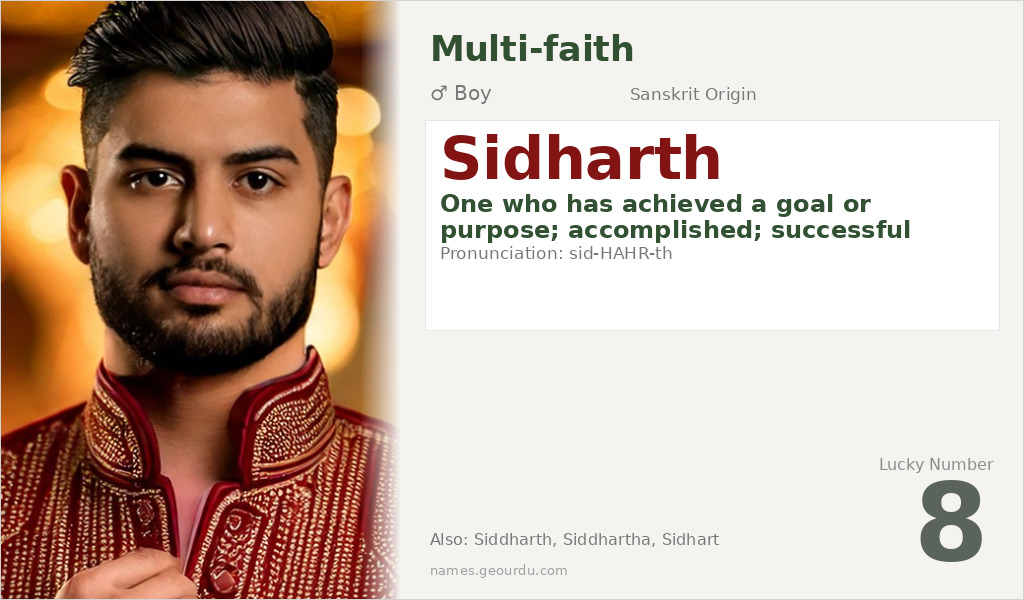
Sidharth is a profound name with deep spiritual roots in South Asian culture. Derived from ancient Sanskrit, this name carries the powerful meaning of ‘one who has achieved a goal or purpose’. Most famously associated with Siddhartha Gautama, the historical Buddha, the name has been cherished for centuries in both Hindu and Buddhist traditions. Today, it remains a popular choice for boys across India and beyond, symbolizing accomplishment and enlightenment.
Meaning of Sidharth
The name Sidharth originates from the Sanskrit compound ‘Siddhārtha’, which combines ‘siddha’ (meaning ‘accomplished, achieved, perfected’) and ‘artha’ (meaning ‘purpose, goal, meaning, wealth’). This creates the literal translation ‘one whose purpose has been accomplished’ or ‘one who has attained enlightenment’. In Buddhist tradition, this specifically refers to Prince Siddhartha Gautama, who abandoned his royal life to seek spiritual truth and ultimately achieved enlightenment, becoming the Buddha. The name has philosophical depth, suggesting not just material success but spiritual fulfillment. It appears in ancient texts including Buddhist scriptures and Hindu literature, maintaining its significance across millennia.
| 📛 Name | Sidharth |
| 💎 Meaning | One who has achieved a goal or purpose; accomplished; successful |
| 👤 Gender | Boy |
| 🕌 Religion | Multi-faith |
| 🌍 Origin | Sanskrit |
| 🗣 Pronunciation | sid-HAHR-th |
| ✍️ Urdu | سدھارتھ |
| ✍️ Arabic | سيدهارتا |
| 🔢 Numerology | 8 |
| ✨ Spellings | Siddharth, Siddhartha, Sidhart, Sidhartha |
Origin & Cultural Significance
Sidharth has its origins in ancient Sanskrit, the classical language of India that dates back over 3,500 years. The name gained particular prominence through Siddhartha Gautama (c. 563-483 BCE), whose spiritual journey and enlightenment made the name synonymous with spiritual achievement. While strongly associated with Buddhism, the name is also used in Hindu communities across India, Nepal, and the South Asian diaspora. It spread throughout Asia with Buddhism, appearing in various forms in Pali, Tibetan, Chinese, Japanese, and Southeast Asian languages. Today, it remains popular in India, particularly in states with strong Buddhist or Hindu traditions, and among global communities interested in Eastern spirituality.
Personality Traits
Those named Sidharth are often perceived as thoughtful, determined individuals with a strong sense of purpose. The name’s meaning suggests someone who sets goals and works diligently to achieve them, whether in personal, professional, or spiritual realms. They may exhibit introspective qualities and a philosophical outlook on life, possibly influenced by the name’s association with enlightenment and accomplishment. While individual personalities vary, the name carries connotations of success, wisdom, and spiritual depth.
Similar Names
If you like Sidharth, consider: Siddharth, Siddhartha, Siddhi, Arth, Siddh, Siddhanth, Siddhant, Siddhivinayak, Siddhesh, Siddhraj
Famous People Named Sidharth
- Siddhartha Gautama — Historical figure, founder of Buddhism who achieved enlightenment and became the Buddha
- Siddharth Malhotra — Indian film actor known for his work in Bollywood
- Siddharth Roy Kapur — Indian film producer and former CEO of UTV Motion Pictures
- Siddharth Shukla — Indian actor and model who won Bigg Boss 13
Frequently Asked Questions About Sidharth
What does Sidharth mean?
Sidharth means 'one who has achieved a goal or purpose' or 'accomplished' in Sanskrit. It comes from the elements 'siddha' (accomplished) and 'artha' (purpose).
Is Sidharth a boy or girl name?
Sidharth is traditionally and almost exclusively a masculine name used for boys in Indian and South Asian cultures. There are no significant feminine variants in common usage.
What is the origin of Sidharth?
Sidharth originates from Sanskrit, the ancient classical language of India. It is most famously associated with Siddhartha Gautama, the historical Buddha, and has been used for centuries in both Hindu and Buddhist traditions across South Asia.





