
Table of Contents
Sindhul is a distinctive Hindu boy name that evokes the majesty of the Sindhu River and the vastness of the ocean. While not widely common, it carries cultural resonance in regions influenced by Sanskrit and Indian traditions. This name is often chosen for its spiritual and natural connotations, reflecting a deep appreciation for heritage and the elements. Explore the etymology, usage, and personality traits associated with Sindhul in this detailed guide.
Meaning of Sindhul
The meaning of Sindhul is not definitively documented in linguistic sources, but it is likely derived from ‘Sindhu,’ the Sanskrit term for the Indus River, which also signifies ‘ocean’ or ‘sea.’ In Sanskrit, ‘Sindhu’ is a historic word referring to one of the major rivers of the Indian subcontinent and, by extension, large water bodies. The suffix ‘-ul’ does not have a clear origin in Sanskrit; it might stem from regional dialects or tribal languages in the Sindh area, possibly indicating a diminutive or affectionate form. Without verified records, the meaning remains speculative, but it generally relates to water, geography, or the Sindh region, rather than the fanciful ‘Procurer of Ocean’ found in some online sources.
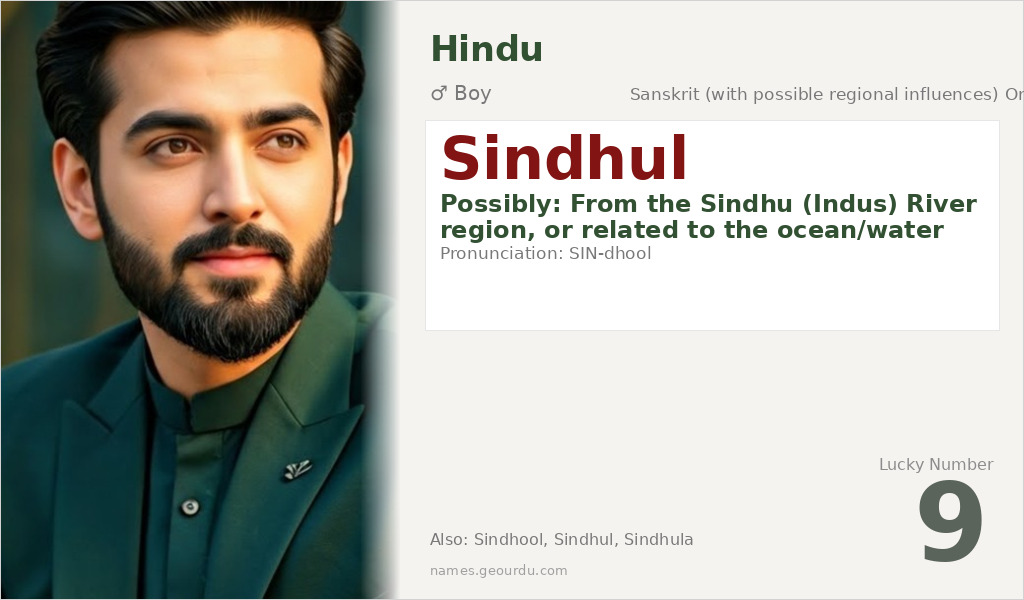
| 📛 Name | Sindhul |
| 💎 Meaning | Possibly: From the Sindhu (Indus) River region, or related to the ocean/water |
| 👤 Gender | Boy |
| 🕌 Religion | Hindu |
| 🌍 Origin | Sanskrit (with possible regional influences) |
| 🗣 Pronunciation | SIN-dhool |
| ✍️ Urdu | سندھول |
| ✍️ Arabic | سيندهول |
| 🔢 Numerology | 9 |
| ✨ Spellings | Sindhool, Sindhul, Sindhula |
Origin & Cultural Significance
Sindhul originates from Sanskrit, with potential influences from regional languages spoken in the Sindh province of Pakistan and northwestern India. The root ‘Sindhu’ has ancient significance in Hindu texts, such as the Rigveda, where it denotes the Indus River and symbolizes life and prosperity. Culturally, names derived from ‘Sindhu’ are often used in Hindu communities to honor geographical and natural elements, reflecting a tradition of naming after rivers or sacred sites. While Sindhul is not a common name in mainstream usage, it may appear in specific familial or regional contexts within Hindu populations, particularly those with ties to the Sindh region or maritime heritage.
Personality Traits
People named Sindhul are often seen as serene and introspective, with a natural affinity for water and tranquility. They tend to be thoughtful and resilient, drawing strength from their cultural roots and spiritual beliefs. In social settings, they may come across as dependable and compassionate, fostering deep connections with those around them.
Similar Names
If you like Sindhul, consider: Sindhu, Sindhuja, Sindoor, Sindh, Samudra
Famous People Named Sindhul
- No widely known public figures with this name found in records
Frequently Asked Questions About Sindhul
What does Sindhul mean?
Sindhul likely means 'from the Sindhu region' or 'related to the ocean,' based on its Sanskrit root 'Sindhu,' but the exact meaning is not well-documented and should be considered speculative.
Is Sindhul a boy or girl name?
Sindhul is traditionally used as a boy name in Hindu culture, though naming practices can vary by region and family.
What is the origin of Sindhul?
Sindhul originates from Sanskrit, with possible influences from regional languages in the Sindh area, and is primarily associated with Hindu traditions.





